A continuous spray bottle that is not working is almost never broken. In the returns and customer complaints we see as a continuous mist bottle manufacturer in Yuyao, China, the large majority trace back to four things: the head was never fully primed, the trigger is being short-stroked, the dip tube is out of the liquid, or the liquid is too thick or too dirty for a 0.3–0.5 mm swirl nozzle. Each one takes under two minutes to fix once you know which one you have.
The problem with most "spray bottle not working" advice is that it is written for ordinary trigger sprayers. A continuous sprayer has an extra part — a spring-loaded pressure chamber — and an extra valve, so it fails in ways a normal trigger bottle cannot. This guide diagnoses by symptom, explains what is physically happening inside the head, and tells you when it really is a defective unit.
Quick Answer: Why Is My Continuous Spray Bottle Not Working?
- Only short bursts, no long mist: the pressure chamber is not full. Give it 15–30 full strokes, squeezing the trigger all the way to the stop.
- Nothing comes out at all: the dip tube is out of the liquid, has popped off the head, or the nozzle is clogged.
- Mists, then the bottle dents in and stops: the air vent is blocked. Loosen the collar a quarter turn and clean the vent hole.
- Spits, drips or sprays a stream: the liquid is too thick, contains oil or particles, or the nozzle orifice is partly blocked by mineral scale.
- New bottle "dead out of the box": it is usually under-priming, not a defect. Do the plain-water test below before returning it.
How a Continuous Spray Bottle Works (and Why It Fails Differently)
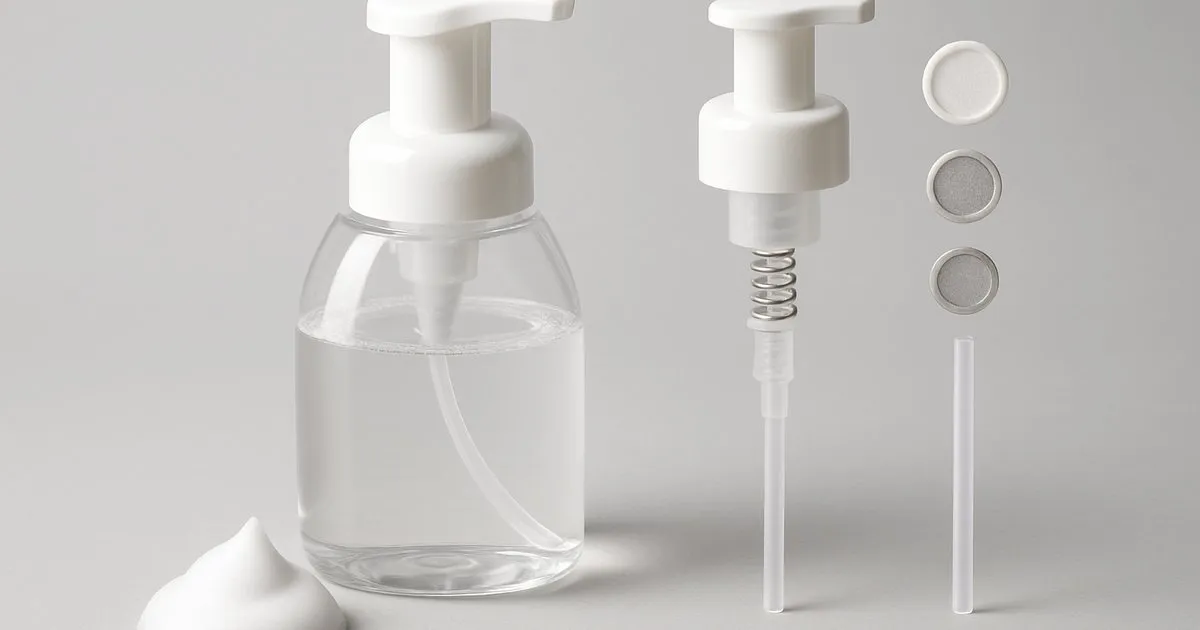
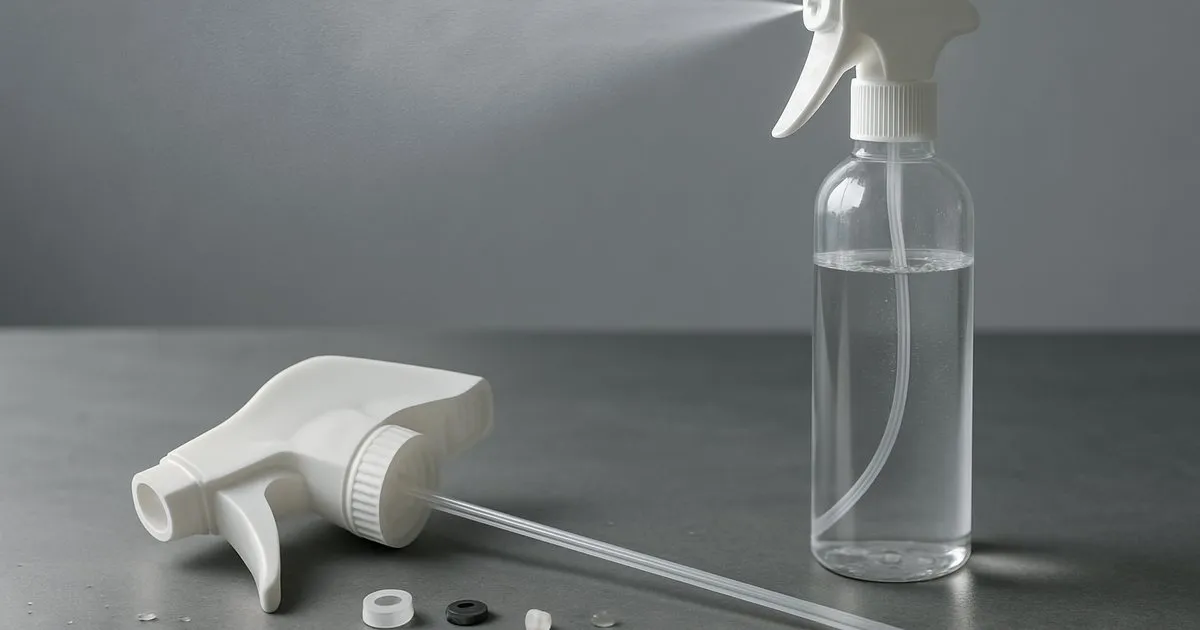
A standard trigger sprayer is a simple piston pump: squeeze, and the piston pushes one dose straight out of the nozzle. Release, and it stops. A continuous spray bottle adds a buffer between the piston and the nozzle:
- Piston and inlet valve. Each stroke pulls liquid up the dip tube through a one-way inlet valve and pushes it forward.
- Pressure chamber (accumulator). Instead of going straight out, the liquid is pushed into a small chamber held under load by a spring. That stored pressure is what keeps the mist going after you let go.
- Pre-compression outlet valve. The outlet only opens above a minimum pressure, so the head sprays a fine, consistent mist instead of dribbling, then snaps shut cleanly when pressure drops.
- Swirl nozzle. A 0.3–0.5 mm orifice spins the liquid into a cone of roughly 40–70 µm droplets.
- Air vent. Every millilitre that leaves the bottle must be replaced by air through a small vent in the head, or the bottle goes into vacuum.
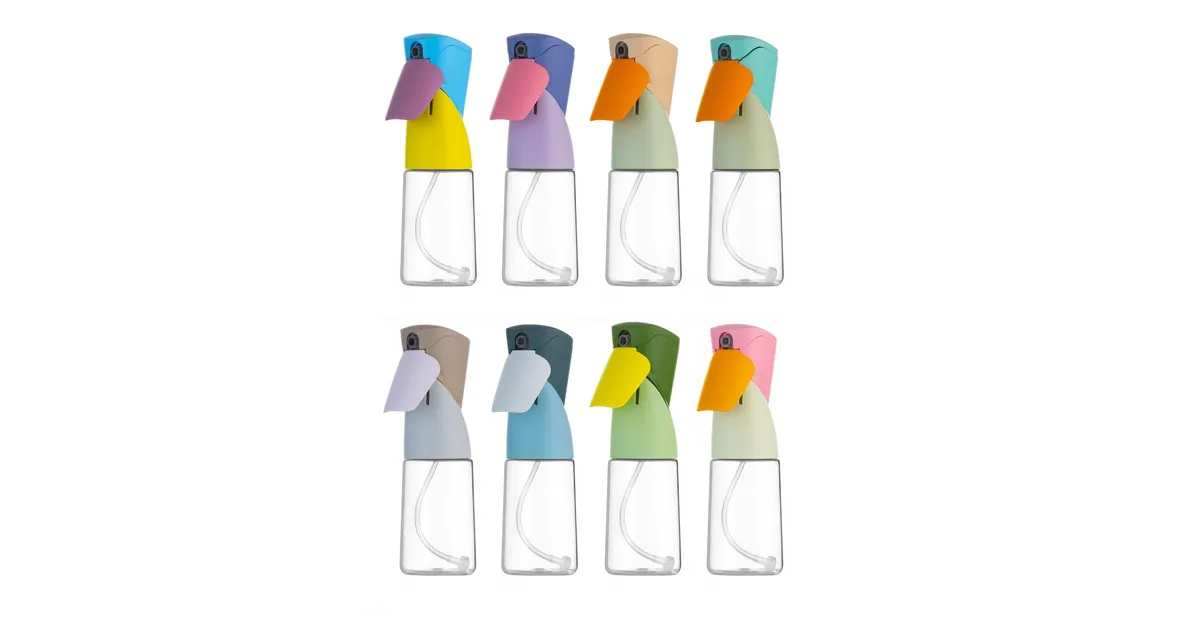
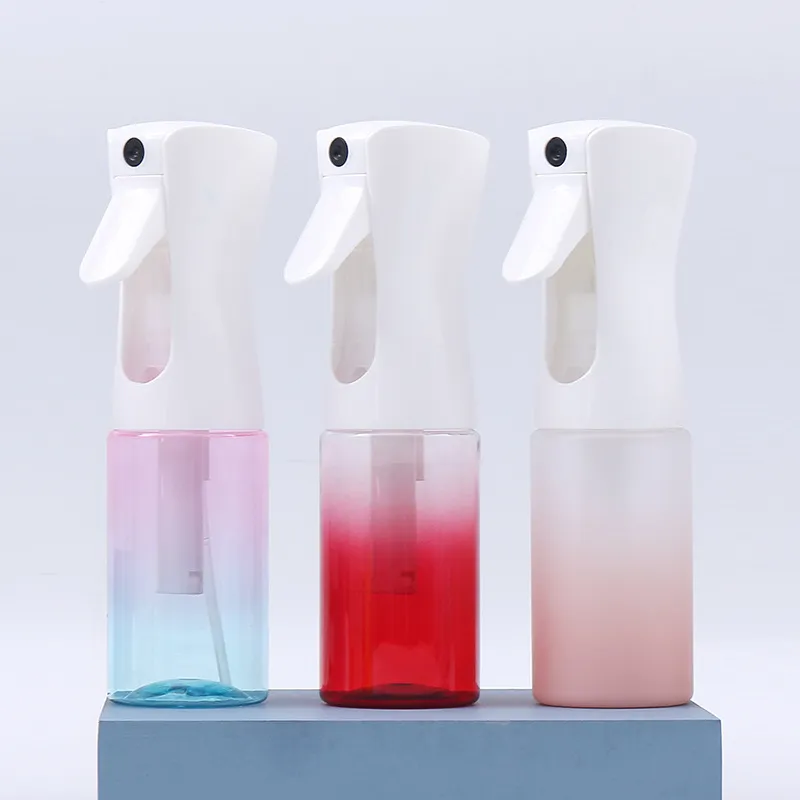
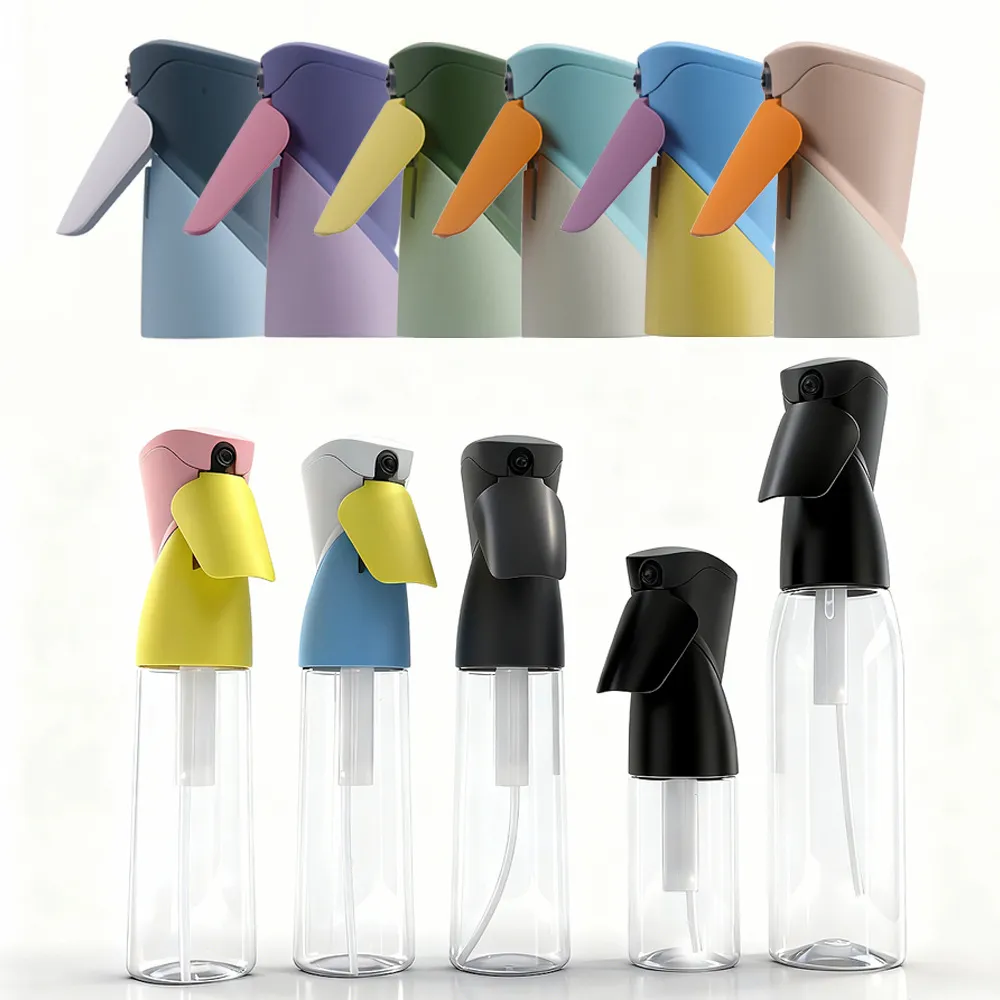
On our Penguin and Slim Waist series that buffer gives 6–12 seconds of mist from one full press. That is also why the product is less forgiving: any leak in the chamber, any partial stroke, or any liquid that is too thick reduces the stored pressure, and the head falls back to short bursts or nothing at all.
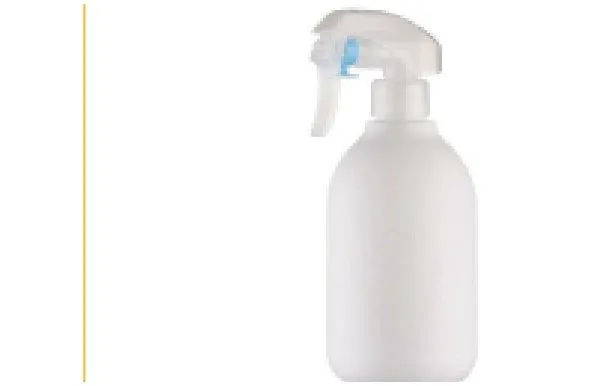
| Feature | Standard Trigger Sprayer | Continuous Spray Bottle |
|---|---|---|
| Spray per squeeze | One burst (~0.5–1.5 ml) | 6–12 s of continuous mist |
| Priming from dry | 3–8 strokes | 15–30 full strokes |
| Effect of a half stroke | Smaller burst | Chamber never charges; short bursts only |
| Nozzle orifice | 0.5–1.2 mm (spray/stream) | 0.3–0.5 mm swirl, ~40–70 µm droplets |
| Tolerance for thick liquids | Moderate | Low — water-thin liquids only |
| Extra failure points | Piston, inlet valve, nozzle | Plus accumulator spring, outlet valve, vent |
If you want the full component breakdown, see our parts of a spray bottle guide and the illustrated how spray bottles work explainer.
60-Second Diagnosis: Match Your Symptom to the Cause
Find your symptom in the first column. Work down the "most likely cause" order, because that is the order in which these faults actually show up.
| Symptom | Most Likely Cause | Fix | Time |
|---|---|---|---|
| Short bursts only, no continuous mist | Under-primed chamber or short strokes | 15–30 full strokes to the stop | 1 min |
| Nothing comes out, trigger moves freely | Dip tube out of liquid / detached; inlet valve dry | Refill above 1/3, reseat tube, re-prime | 2 min |
| Nothing comes out, trigger feels stiff | Clogged nozzle or dried residue in chamber | Warm-water flush, then vinegar or IPA soak | 15 min |
| Sprays, then bottle dents in and stops | Blocked vent / over-tightened collar | Loosen 1/4 turn, clear vent hole | 2 min |
| Mist turns into a stream or spits | Partly blocked orifice (scale, polymer) | Soak nozzle; switch to distilled water | 15 min |
| Mist lasts 1–2 s instead of 6+ s | Liquid too viscous, or chamber leaking | Test with plain water to separate the two | 3 min |
| Drips after you release | Worn outlet valve or debris on its seat | Flush 20 strokes of clean water | 2 min |
| Leaks at the collar | Missing/swollen gasket, cross-threaded, overfilled | Reseat gasket, fill to shoulder only | 2 min |
| Trigger stays down / slow return | Sticky residue on piston or tired spring | Pump warm water through; replace head if spring | 5 min |
The plain-water test is the single most useful step. Empty the bottle, fill it with tap or distilled water, prime it with 20 full strokes and spray. If it works on water but not on your product, the bottle is fine and the formula is the problem. If it fails on water too, it is a mechanical fault.
Looking for a reliable spray bottle supplier?
Get free samples and a factory-direct quote within 12 hours.
Get a Free Quote →Fix 1: Prime It Properly — Full Strokes, Not Fast Strokes
A new head is full of air. Before it can mist, the piston has to pull liquid up the full length of the dip tube, push the air out through the nozzle, and then fill the accumulator. That takes 15–30 strokes depending on bottle size and fill level — far more than the 3–8 a normal trigger needs. Most people give up at around 10 and assume the bottle is dead.
Two details matter more than the count:
- Squeeze to the stop every time. Half strokes move only part of the piston volume, and on many heads they never push the chamber past the outlet valve's opening pressure. You get spits, not mist.
- Hold it upright while priming. Priming at an angle can leave the dip tube end in air; the pump then moves air, not liquid.
Once primed, a healthy head will give a long mist from one firm press and keep going if you press again before the mist stops. If the bottle sits unused for weeks it can lose prime and need 5–10 strokes again — that is normal.
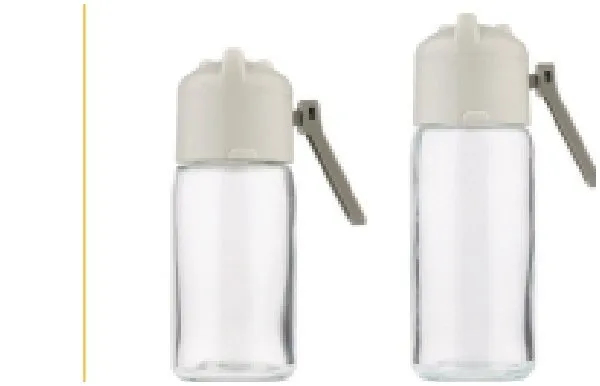
Buying continuous spray bottles for your brand or salon? Ask us for priming and mist-duration test data on your order before it ships. Stock MOQ is 3,000 pcs, with a 3–5 day lead time. Browse continuous spray bottles or request free samples.
Fix 2: Check the Dip Tube and the Fill Level
If the trigger moves freely but nothing comes out, look through the bottle. On clear PET bottles you can see the tube.
- Tube popped off the head: it happens during shipping or when the head is unscrewed at an angle. Push it firmly back onto the inlet spigot.
- Tube too short or curled up: if it does not reach within a few millimetres of the bottom, the bottle "stops working" once the liquid drops below it. This is a fit issue between head and bottle height — common when people mix heads and bottles from different brands.
- Fill too low: below roughly one third, tilting the bottle uncovers the tube end and the pump draws air, which also drains the chamber. Top up and re-prime.
Also do not fill above the shoulder. The head needs a little headspace, and an overfilled bottle pushes liquid into the vent path, which shows up as leaking at the collar.
Fix 3: Bottle Caves In, Then Stops — Clear the Vent
This is the failure most guides miss, and it is specific to how much liquid a continuous head moves. In 10 seconds of spraying you remove several millilitres from the bottle. That volume must be replaced by air through a small vent in the head. If the vent is blocked, the bottle goes into vacuum: the sidewalls pull in, the inlet valve cannot open against the suction, and the mist dies even though the bottle is half full.
Typical causes we see:
- Collar screwed down too hard, deforming the gasket over the vent path. Back it off a quarter turn and test.
- Dried product in the vent hole — hairspray, sugar-based detanglers and salt-water texturisers are the usual culprits. Soak the head in warm water and work the trigger to clear it.
- Thin-wall bottle paired with a strong pump. A soft bottle collapses faster than air can enter. This is a specification issue for buyers, covered below.
Quick test: if you loosen the collar and hear a hiss of air rushing in, the vent was blocked.
Fix 4: Unclog the Nozzle Without Ruining It
A 0.3–0.5 mm swirl orifice is far smaller than a stream nozzle, so mineral scale and dried product block it quickly. Match the cleaning liquid to the deposit:
| Deposit | Typical Source | Soak In | Time |
|---|---|---|---|
| White, chalky scale | Hard tap water (above ~120 mg/L as CaCO₃) | 1:1 white vinegar (5% acetic acid) and warm water | 15–30 min |
| Sticky, clear film | Hairspray, styling polymers, sugars | Warm water at 40–50°C, then 70% isopropyl alcohol | 10–15 min |
| Oily residue | Body oils, essential oils, oil-based serums | Warm water plus a drop of dish soap | 10 min |
| Bleach or cleaner crust | Diluted cleaning chemicals | Plain warm water only (never mix vinegar with bleach) | 10 min |
Soak the whole head, not just the nozzle tip, then pump 20 strokes of the soaking liquid through it, followed by 20 strokes of clean water. Avoid poking the orifice with a pin. A steel pin larger than 0.3 mm can scratch or enlarge the swirl chamber, and the result is a permanent stream instead of a mist. If you must, use a soft bristle or blow it out gently.
Prevention is cheaper than cleaning. Use distilled water for plant and hair misting if your tap water is hard, and flush with clean water after products that dry sticky. Our full routine is in the spray bottle cleaning and maintenance guide.
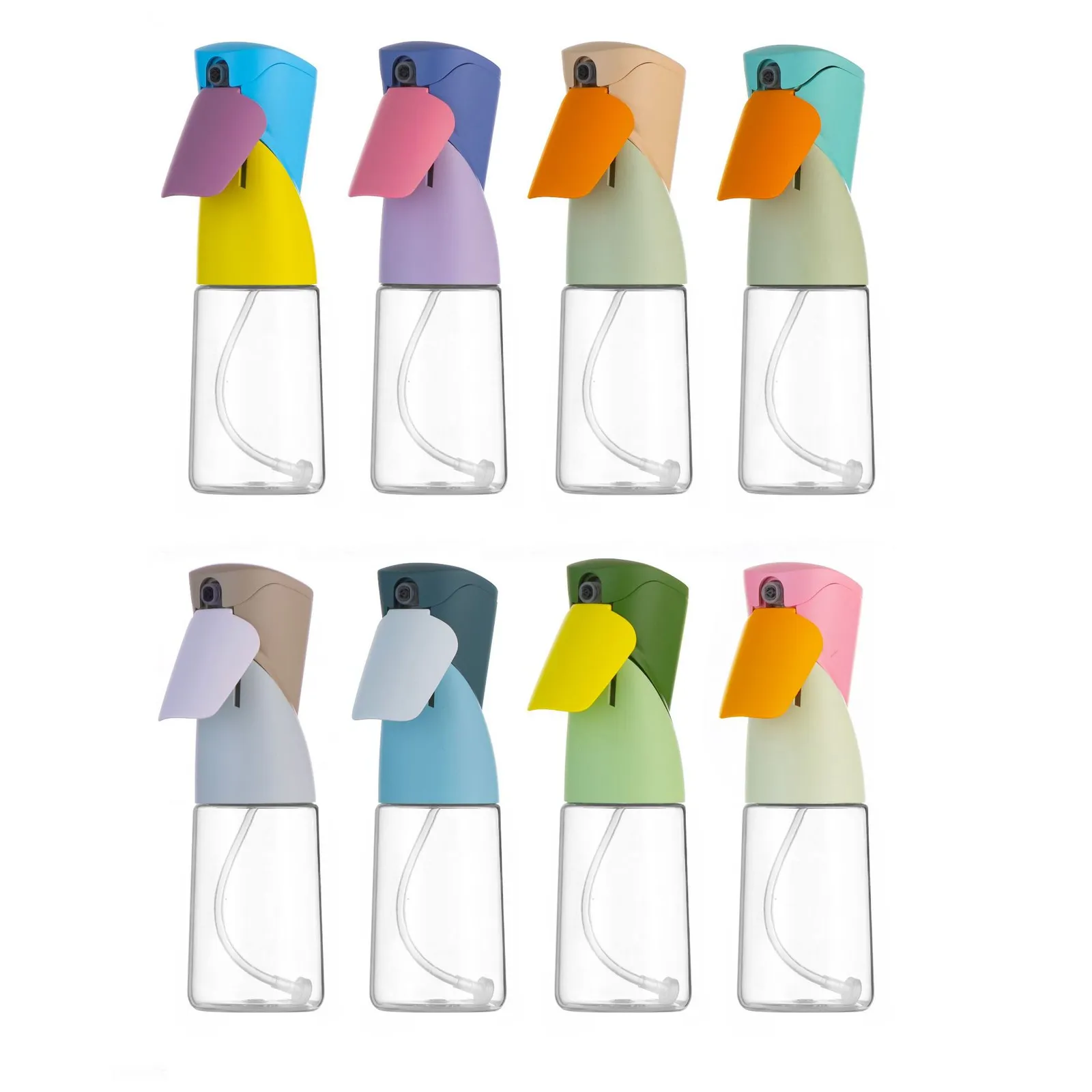
Fix 5: Is Your Liquid Too Thick? (Alcohol, Oil and Viscosity Explained)
Continuous heads are tuned for water-thin liquids. As viscosity rises, the chamber empties more slowly through the orifice, the swirl chamber cannot break the liquid into fine droplets, and mist time drops from 6–12 seconds to 1–2 — or the head simply spits. Reference values at about 20°C:
| Liquid | Approx. Viscosity | Continuous Mist Performance |
|---|---|---|
| Water, floral water, toner | ~1 mPa·s | Ideal — full mist duration |
| 75% alcohol (sanitiser, room spray base) | ~2 mPa·s | Good — check gasket compatibility (see below) |
| Leave-in conditioner, light detangler | ~5–50 mPa·s | Variable — test before you commit to a format |
| Olive / cooking oil | ~80 mPa·s | Avoid — use an oil-specific head |
| Glycerin-heavy setting sprays | Up to ~1,400 mPa·s for pure glycerin | Avoid unless heavily diluted |
Why alcohol sprays misbehave even though alcohol is thin: ethanol has a surface tension of about 22 mN/m against water's ~72 mN/m. It creeps past seals more easily and evaporates fast, which leaves dissolved fragrance or actives behind as a film in the nozzle. If your "alcohol spray bottle" drips at the nozzle or slowly loses prime, flush it with water after use and confirm that the gasket material is rated for alcohol. Pure essential oils and concentrated fragrance are a different matter: they can swell some rubber seals, which is why we list them as unsuitable for our standard continuous heads.
For cooking oil, a water-tuned head will clog no matter how you clean it. Use a head built for oil, like the one described in our continuous oil spray bottle technology guide. For harsh cleaning chemicals, see chemical-resistant spray bottles.
Fix 6: Leaks, Drips and a Trigger That Won't Return
Drips after release. The pre-compression outlet valve should cut off cleanly. A drip means debris is sitting on the valve seat or the valve is worn. Pump 20 strokes of clean warm water to flush it. If it still drips on plain water, the valve is damaged — replace the head.
Leaking at the collar. Check that the gasket is present and seated flat. A missing gasket is a common assembly defect on low-cost bottles. Then check that the head is not cross-threaded, and that the bottle is not filled above the shoulder. A gasket that looks swollen or wavy has been attacked by the liquid (often solvent or essential oil). Replace it, or change the formula or the seal material.
Trigger stuck down or returning slowly. Sticky residue on the piston is the usual cause. Pump warm water through until the action frees up. If the trigger has no spring-back at all on plain water, the return spring has failed, and the head is not repairable at home.
When It Really Is a Defect: What Brands and Salons Should Specify
If a bottle fails the plain-water test after correct priming, it is a genuine defect. For one bottle, replace it. If you are buying thousands under your own brand, the fix belongs in the purchase specification, not in your customer-service inbox. These are the checks we suggest writing into the PO:
| Check | What to Specify | Why It Matters |
|---|---|---|
| Priming | Primes on water within an agreed stroke count (e.g. ≤ 30) | Catches dry inlet valves and short dip tubes before shipment |
| Mist duration | Seconds of mist per full press, on water, after priming | A weak spring or leaking chamber shows up as short mist time |
| Leak test | Vacuum leak test on the closed unit (method such as ASTM D4991) | Finds gasket and collar leaks that cause drips and vent problems |
| Formula compatibility | Filled samples stored with your formula, e.g. 4 weeks at 40°C, then re-tested | Seal swelling and nozzle blocking only show up with the real liquid |
| Dip tube length | Cut to your bottle height, within a few mm of the base | Prevents "stops working at half full" complaints |
| Bottle wall | Minimum wall thickness / bottle weight on the drawing | Thin walls panel in under vacuum and amplify vent problems |
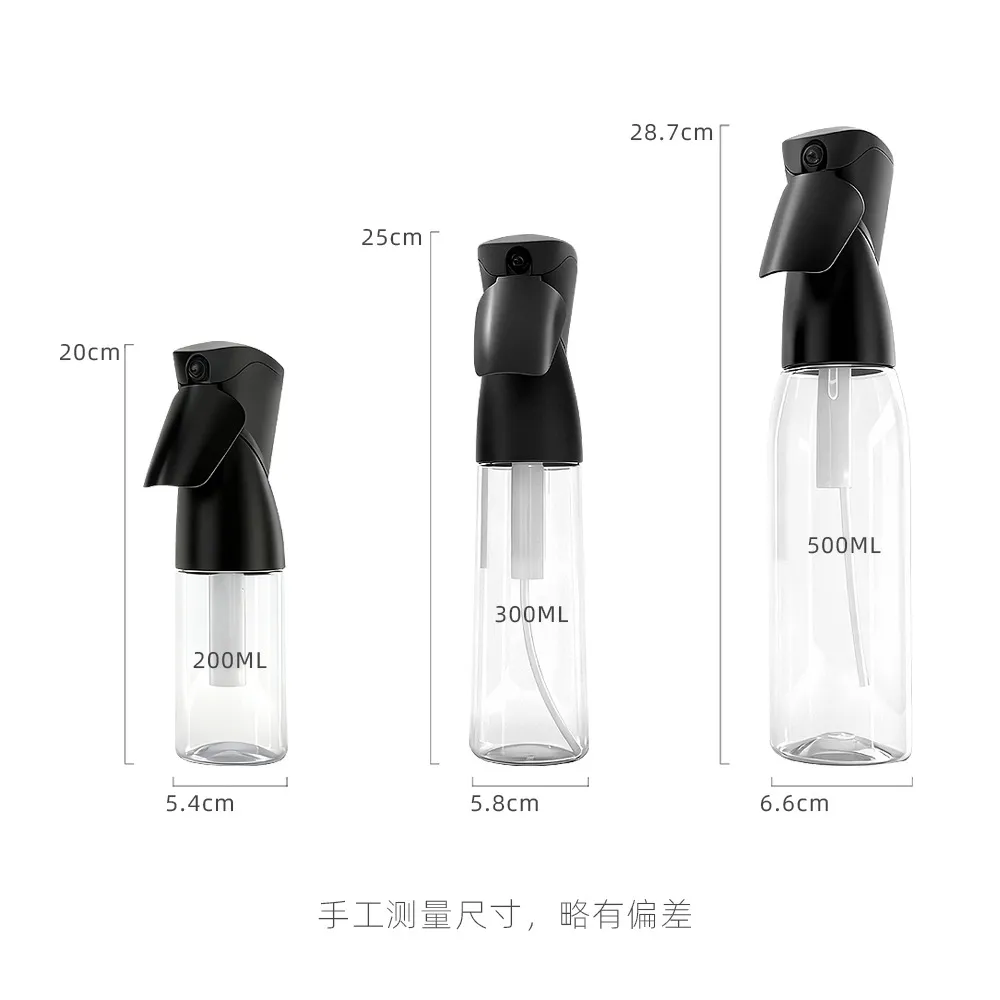
Our standard 200 ml continuous mist bottle in PET runs $0.28–$0.45 FOB at 3,000 pcs. Custom logo starts at 3,000 pcs, custom colour at 10,000 pcs, and custom orders take 20–25 days. Details are on the 200ml Penguin continuous spray bottle and 300ml Slim Waist continuous spray bottle pages, and the full QC framework is in our spray bottle quality standards and testing guide. If the leak is at the closure, the capping torque and neck finish guide explains why.
Continuous vs Regular: Is a Continuous Bottle the Right Format?
If your users keep running into the problems above, the format may be wrong for the job. Continuous mist is ideal for hair, plants, linen and skin. It is a poor fit for thick or oily products, and for users who will not prime the bottle. Our continuous vs regular spray bottle comparison walks through the trade-offs. For problems with ordinary trigger bottles, start with the general how to fix a spray bottle guide.
Related Guides
- How to Fix a Spray Bottle That Won't Spray
- Continuous vs Regular Spray Bottle
- Parts of a Spray Bottle
- How to Clean and Maintain Spray Bottles
- Spray Bottle Nozzle Specifications
- Continuous Spray Bottle Manufacturer
Request a Quote for Continuous Spray Bottles
Factory direct from Yuyao, China: 200–500 ml Penguin and Slim Waist series, with priming and leak checks written into your PO. Stock MOQ 3,000 pcs, with custom logo and colour available.
Last Updated: October 12, 2026
Sourcing note for brands
If you sell continuous spray bottles under your own brand, the pump quality issues above are exactly what our factory tests for. Desiky supplies own-tooled continuous spray bottles and fine mist spray bottles wholesale with 100% vacuum leak testing — see spray bottle wholesale pricing (MOQ 3,000 pcs).