The main types of jars are grouped three ways: by closure (Mason, clamp-top, Weck, apothecary, airless), by shape (straight-sided, paragon, hexagon, square, wide-mouth or regular-mouth) and by material (glass, plastic, ceramic, metal). The closure decides what the jar can safely hold, whether that is a home-canned sauce or an oxygen-sensitive face cream. Shape and material decide how it fills, ships and looks on the shelf.
Most "types of jars" guides stop at kitchen storage. This one also covers the cosmetic jars that skincare brands buy, and it is clear about what we make. We are a bottle and packaging factory in Yuyao, China. In jars, we make acrylic cosmetic cream jars, including a press-type airless jar. We do not make Mason, clamp, ceramic, metal or candle jars. Those are explained here so you can choose the right type, but for them you will need a specialist glassworks or tin maker.
Quick Answer: How to Tell Jar Types Apart
- Look at the lid first. A two-piece lid means a Mason-type canning jar. A wire bail and rubber ring means a clamp (swing-top) jar. A glass lid held by two metal clips means a Weck jar.
- Then the body shape. Straight walls with no shoulder (straight-sided), tall and narrow (paragon), six-sided (hexagon) or square with flat label panels (French square).
- Then the mouth. Regular-mouth Mason jars open at about 70 mm and wide-mouth at about 86 mm. Cream jars are almost all wide-mouth so a finger or spatula fits.
- Then the material. Glass for canning, preserving and premium display; plastic (PET, PP, acrylic) for light, shatter-resistant packs; ceramic and metal for light-blocking or decorative storage.
- For skincare, check how the product leaves the jar. An open cream jar is scooped. An airless jar dispenses through a press top, so the formula is not touched by fingers.
Types of Jars by Closure and Style (With Names)
When people ask "what are those glass jars called?", they usually mean a closure style. These are the names you will see most often, what seals them, and where each is used.
| Jar type | How it seals | Usual material | Typical use | Do we make it? |
|---|---|---|---|---|
| Mason / canning jar | Two-piece lid: flat lid with sealing compound plus a screw band | Glass | Home canning, preserves, pantry storage | No |
| Clamp / swing-top jar (Kilner clip top, Le Parfait) | Hinged lid, rubber ring, wire bail clamp | Glass | Dry goods, preserving, fermenting | No |
| Weck jar | Glass lid, rubber ring, two metal clips | Glass | Canning, fermenting, leftovers | No |
| Apothecary jar | Loose or ground glass lid, sometimes with a gasket | Glass | Bath salts, cotton pads, candy, display | No |
| Spice / seasoning jar | Screw cap with sifter insert, flip top or dispensing cap | Glass or plastic | Herbs, spices, rubs | One portion-control model (see below) |
| Candle jar / tumbler | Often no seal; dust lid or wooden lid | Glass, ceramic, tin | Candles, home fragrance | No |
| Cosmetic cream jar | Screw cap, often with an inner liner disc | Glass, acrylic, PP | Face cream, eye cream, balms, scrubs | Yes (acrylic) |
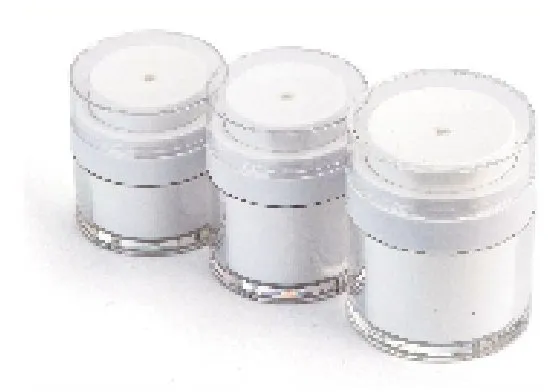
| Airless (vacuum) jar | Press top with a rising disc inside; no scooping | Acrylic, PP | Creams with oxygen-sensitive actives | Yes (YS-026) |
Mason Jars and Canning Jars
A Mason jar is a threaded glass jar closed with a two-piece lid. The flat lid seals during processing and the band holds it in place. Sizes run from half-pint (8 oz) through pint, quart and half-gallon (64 oz), in regular-mouth and wide-mouth openings. Wide-mouth jars are easier to pack with whole fruit and vegetables; regular-mouth jars pour better.
Clamp-Top, Kilner and Weck Jars
Clamp-top jars use a wire bail to press a glass lid onto a rubber ring. Kilner (a British brand) sells both screw-top and clip-top jars. Le Parfait is the classic French clamp jar. Weck jars, from Germany, use a separate glass lid, a rubber ring and two clips. The clips come off once the jar has sealed. Glass and rubber are the only things the food touches, which is why many people prefer them for fermenting.
Apothecary and Spice Jars
Apothecary jars have wide bodies and heavy lids and are used more for display than for sealing. Spice jars are small cylinders or squares, usually 2–8 oz, with a sifter insert under the cap. Spice jars are a whole category of their own. For buying them in bulk, see our guide to wholesale spice jars. For how much each spice actually fills a jar, see our spice jar sizes and net weight chart.
Types of Jars by Shape
Shape affects labeling, filling-line tooling, how many jars fit in a carton and how the pack looks on a shelf.
- Straight-sided jars have vertical walls and no shoulder. They are easy to label, easy to scoop from, and safer for freezing because expanding contents are less likely to crack the glass.
- Paragon jars are tall and narrow. They are used for olives, pickles, sauces and honey.
- Hexagon jars have six flat sides. Their usual uses are honey, jam, candles and gifts.
- French square jars are square with rounded corners. They pack tightly and give flat label panels.
- Round "economy" jars are the plain cylinders used for most supermarket foods.
- Squat (low-profile) jars are wider than they are tall. Almost every cream jar is this shape, because the user needs to reach the bottom.
One practical point for brands: a round jar and a square jar are not interchangeable on a filling line, even if they hold the same volume and share a cap. Change the shape and the co-packer usually has to change the guides and pucks too.
Looking for a reliable spray bottle supplier?
Get free samples and a factory-direct quote within 12 hours.
Get a Free Quote →Types of Jars by Material
| Material | Strengths | Watch-outs | Common jar types |
|---|---|---|---|
| Soda-lime glass | Inert, reusable, recyclable, clear | Heavy, breakable; freight cost | Mason, Weck, food and cream jars |
| Borosilicate glass | Handles sudden temperature changes | Costs more than soda-lime | Storage and kitchen jars |
| Amber / cobalt glass | Tint cuts UV light | Contents harder to see | Herbal, apothecary, light-sensitive creams |
| PET | Clear, light, shatter-resistant | Not for hot-filling | Food jars (nut butter, snacks), clear cosmetic jars |
| PP | Tough, wide chemical tolerance | Translucent rather than crystal clear | Cosmetic inner cups, caps, travel jars |
| Acrylic (PMMA) | Glass-like clarity and weight, premium look | Some formulas (e.g. high alcohol or certain oils) need a compatibility test | Outer shells of cosmetic and airless jars |
| Ceramic / stoneware | Opaque, sturdy, decorative | Heavy, no view of contents | Kitchen canisters, candles |
| Metal (tinplate, aluminum) | Blocks light, will not shatter | Can dent; may need a liner | Balm and salve tins, tea, powders |
In many acrylic cosmetic jars the acrylic is the outer shell and a separate inner cup holds the product. When you compare samples, ask which material the formula actually touches, and run a stability test with your own formula in that material before ordering.
Types of Jar Lids and Closures
The lid is the part that fails most often, so it is worth knowing the main closure types:
- Continuous-thread (CT) screw caps. These are the most common. They are described by a two-number neck finish such as 89-400: the first number is the opening in millimetres and the second is the thread style. A cap only seals on a jar with the matching finish. Our neck finish and capping torque guide explains how to read these codes.
- Lug (twist-off) caps. These have short lugs instead of a full thread and are vacuum-sealed after hot filling. You see them on jams and sauces.
- Two-piece canning lids. A flat lid plus a screw band, used on Mason jars.
- Clamp and clip closures. A wire bail or metal clips hold a lid against a rubber ring (clamp-top and Weck jars).
- Stoppers. Cork or ground glass, used on apothecary and decorative jars.
- Dispensing caps. Sifter inserts, flip tops and portion-control caps for spices and seasonings.
- Liner discs and inner lids. A flat disc under a cosmetic jar cap that protects the cream surface and reduces drying out.
- Airless press tops. Pressing the top dispenses a dose while a disc inside the jar rises as the product is used up.
Cosmetic Jars: The Types Skincare Brands Choose Between
For beauty brands, "types of jars" really means three formats:
- Standard (single-wall) cream jars. One wall, a screw cap and usually a liner disc. These are simple and low-cost, and they suit balms, scrubs, masks and body butters.
- Double-wall jars. An outer shell (often acrylic) around an inner cup. The thick outer wall gives a heavier, more premium look without needing a thick-walled product cup.
- Airless (vacuum) jars. The user presses the top instead of scooping. A disc inside rises as the cream is used, so less air reaches the formula and fingers never touch it. Brands choose them for creams with oxygen-sensitive ingredients and for a more hygienic, clinical image.
The Cosmetic Jars We Make
| Model | Type | Sizes | Material | Finish | MOQ | Lead time |
|---|---|---|---|---|---|---|
| YS-026 airless cream jar | Press-type airless (vacuum) jar | 15 g / 30 g / 50 g | Acrylic body, PP top | White / silver | 3,000 pcs | 20–30 days |
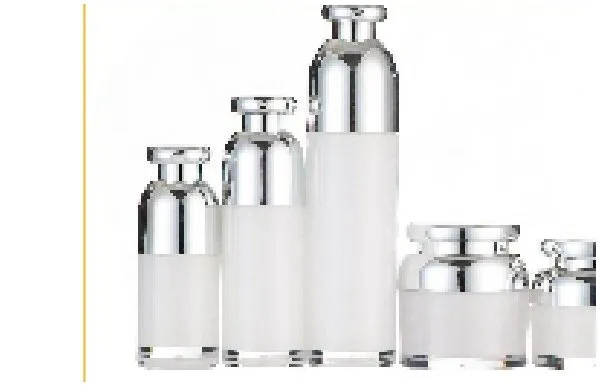
| YS-027 acrylic mushroom series | Matching bottles plus two cream jars in the same finish | Bottles 15 / 30 / 50 / 100 ml, plus two jar sizes | Acrylic | Clear with gold or silver | 3,000 pcs | 20–30 days |
Ordering a jar and its matching bottles from the same series keeps the cap color, shoulder shape and metallic finish consistent across a skincare line. A cream, serum and toner can then share one look on the shelf without the brand having to color-match parts from different suppliers. Both models accept logo decoration such as silk-screen printing, pad printing and hot stamping. You can see the rest of the range on our cosmetic jars and bottles page. For tooling and specification questions, read our airless cream jar manufacturing guide.
Kitchen Jars: Where We Fit and Where We Do Not
On the food side, our catalog has one jar: a 220 ml portion-control seasoning jar (YS-008-220ML) with a lever-operated cap that dispenses a set amount each time. It is aimed at brands selling "measured seasoning" or low-salt kitchen tools. Contact us for its current specification and terms.
We do not make Mason jars, canning jars, clamp or Weck jars, apothecary jars, hexagon or paragon food jars, ceramic canisters, metal tins or candle jars. If one of those is the right type for your product, use a specialist glassworks or tin maker. The selection guide below still applies.
How to Choose the Right Jar Type
| What goes in the jar | Jar type to start with | Why |
|---|---|---|
| Home-canned fruit, sauces, pickles | Mason-type canning jar (regular or wide mouth) | Designed for canning heat and a two-piece self-sealing lid |
| Jam, sauce sold at retail | Round, hexagon or paragon glass with lug cap | Hot-fill and vacuum-seal friendly; familiar retail look |
| Dry goods, ferments | Clamp-top or Weck jar | Rubber ring seal, easy to reopen |
| Spices and rubs | Spice jar with sifter or dispensing cap | Controls pour; size by net weight, not volume |
| Body butter, scrub, balm, mask | Single-wall cream jar (wide mouth) | Thick products need to be scooped |
| Premium face or eye cream | Double-wall acrylic jar | Heavy premium feel without a thick product cup |
| Cream with oxygen-sensitive actives | Airless (vacuum) jar | Less air contact, no fingers in the product |
| Candles | Glass tumbler or tin | Has to take the heat of the flame |
Before you commit, ask three questions. Does the lid type suit how the product is used every day? Has the formula been tested in the material it actually touches? Does the jar size match your label claim and fill line? For cosmetic jars, request samples of two or three sizes, fill them with your formula, and check the seal and dispensing over a few weeks before you order production.
FAQ
What are the different types of jars?
Jars are usually grouped by closure (Mason/canning, clamp-top, Weck, apothecary, spice, cream and airless jars), by shape (straight-sided, paragon, hexagon, French square, round, squat) and by material (glass, plastic, ceramic, metal). The closure matters most, because it decides how well the jar seals and what it can hold.
What are the different types of glass jars?
The common glass jars are Mason/canning jars, clamp-top (swing-top) jars, Weck jars, apothecary jars, straight-sided jars, paragon jars, hexagon jars, French square jars, spice jars and glass cosmetic cream jars. Most are soda-lime glass; borosilicate is used where heat resistance matters, and amber or cobalt glass where UV protection matters.
What are the different types of jar lids?
The main types are continuous-thread screw caps, lug (twist-off) caps, two-piece canning lids, clamp or clip closures with a rubber ring, cork or glass stoppers, dispensing caps such as sifters and flip tops, and airless press tops used on cosmetic jars.
Is a Mason jar the same as a canning jar?
A Mason jar is one type of canning jar: a threaded glass jar with a two-piece self-sealing lid. Weck and clamp-top jars are canning jars too, but they seal differently. Decorative "mason-style" jars are not necessarily made for canning, so check that the jar is sold as a home-canning jar before you use it that way.
Are airless jars better than regular cream jars?
Not always. An airless (vacuum) jar dispenses the product when the top is pressed, and a disc inside rises as it is used, so less air reaches the cream and fingers never touch it. That suits creams with oxygen-sensitive ingredients. Very thick balms, scrubs and masks are better in a regular wide-mouth jar, where they can be scooped. Our YS-026 airless jar comes in 15 g, 30 g and 50 g, with an MOQ of 3,000 pcs and a 20–30 day lead time.
Choosing Jars for a Skincare Line?
Tell us the product, fill size and target quantity. We will recommend a jar type from our cosmetic range, confirm MOQ and lead time, and send samples.
Get a Free Quote →Related Guides: Airless Cream Jar Manufacturing Guide · Wholesale Spice Jars · Spice Jar Sizes & Net Weight
Last Updated: November 22, 2026