Technical Guide
How Does a Spray Bottle Work?
A complete guide to spray bottle mechanics — from the simple piston pump in a trigger sprayer to the pre-compression technology inside continuous mist bottles. Written by the engineers who design and manufacture them.
In This Guide
How the Pump Mechanism Works
Every spray bottle — from a simple kitchen cleaner to a professional salon sprayer — operates on the same fundamental principle: a reciprocating piston pump. The mechanism converts your hand motion into liquid pressure, forcing fluid through a tiny nozzle opening that breaks it into a spray of fine droplets.
The process works in two phases that repeat with every pump cycle:
Compression Stroke (Squeeze)
Pressing the trigger pushes the piston forward inside the cylinder. This compresses the liquid trapped inside, building pressure. The inlet check valve closes (preventing backflow into the bottle), while the outlet valve opens, forcing pressurized liquid through the nozzle. The nozzle's tiny orifice (0.2-1.0mm) breaks the stream into a spray pattern.
Suction Stroke (Release)
Releasing the trigger lets the spring push the piston back, creating a vacuum inside the cylinder. The outlet valve closes (preventing air from entering through the nozzle), while the inlet valve opens. Suction draws liquid up through the dip tube from the bottle reservoir, refilling the cylinder for the next pump cycle.
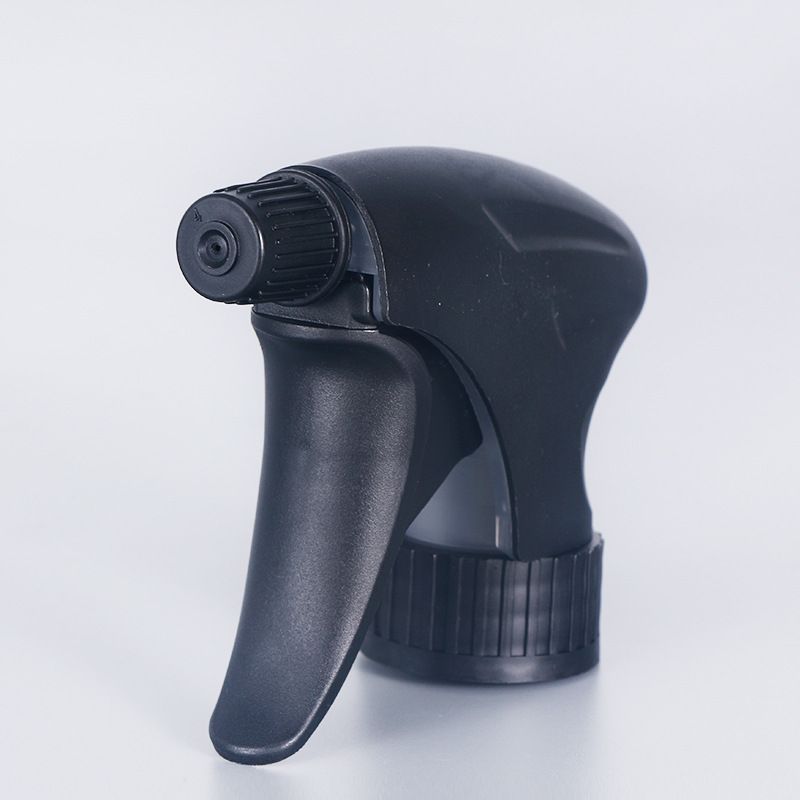
Spray bottle nozzle mechanism — the precision-engineered component that converts liquid pressure into fine mist
Key insight: The quality difference between cheap and premium spray bottles comes down to three things — the spring tension (determines pump pressure), the check valve seal quality (determines reliability), and the nozzle precision (determines spray fineness). All three degrade over time, which is why cheaper bottles fail faster.
Parts of a Spray Bottle — Component Breakdown
Every spray bottle consists of 7 core components. Understanding each part helps you diagnose problems, choose better products, and specify the right bottle for your application.
Bottle Body
The reservoir that holds the liquid. Material choice determines chemical compatibility, clarity, and durability.
Material: PET, HDPE, PP, or Glass
Dip Tube
A thin tube extending from the pump to the bottom of the bottle. Draws liquid upward during the suction stroke.
Material: PP or PE
Pump Cylinder
The chamber where liquid is compressed. Diameter determines output volume per stroke (0.7-1.6ml typical).
Material: PP
Piston
Moves back and forth inside the cylinder, creating alternating pressure and vacuum with each pump cycle.
Material: PP with PE gasket
Spring
Returns the piston to its resting position after each squeeze. Spring tension determines pump resistance and pressure.
Material: Stainless steel or PP
Check Valves
Two one-way valves (inlet + outlet) control flow direction. They prevent backflow and maintain pump priming.
Material: Silicone or PE
Nozzle
Shapes the spray pattern. Orifice diameter (0.2-1.0mm) determines droplet size. Adjustable nozzles rotate between mist and stream.
Material: PP
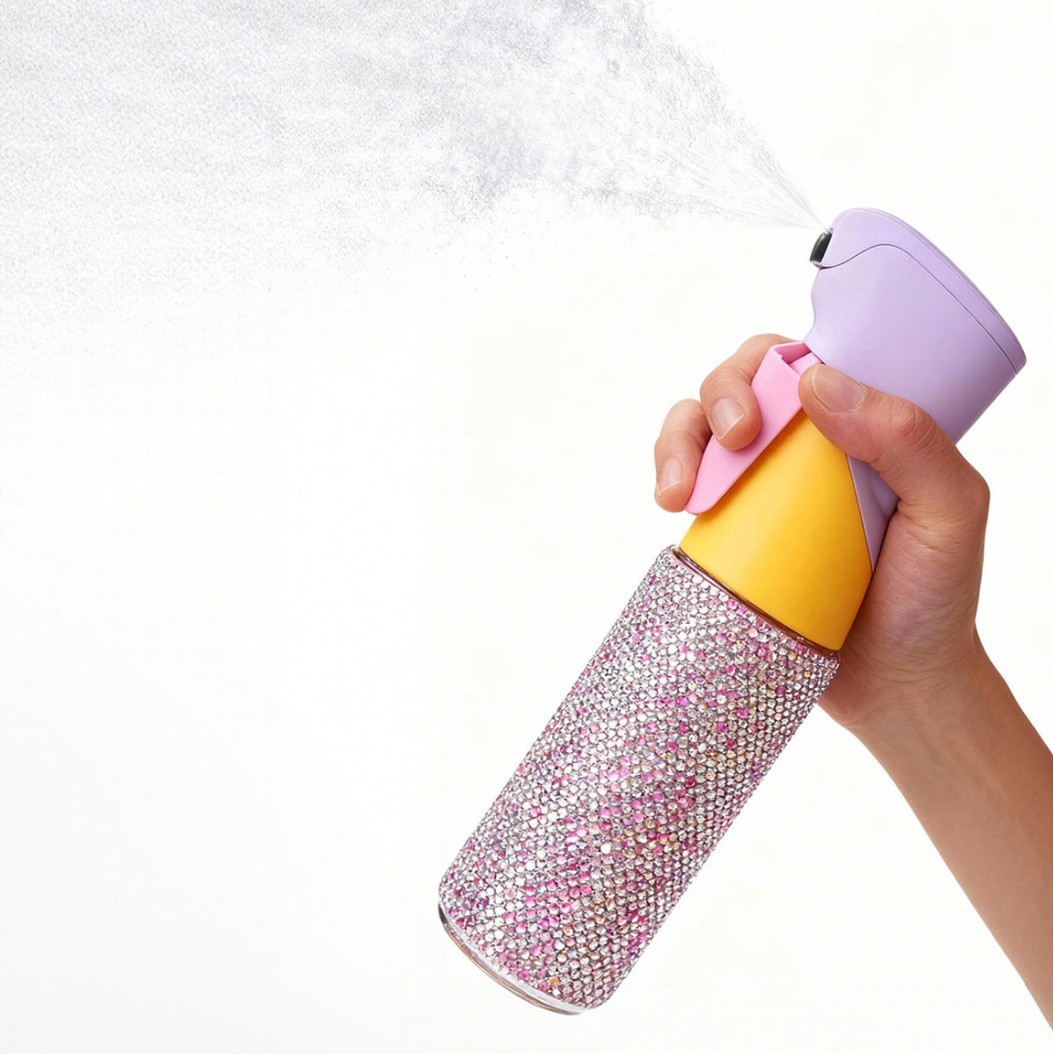
Trigger vs Continuous Mist vs Fine Mist — Technical Comparison
Not all spray mechanisms are equal. Each type uses a different approach to convert pump action into spray, resulting in very different performance characteristics.
| Mechanism | Droplet Size | Pressure | Lifespan | Cost (pump) | Best For |
|---|---|---|---|---|---|
| Trigger Sprayer | 100-200+ micron | Low (direct) | 30,000-50,000 | $0.08-0.15 | Cleaning, industrial, garden |
| Continuous Spray | 40-70 micron | High (pre-compressed) | 15,000-25,000 | $0.25-0.50 | Hair styling, body mist, cooking oil |
| Fine Mist Spray | 40-80 micron | Medium | 20,000-40,000 | $0.10-0.25 | Cosmetics, facial toner, perfume |
| Foam Pump | N/A (foam) | Medium + air mix | 20,000-40,000 | $0.15-0.35 | Hand soap, facial cleanser |
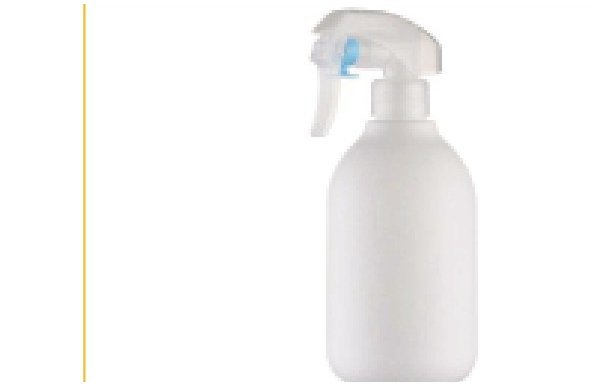
Trigger Sprayer
Durable, chemical-resistant
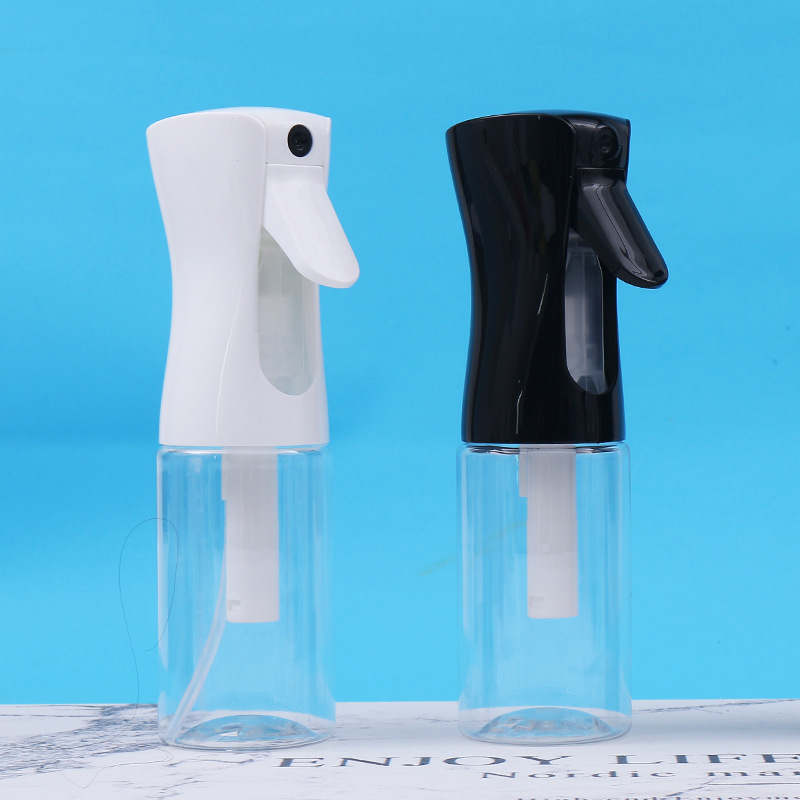
Continuous Spray
Ultra-fine mist, 360° spray
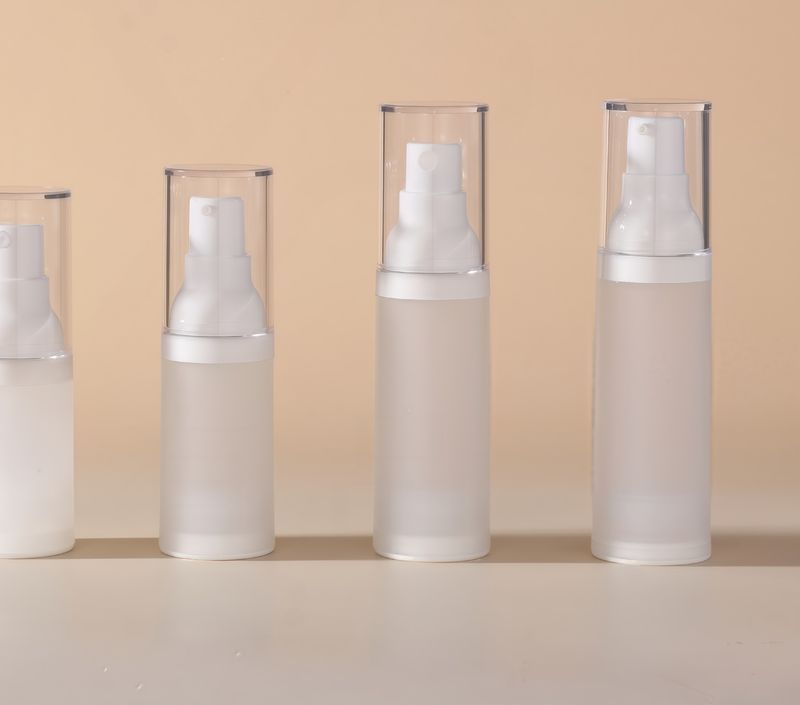
Fine Mist
Precision cosmetic spray
Pre-Compression Technology — Why Continuous Spray Is Different
The key innovation that separates continuous spray bottles from standard trigger sprayers is the pre-compression chamber. This small air chamber sits between the pump cylinder and the nozzle, and it changes everything about how the spray is delivered.
How Pre-Compression Works (3 stages):
Pressure Build-Up
When you press the pump, liquid enters the pre-compression chamber but the outlet valve stays closed. Pressure builds inside the chamber as the piston continues to push liquid in.
Threshold Release
Only when internal pressure exceeds the valve threshold does the outlet snap open, releasing a burst of highly pressurized liquid through the nozzle. This high pressure is what creates the ultra-fine 40-70 micron mist.
Sustained Spray
The pressurized chamber continues to feed liquid through the nozzle even after you stop pressing, creating a sustained, continuous mist that lasts 2-3 seconds per pump. This is why it's called "continuous spray" — one pump produces an extended mist, not a single burst.
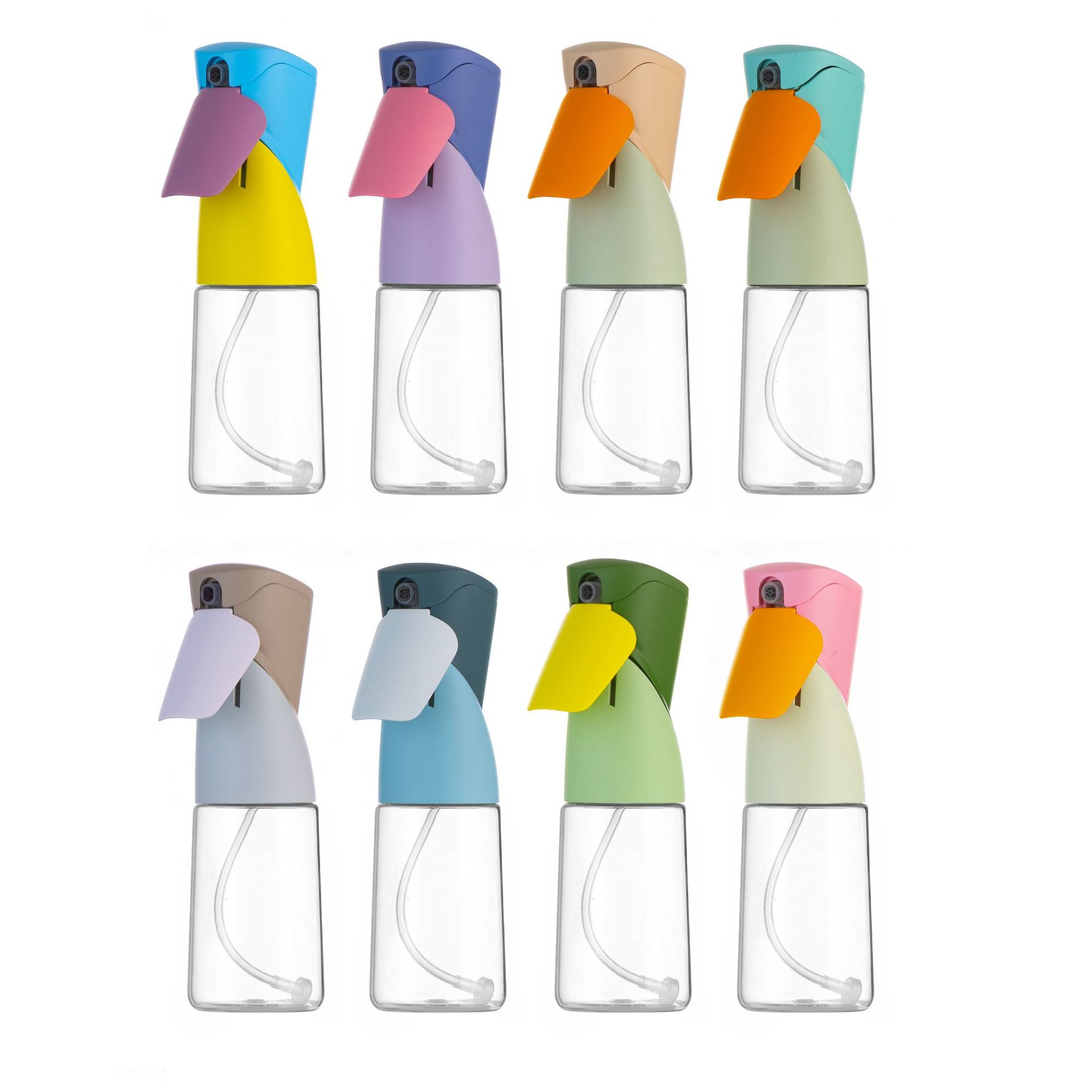
Desiky's continuous spray bottles use patented pre-compression technology — EU & US patent protected
360°
Spray at any angle — even upside down
40-70 μm
Ultra-fine mist droplets
2-3 sec
Sustained mist per pump
Why Spray Bottles Stop Working — 5 Common Failure Points
Understanding how spray bottles fail helps you both maintain your current bottles and choose better ones. Here are the most common failure modes, ranked by frequency.
Clogged Nozzle (50% of failures)
Dried product, mineral deposits, or particulate matter blocks the tiny nozzle orifice. Fix: soak nozzle in warm vinegar for 15 minutes, then flush with clean water.
Air Lock in Dip Tube (20%)
Air bubble trapped in the dip tube prevents liquid from being drawn up. Fix: submerge nozzle in water and pump 20-30 times to re-prime the system.
Worn Spring (15%)
Spring loses tension after 10,000-20,000 cycles, reducing pump pressure below the threshold needed to atomize liquid. Stainless steel springs last 3-5× longer than PP springs.
Degraded Check Valves (10%)
The small silicone or PE flaps lose their seal, allowing liquid to flow backwards. Result: the pump can't build pressure. This is the hardest component to repair.
Cracked Cylinder or Piston Wear (5%)
Physical damage to the pump cylinder or worn piston gasket breaks the seal needed for compression. Usually caused by chemical attack from incompatible liquids.
Prevention tip: Rinse spray bottles with warm water after each use. This single habit prevents 70%+ of nozzle clogs and extends pump life by 2-3×. For a detailed repair guide, see our How to Fix a Spray Bottle article.
Frequently Asked Questions
How does a trigger spray bottle work?
A trigger spray bottle uses a piston pump mechanism. When you squeeze the trigger, it pushes a piston forward inside a small cylinder, compressing the liquid and forcing it through a narrow nozzle opening. This breaks the liquid into a spray pattern. Releasing the trigger pulls the piston back, creating suction that draws more liquid up through the dip tube from the bottle reservoir. A one-way check valve prevents liquid from flowing back down.
How does a continuous spray bottle work?
A continuous spray bottle uses pre-compression technology. Unlike a trigger sprayer that sprays immediately when you press, a continuous spray bottle builds up air pressure inside a small chamber first. Only when pressure reaches a threshold does the valve open, releasing a sustained, ultra-fine mist (40-70 micron droplets). This pre-compression is why continuous spray bottles produce a finer, more even mist than trigger sprayers and can spray at any angle including upside down.
What are the main parts of a spray bottle?
A spray bottle has 7 main components: (1) the bottle body (reservoir), (2) the dip tube that reaches the bottom to draw liquid, (3) the pump cylinder where compression happens, (4) the piston that creates pressure, (5) the spring that returns the piston, (6) one-way check valves (inlet and outlet) that control flow direction, and (7) the nozzle that shapes the spray pattern. Continuous spray bottles add an air-mixing pre-compression chamber between the pump and nozzle.
Why does my spray bottle only work when held upright?
Standard trigger spray bottles rely on gravity to keep the dip tube submerged in liquid. When tilted, the dip tube opening lifts above the liquid surface and draws air instead. Continuous spray bottles solve this with pre-compression — they pressurize a small chamber of liquid before spraying, allowing 360-degree operation regardless of bottle orientation.
What makes a fine mist spray bottle different from a regular spray?
Fine mist spray bottles have a smaller nozzle orifice (0.2-0.4mm vs 0.5-1.0mm for regular sprayers) and higher compression ratio. This produces droplets of 40-80 microns vs 100-200+ microns for regular trigger sprayers. The finer mist feels gentler on skin and hair, provides more even coverage, and uses less product per application. Fine mist mechanisms cost more to manufacture due to tighter tolerances.
What is the difference between a spray bottle nozzle and a trigger sprayer?
A spray nozzle is the tip component that shapes the spray pattern — it can be adjusted from fine mist to direct stream on many models. A trigger sprayer is the complete pump mechanism including the trigger handle, piston, cylinder, spring, and nozzle assembly. The nozzle is one part of the trigger sprayer system.
Why do spray bottles stop working over time?
The three most common failure points are: (1) clogged nozzle — dried product or mineral deposits block the tiny orifice, (2) worn spring — loses tension after 10,000-20,000 actuations, reducing pump pressure, and (3) degraded check valves — the small rubber or silicone flaps lose their seal, allowing liquid to flow backwards instead of being pumped forward. Regular cleaning and using filtered liquids extends spray bottle life significantly.
How many times can a spray bottle be pumped before it wears out?
A quality trigger sprayer lasts 30,000-50,000 actuations. A continuous spray mechanism typically lasts 15,000-25,000 actuations due to more complex internal components. At 20 sprays per day, a trigger sprayer lasts 4-7 years and a continuous sprayer lasts 2-3 years. Commercial-grade mechanisms with stainless steel springs and reinforced seals can exceed 50,000 actuations.
Need Spray Bottles Engineered for Your Product?
We manufacture continuous spray, trigger spray, and fine mist bottles with custom specifications. Direct from our factory — free samples and quotes within 24 hours.