Choosing the right spray bottle size is one of those decisions that seems simple — until you end up with a bottle that is too heavy for one-handed use, runs out mid-task, or takes up too much shelf space. Whether you are filling spray bottles for a hair salon, stocking a cleaning supply line, or sourcing kitchen oil sprayers for your brand, capacity matters more than you think.
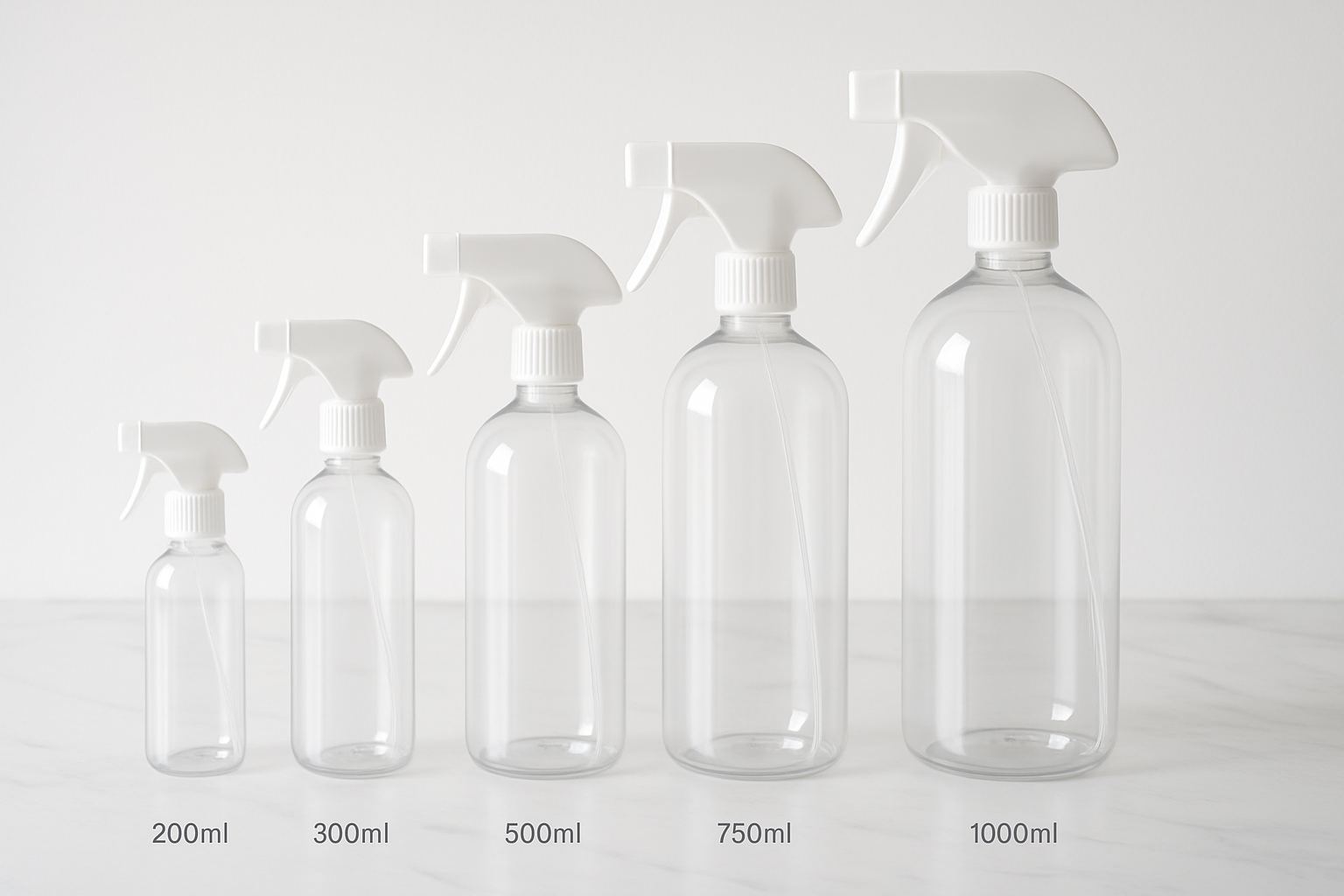
In this comprehensive guide, we break down the five most common spray bottle sizes — from compact 200ml travel bottles to large-format 1000ml workhorses — and help you match the right capacity to your specific use case. We include a comparison table, real-world recommendations, and insider tips from our experience manufacturing millions of spray bottles.
Key Takeaways
- 200ml bottles are ideal for travel, personal care, and precision tasks like plant misting.
- 300ml bottles hit the sweet spot for hair styling, facial mists, and kitchen oil spraying.
- 500ml bottles are the most versatile — perfect for household cleaning, salon use, and gardening.
- 750ml-1000ml bottles are best for commercial cleaning, large-area gardening, and industrial tasks.
- Ergonomics matter: bottles over 500ml should have contoured grips to reduce hand fatigue during extended use.
Why Spray Bottle Size Matters
Spray bottle capacity is not just about how much liquid a bottle holds. It affects ergonomics, portability, refill frequency, and user experience. A cleaning crew using 200ml bottles wastes time on constant refills. A hairdresser wielding a 1000ml bottle develops wrist fatigue within minutes. Getting the size right impacts productivity and satisfaction.
Here are the key factors that bottle size influences:
- Weight when full: A 500ml bottle full of water weighs roughly 550g (about 1.2 lbs). A 1000ml bottle weighs over 1kg (2.2 lbs) — a significant difference when you are using it one-handed for extended periods.
- Portability: Smaller bottles fit in bags, aprons, and tool belts. Larger bottles need dedicated storage.
- Refill frequency: A 200ml bottle used for cleaning runs out quickly. A 750ml bottle can last an entire cleaning session.
- Shelf presence: For retail products, bottle size affects shelf space, shipping costs, and perceived value.
- Cost per unit: Larger bottles generally cost more per unit but less per milliliter of capacity. For wholesale buyers, this affects margins significantly.
Spray Bottle Size Comparison Table
This table summarizes the five most common spray bottle capacities with their key characteristics and best applications.
| Size | Fluid Ounces | Weight (Full) | Best For | Refill Frequency | Portability |
|---|---|---|---|---|---|
| 200ml | 6.8 oz | ~230g | Travel, facial mist, plant misting, precision tasks | High (daily use) | Excellent — fits in bags and pockets |
| 300ml | 10.1 oz | ~340g | Hair styling, kitchen oil spraying, personal care, small plants | Moderate | Very good — one-handed use easy |
| 500ml | 16.9 oz | ~550g | Household cleaning, salon use, gardening, general purpose | Low to moderate | Good — standard size for most tasks |
| 750ml | 25.4 oz | ~800g | Commercial cleaning, large gardens, automotive detailing | Low | Fair — best with ergonomic grip |
| 1000ml | 33.8 oz | ~1050g | Industrial cleaning, landscaping, commercial kitchens | Very low | Limited — requires strong grip, two hands for some users |
200ml Spray Bottles: Compact and Portable
Best Use Cases
The 200ml spray bottle (approximately 6.8 fl oz) is the smallest standard size and excels in situations where portability and precision matter more than capacity. At just 230g when full, it is light enough for extended one-handed use without any fatigue.
- Travel: Fits TSA liquid requirements for carry-on bags. Perfect for facial mists, setting sprays, and travel-size cleaning solutions.
- Personal care: Ideal for hair moisturizing sprays, leave-in conditioner application, and facial toners. The compact size makes it easy to store on a vanity or in a bathroom cabinet.
- Plant misting: Perfect for small indoor plants, succulents, and terrariums where you need a gentle, controlled mist without drenching.
- Crafting and art: Great for watercolor painting, fabric dyeing, and other precision applications where you need controlled, light coverage.
Considerations
The main drawback of 200ml bottles is refill frequency. If you are using a 200ml bottle for daily cleaning tasks, you will be refilling multiple times per session. They are also less cost-effective for bulk liquid storage. For anything beyond personal or precision use, consider stepping up to 300ml or 500ml.
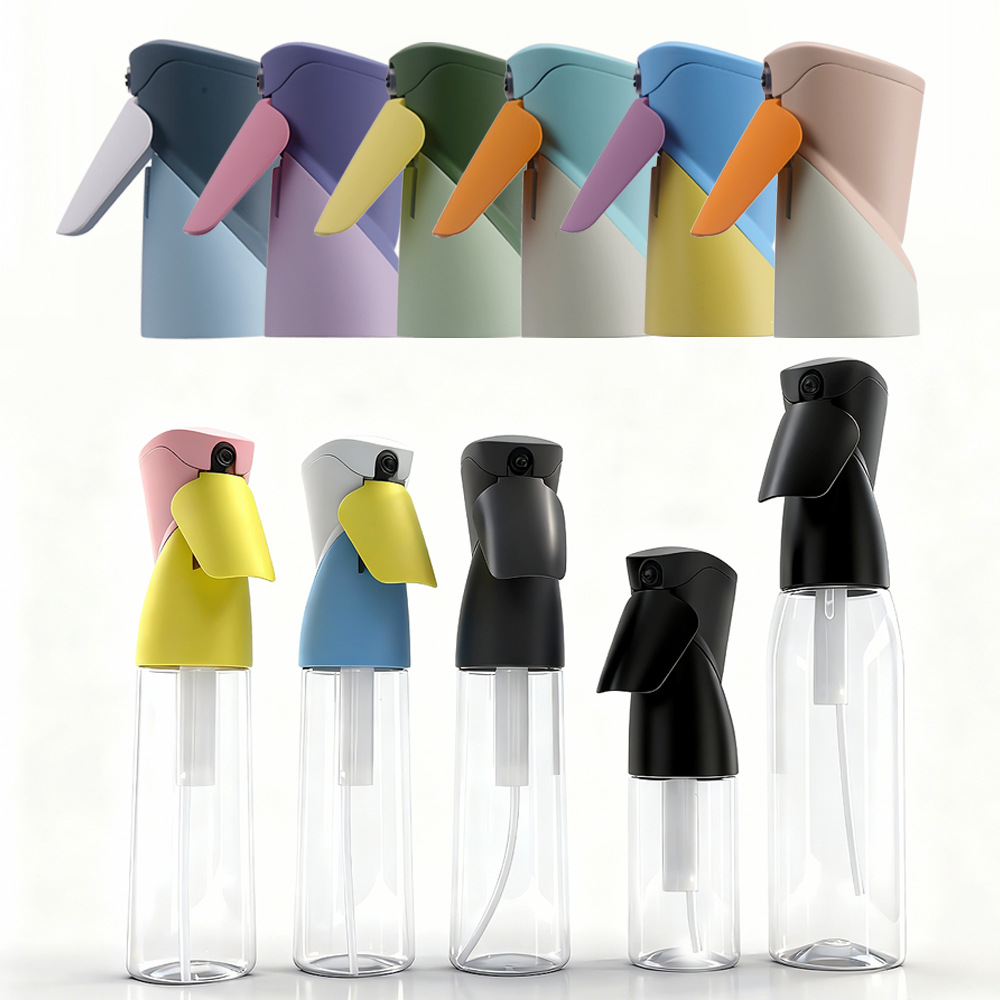
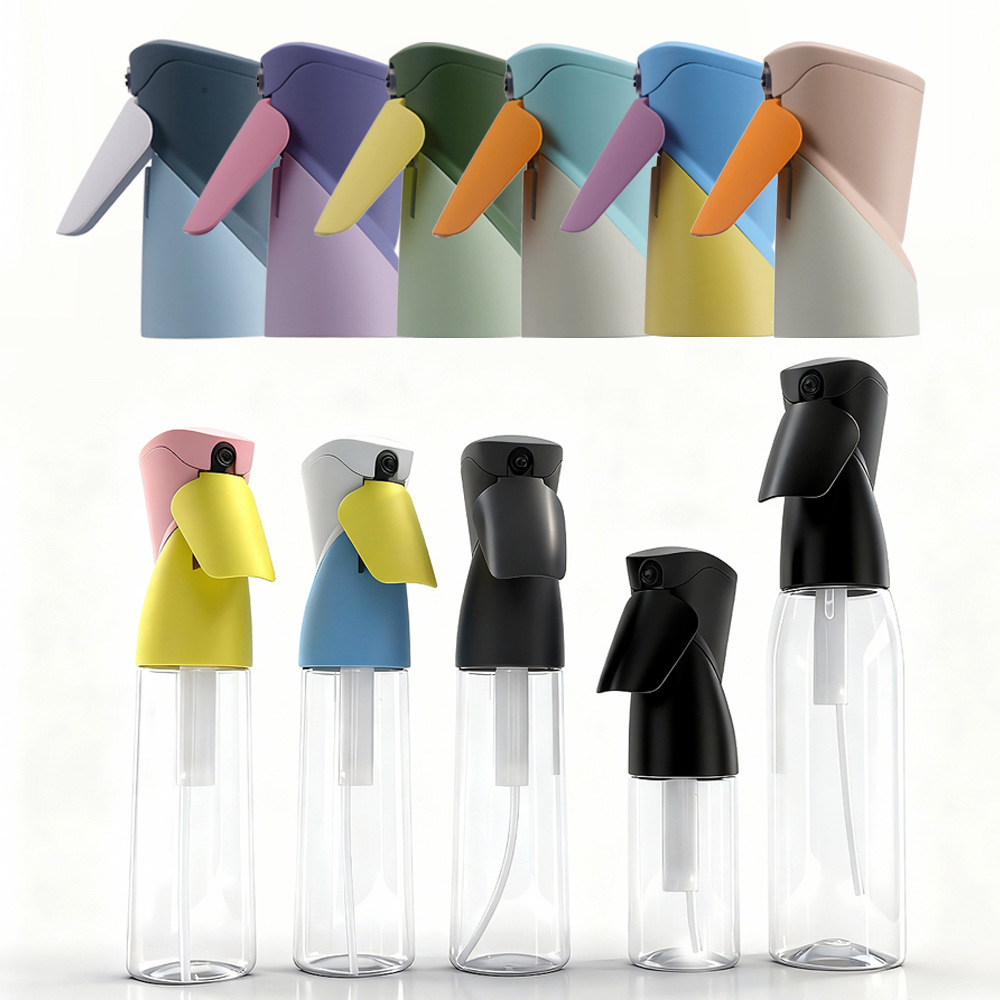
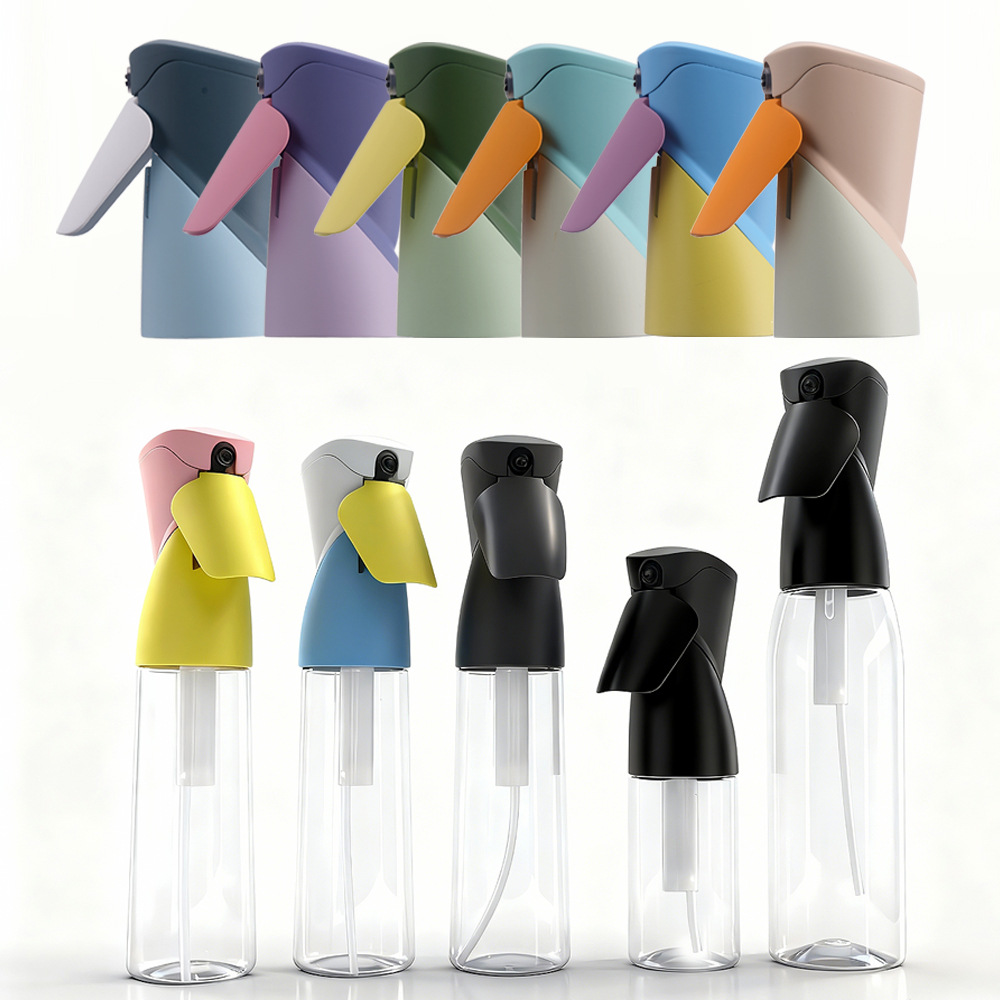
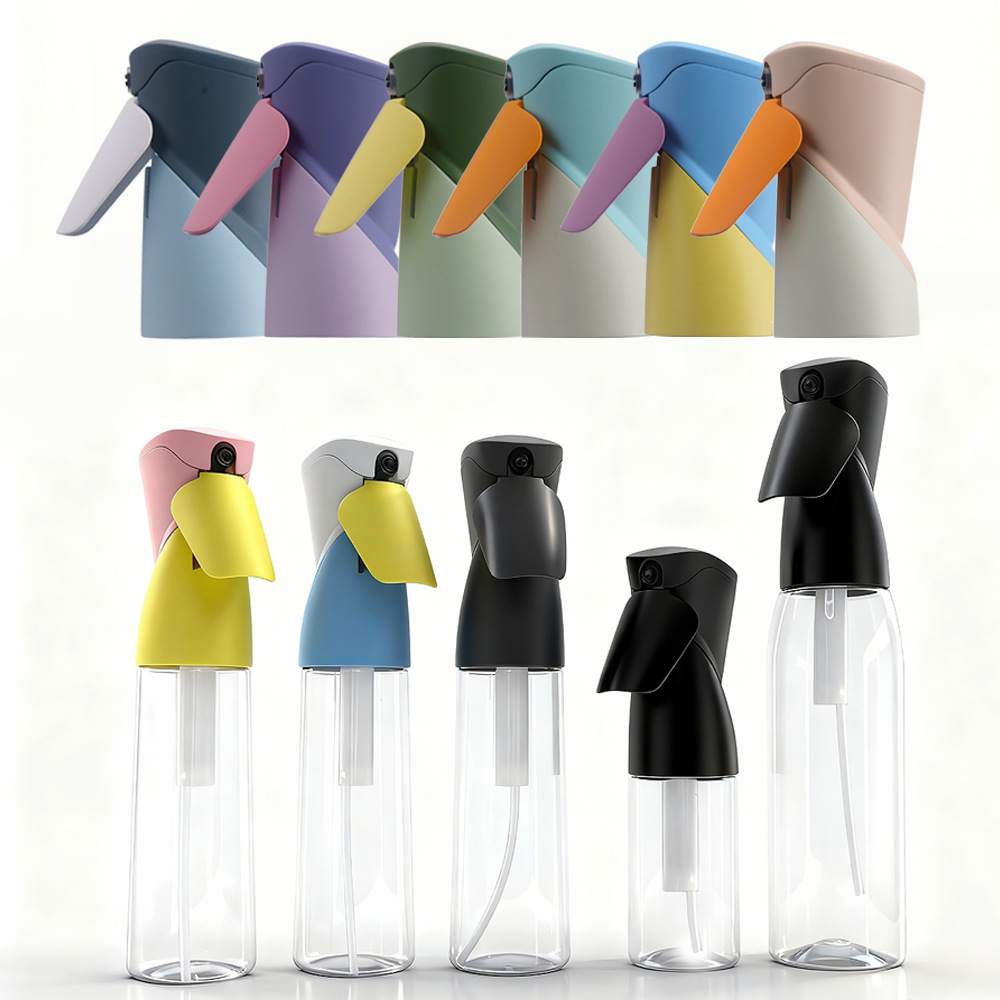
Desiky's 200ml continuous spray bottles in the Penguin and Slim Waist series deliver 6-12 seconds of ultra-fine mist per press — making every milliliter count. The continuous mist mechanism is particularly well-suited to small bottles because it delivers more coverage per pump than traditional trigger sprayers.
300ml Spray Bottles: The Everyday Sweet Spot
Best Use Cases
The 300ml spray bottle (approximately 10 fl oz) strikes an excellent balance between portability and capacity. It is the most popular size for personal care and kitchen applications, offering enough liquid for a full session without feeling bulky.
- Hair styling: The preferred size for most hairdressers and home users. A 300ml bottle holds enough water or styling product for a complete styling session (typically 50-80 sprays) while remaining comfortable for extended use.
- Kitchen oil spraying: Ideal for cooking oil sprayers. A 300ml bottle holds enough olive oil or cooking spray for weeks of daily cooking, and the moderate weight keeps it easy to handle near the stove.
- Facial and body mists: Popular for spa treatments, skincare routines, and sunscreen application. The 300ml size lasts longer than travel bottles without being too large for a bathroom shelf.
- Small to medium plant care: Sufficient for watering a collection of 5-10 small houseplants, with enough capacity to avoid mid-session refills.
Considerations
300ml is generally too small for full-room cleaning tasks or large garden areas. If your primary use is cleaning, the 500ml size offers a better capacity-to-ergonomics ratio. However, for personal care and kitchen use, 300ml is often the optimal choice — large enough to avoid constant refills but small enough for comfortable one-handed operation.
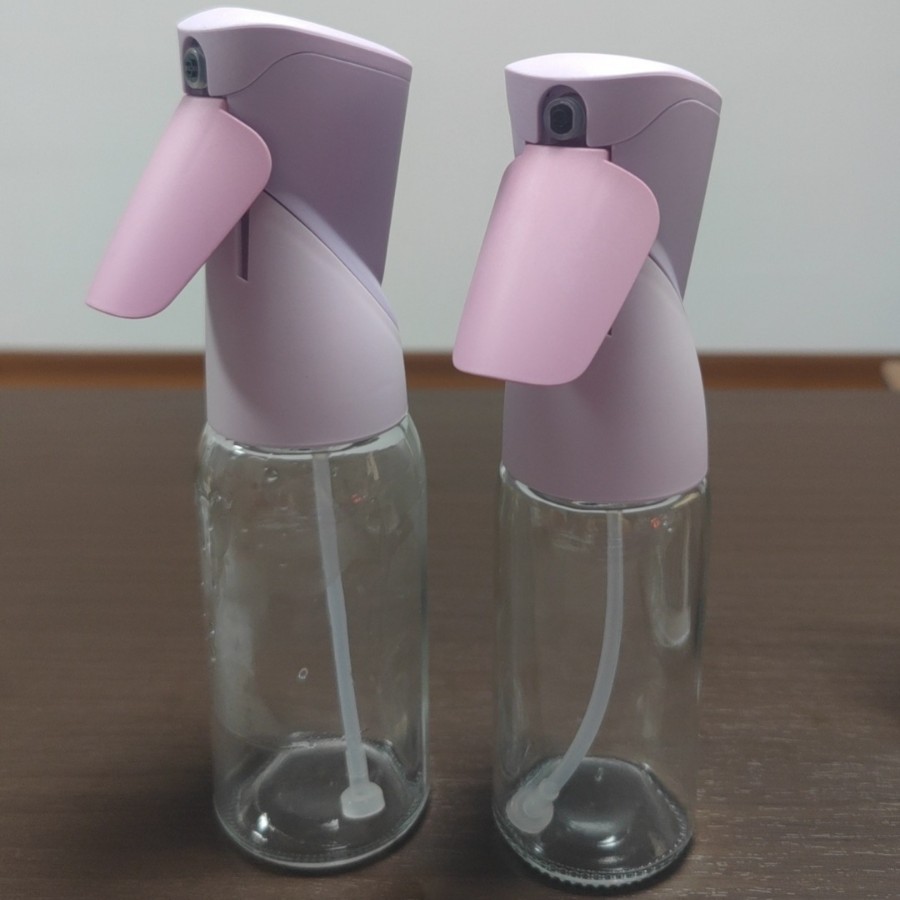
Desiky offers 300ml continuous spray bottles in both Penguin and Slim Waist designs. The Slim Waist series features a contoured grip that makes it especially comfortable for the 300ml size — wide enough to hold comfortably but narrow enough that most hands can wrap around it easily.
500ml Spray Bottles: The Universal Workhorse
Best Use Cases
The 500ml spray bottle (approximately 16.9 fl oz) is the industry standard for good reason. It offers the best all-around balance of capacity, weight, and versatility. According to industry data, 500ml is the most commonly purchased spray bottle size worldwide, accounting for roughly 40% of all spray bottle sales.
- Household cleaning: The go-to size for kitchen cleaners, bathroom sprays, glass cleaners, and all-purpose solutions. Most commercial cleaning products come in 500ml bottles because it provides enough solution for a full cleaning session.
- Professional salon use: Many professional hairdressers prefer 500ml for busy days when they are working with multiple clients. Fewer refills mean more time focused on clients.
- Gardening: Suitable for medium-sized gardens, herb gardens, and balcony plants. Holds enough water or liquid fertilizer for a thorough watering session.
- Automotive detailing: Popular for interior detailing sprays, glass cleaners, and wheel cleaners. The 500ml size fits conveniently in a detailing bucket or apron.
- Commercial and B2B applications: The most requested size for private-label and OEM spray bottles. Its versatility makes it suitable for multiple product lines from a single SKU.
Considerations
At 550g when full, a 500ml bottle is noticeably heavier than a 300ml bottle. For tasks requiring extended overhead spraying (like cleaning ceiling fans or tall windows), a lighter bottle may be more comfortable. If portability is a priority — for example, bottles that need to fit in a cleaning apron or tool belt — 300ml may be the better choice.
Desiky's 500ml continuous spray bottles are our most popular size for B2B customers. They feature an ergonomic design that distributes weight evenly, reducing hand fatigue during extended use. All sizes undergo 100% leak testing before shipment, ensuring zero-defect performance out of the box.
750ml Spray Bottles: Commercial Grade
Best Use Cases
The 750ml spray bottle (approximately 25.4 fl oz) moves firmly into commercial territory. At nearly 800g when full, this size prioritizes capacity over portability and is best suited for professional and commercial environments.
- Commercial cleaning: Janitorial services, hotel housekeeping, and office cleaning crews benefit from the extended capacity. Fewer refills mean faster room turnover.
- Large garden care: Suitable for medium to large gardens, greenhouses, and outdoor plant collections. Holds enough liquid fertilizer or pest control solution for comprehensive treatment.
- Automotive detailing (professional): Professional detailers working on multiple vehicles per day prefer larger bottles to minimize downtime.
- Industrial applications: Lubricant application, parts cleaning, and degreasing in workshop environments.
Considerations
Ergonomics become critical at 750ml. Look for bottles with contoured or textured grips, as the weight can cause hand fatigue during extended use. Trigger sprayers are generally preferred over pump sprayers at this size because the trigger mechanism distributes the effort across more hand muscles. If your application involves continuous use for more than 10 minutes at a time, consider whether a 500ml bottle with one refill might actually be more comfortable than a single heavy 750ml bottle.
1000ml Spray Bottles: Maximum Capacity
Best Use Cases
The 1000ml spray bottle (approximately 33.8 fl oz or 1 liter) is the largest standard spray bottle size. At over 1kg when full, it is designed for heavy-duty applications where capacity is the primary concern and the bottle remains relatively stationary.
- Industrial cleaning: Manufacturing floors, warehouse cleaning, and large facility maintenance.
- Landscaping: Large-scale plant treatment, pest control for outdoor areas, and greenhouse management.
- Commercial kitchens: Sanitizing solution bottles for food prep areas, where large-volume bottles reduce refill interruptions during busy service hours.
- Automotive workshops: Degreaser and brake cleaner application where bottles sit on workbenches rather than being carried around.
Considerations
At over 1kg, a full 1000ml bottle is too heavy for comfortable one-handed use by most people over extended periods. It is best suited for applications where the bottle sits on a surface and is picked up briefly for spraying, then set down again. For mobile applications, two 500ml bottles are often more practical than one 1000ml bottle.
How to Choose: A Decision Framework
Still not sure which size is right for you? Use this quick decision framework:
Step 1: Identify Your Primary Application
| Application | Recommended Size | Why |
|---|---|---|
| Travel / on-the-go | 200ml | TSA-compliant, ultra-portable |
| Hair care / personal care | 200ml - 300ml | Lightweight for extended one-handed use |
| Kitchen oil spraying | 200ml - 300ml | Moderate capacity, easy to handle near stove |
| Household cleaning | 500ml | Standard size, good capacity-to-weight ratio |
| Salon / professional hair | 300ml - 500ml | Balance of capacity and comfort |
| Garden / plant care | 500ml - 750ml | Enough capacity for full sessions |
| Commercial cleaning | 750ml - 1000ml | Maximum capacity, fewer refills |
| Industrial / workshop | 1000ml | Heavy-duty capacity for stationary use |
Step 2: Consider Your Usage Pattern
- How long is a typical session? Quick tasks (under 5 minutes) work fine with any size. Extended sessions (15+ minutes) need ergonomic considerations — do not go larger than you can comfortably hold.
- How often will you refill? If frequent refills disrupt your workflow, size up. If the bottle mostly sits on a shelf, size down for easier storage.
- Who will use it? Consider hand size and grip strength. Children, elderly users, and people with limited mobility benefit from smaller, lighter bottles.
- Where will it be stored? Measure your storage space. A 1000ml bottle may not fit in a standard cleaning caddy or under a bathroom sink.
Step 3: Factor In Spray Mechanism
The type of spray mechanism affects how efficiently each size performs:
- Trigger sprayers: Work well across all sizes. The trigger design distributes effort evenly and is comfortable even on larger bottles.
- Pump sprayers (fine mist): Best suited for 200ml-500ml. Larger pump bottles become tiring because the pump requires more finger pressure than a trigger.
- Continuous spray bottles: Excellent for 200ml-500ml. The pressurized mechanism delivers more coverage per pump, effectively making a smaller bottle perform like a larger one. A 300ml continuous spray bottle can cover the same area as a 500ml trigger sprayer in the same number of pumps.
Size Recommendations for Specific Industries
Hair and Beauty Industry
Professional hairdressers and beauty professionals should stock two sizes: 200ml and 300ml. Use 200ml for precision work like setting sprays and leave-in treatments. Use 300ml for general water misting and styling product application. A continuous spray bottle is particularly valuable in salon settings — the ultra-fine 360-degree mist covers hair evenly without the dripping and uneven coverage of traditional trigger sprayers.
Cleaning Products Industry
For private-label cleaning products, 500ml is the industry standard. It matches consumer expectations (most major cleaning brands use 500ml), fits standard shelf facings, and provides enough product for approximately 2-4 weeks of regular household use. For commercial cleaning lines, consider offering both 500ml and 750ml options.
Kitchen and Food Industry
Cooking oil sprayers perform best in 200ml-300ml sizes. Smaller bottles keep oil fresher (less air exposure), are easier to handle near hot cookware, and fit neatly in kitchen storage. Glass oil sprayers in these sizes offer the added benefit of not absorbing flavors and being easy to see the remaining oil level.
Garden and Plant Care
Home gardeners typically need 500ml for indoor plants and 750ml-1000ml for outdoor gardens. For indoor plant misting, a continuous spray bottle delivers a gentler, more uniform mist than trigger sprayers — reducing the risk of overwatering and leaf damage.
B2B Sizing Considerations
If you are sourcing spray bottles for your brand or business, size selection involves additional factors:
- Shipping costs: Larger bottles take up more space in containers and weigh more per unit. A 40-foot container holds approximately 25,000-30,000 units of 200ml bottles versus 12,000-15,000 units of 500ml bottles.
- MOQ impact: Most manufacturers set MOQs per SKU. Offering fewer size options means higher volume per SKU, which can unlock better pricing.
- Market testing: If launching a new product, start with 300ml or 500ml — the two sizes with broadest market appeal. Expand to other sizes once you have validated demand.
- Customization: Ensure your supplier can maintain consistent branding across different sizes. Desiky's OEM service supports custom colors, logos, and packaging across all size variants from a single production line.
Frequently Asked Questions
What is the most common spray bottle size?
The 500ml (16.9 oz) spray bottle is the most common size globally, accounting for roughly 40% of all spray bottle sales. It is the standard for household cleaning products and offers the best balance of capacity, weight, and versatility for general-purpose use.
What size spray bottle is best for hair?
For hair care and styling, 200ml to 300ml is ideal. These sizes are lightweight enough for extended one-handed use, easy to maneuver around the head, and hold enough water or product for a full styling session (typically 50-80 sprays). Professional stylists working with multiple clients may prefer 500ml to reduce refills.
What size spray bottle do I need for cleaning?
For household cleaning, 500ml is the standard recommendation. It holds enough solution for a complete cleaning session (kitchen, bathroom, or several rooms) without being too heavy. For commercial or professional cleaning, 750ml to 1000ml bottles reduce refill frequency during longer cleaning shifts.
What is the best spray bottle size for cooking oil?
For kitchen oil sprayers, 200ml to 300ml is optimal. Smaller bottles keep oil fresher by minimizing air exposure, are easier to handle near hot cookware, and fit neatly in kitchen storage. A glass oil sprayer in this size range is the best choice because glass does not absorb flavors and allows you to see the remaining oil level.
Can I use a large spray bottle for fine mist applications?
It depends on the spray mechanism. Standard pump sprayers become less comfortable in sizes above 500ml for fine mist applications because of the hand pressure required. Continuous spray bottles are an exception — they use a pressurized mechanism that delivers consistent fine mist regardless of bottle size, making them suitable for fine mist applications even in larger sizes.
How many sprays does a spray bottle hold?
The number of sprays depends on the spray mechanism and output per spray. A typical trigger sprayer delivers about 1-1.5ml per spray. A fine mist sprayer delivers about 0.5-1ml per spray. As a rough guide: a 300ml bottle delivers approximately 300-600 sprays, and a 500ml bottle delivers approximately 500-1000 sprays. Continuous spray bottles deliver more coverage per spray cycle due to the sustained mist output.
Conclusion
Choosing the right spray bottle size comes down to matching capacity with your specific use case, ergonomic needs, and practical constraints like storage space and refill frequency. For most users, the decision falls into a clear pattern: 200-300ml for personal care and kitchen use, 500ml for household and professional applications, and 750-1000ml for commercial and industrial tasks.
The spray mechanism matters too — a continuous spray bottle delivers more effective coverage per pump than traditional sprayers, which means you can often achieve the same results with a smaller bottle. This translates to better ergonomics, lower shipping costs (for B2B buyers), and a better user experience overall.
Need help choosing the right size for your product line or application? Desiky manufactures continuous spray bottles in 200ml, 300ml, and 500ml sizes with full OEM customization options. Contact our team for expert guidance and free samples.
Related Articles: Best Spray Bottle · Continuous vs Trigger Spray Comparison · How to Clean & Maintain Spray Bottles · Spray vs Pump vs Dropper Comparison