Professional auto detailers use 8 to 15 spray bottles daily — each filled with a different chemical, each requiring a specific spray pattern, and each demanding a bottle material that won't degrade, crack, or contaminate the product inside. The difference between a $0.50 generic spray bottle and a properly selected detailing bottle is the difference between a flawless finish and a paint correction nightmare.
As a spray bottle manufacturer supplying detailing brands worldwide, we've tested every bottle type against the most aggressive chemicals in the detailing arsenal — from pH 1 wheel acid to pH 14 all-purpose cleaners. This guide ranks all 7 spray bottle types for auto detailing, provides a chemical compatibility chart, and explains how to choose the right bottle for every step in a professional detail.
Why Auto Detailing Demands Better Spray Bottles
Detailing chemicals are far more aggressive than household cleaners. A standard PET spray bottle that handles glass cleaner for years will crack within weeks when filled with a solvent-based tar remover. Here is what makes detailing different:
- Chemical extremes: Detailing chemicals span pH 1 (acid wheel cleaner) to pH 14 (alkaline all-purpose cleaner), plus solvents, surfactants, and silicone-based dressings — most household bottles are designed for pH 5-9
- High-frequency use: A professional detailer triggers 500-1,000+ sprays per day — cheap pump mechanisms fail within weeks
- Precision matters: Interior dressing needs a fine mist (50-100 micron droplets), wheel cleaner needs a heavy stream, and ceramic coating prep needs an ultra-fine aerosol — one spray pattern does not fit all
- Chemical cross-contamination: Silicone from a tire dressing bottle can ruin a paint correction if it contaminates a compound bottle — material absorption is a real risk with cheap plastics
7 Spray Bottle Types for Auto Detailing — Ranked
1. Heavy-Duty HDPE Trigger Sprayer (Best All-Around)
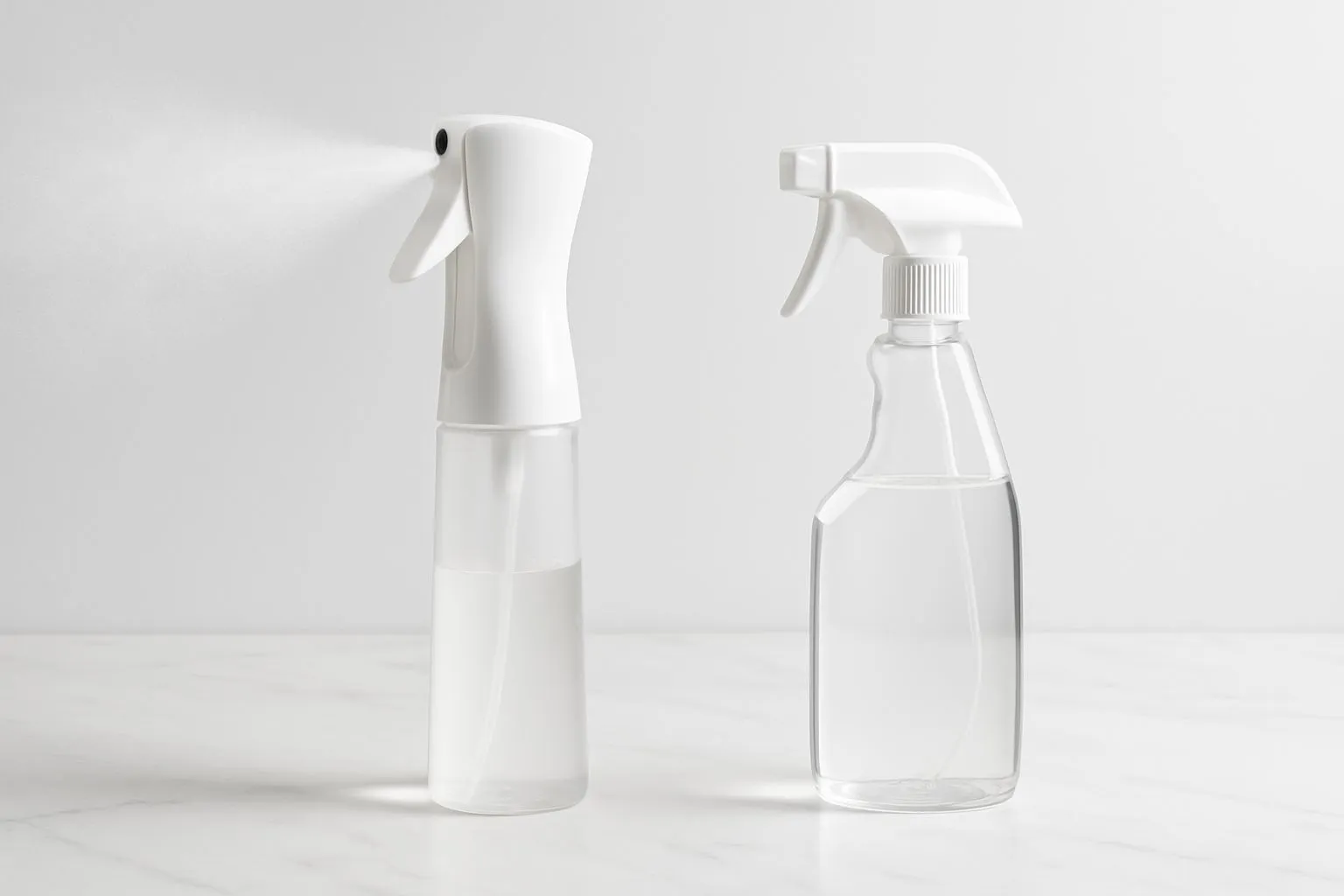
The workhorse of professional detailing. HDPE (high-density polyethylene) resists virtually every detailing chemical — acids, alkalis, solvents, and silicones. A quality trigger mechanism with a Viton or EPDM seal delivers 30,000+ sprays before failure.
| Feature | Specification |
|---|---|
| Material | HDPE bottle, PP trigger, Viton/EPDM seals |
| Chemical resistance | pH 1-14, most solvents, silicones |
| Spray pattern | Adjustable: stream to fan spray |
| Output per trigger | 1.0-1.4 ml |
| Best for | APC, wheel cleaner, degreaser, iron remover |
| Wholesale price | $0.80-$1.50 (bottle + trigger, FOB) |
Pro tip: Choose a trigger sprayer with a pre-compression mechanism — it builds full pressure before releasing, delivering a consistent spray pattern on every pull. Cheap triggers with no pre-compression dribble on the first squeeze.
2. Chemical-Resistant Spray Bottles with Measurement Markings
Dilution ratios matter in detailing. An APC at 10:1 is safe for interior plastic; the same APC at 4:1 can strip clear coat. Bottles with printed measurement markings (in ml and oz) eliminate guesswork and ensure consistent dilution every time.
Look for screen-printed markings, not stick-on labels — labels peel off within days when exposed to solvents and wet hands. Screen printing on HDPE costs only $0.05-$0.10 more per bottle and lasts the lifetime of the bottle.
3. Continuous Mist Spray Bottles (Best for Interior Detailing)
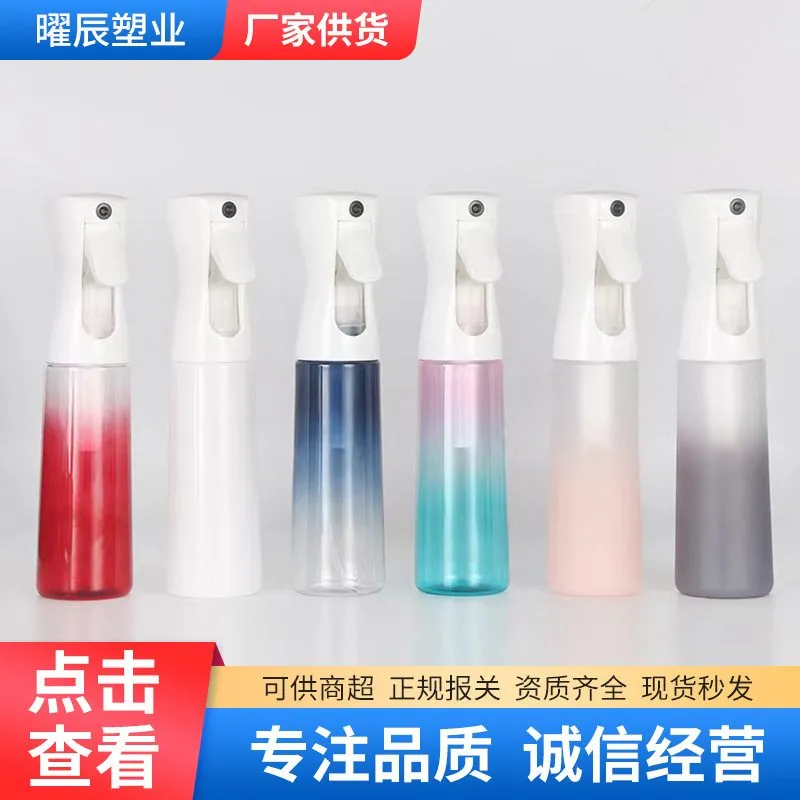
Continuous mist bottles deliver a sustained, ultra-fine mist (40-70 micron droplets) that settles evenly on surfaces without dripping or running. This makes them ideal for:
- Interior dressing — even coating on dashboards, door panels, and trim without over-application
- Quick detailer — fine mist distributes product evenly across paint before buffing
- Glass cleaner — mist prevents drips and runs on vertical surfaces
- Leather conditioner — controlled application prevents dark spots from over-saturation
Continuous mist bottles use a pressurized pump mechanism — 10-15 pumps to build pressure, then 3-5 seconds of sustained spray per trigger pull. They cost 2-3x more than standard triggers but the application quality is incomparable for finish work. See our continuous spray bottle range.
4. Foam Sprayer Bottles (Best for Pre-Wash)
Foam spray bottles generate thick, clinging foam that dwells on the surface and dissolves dirt before contact washing. In detailing, foam application is critical for:
- Pre-wash / snow foam — foam clings to vertical panels for 3-5 minutes of dwell time, softening dirt and reducing wash marring
- Wheel cleaning — foam stays on the wheel barrel and behind spokes instead of running off immediately
- Engine bay degreasing — foam reaches into crevices that liquid spray misses
Handheld foam bottles use a mesh screen to mix air and liquid at a 10:1 ratio, producing instant foam. For heavier foam, a foam pump sprayer with adjustable dilution is the professional choice.
5. Fine Mist Spray Bottles (Best for Ceramic Coating Prep)
Fine mist bottles produce the smallest droplet size (30-60 microns) — almost an aerosol. They are essential for:
- IPA (isopropyl alcohol) wipe-down — panel prep before ceramic coating or PPF, where even distribution is critical and drips can cause streaking under the coating
- Detail spray between polishing stages — light mist to lubricate the surface without flooding it
- Scent sprays and air fresheners — even distribution in the cabin
Material note: PET is rated good for isopropyl alcohol at room temperature, but HDPE or PP is the safer choice for IPA wipe-down bottles that sit in a hot garage or van. The seals matter more than the bottle. See can you put rubbing alcohol in a plastic spray bottle.
6. Pump Spray Bottles (Best for Heavy Chemicals)
Pump sprayers (like a hand-pump garden sprayer, scaled down to 1-2 liters) deliver high-volume, high-pressure spray for jobs where trigger sprayers are too slow:
- Tire and wheel cleaning — blast wheel wells and tire sidewalls quickly
- Engine bay wash — high pressure reaches tight spaces
- Large-surface APC application — cover a truck bed or SUV roof in seconds instead of trigger-spraying for minutes
Choose a pump sprayer with chemical-resistant seals (Viton, not rubber) and a brass or stainless nozzle — standard garden sprayer nozzles corrode quickly with acidic chemicals.
7. Squeeze Bottles (Best for Compounds and Polishes)
Not every product needs to be sprayed. Polishing compounds, cutting compounds, and paste waxes are applied as dots or lines directly onto pads or panels. Squeeze bottles with narrow-tip caps deliver precise, controlled amounts without waste.
For liquid compounds and polishes, a 250-500 ml HDPE squeeze bottle with a flip-top cap is the standard. For paste products, a wide-mouth jar with a screw lid is more practical.
Looking for a reliable spray bottle supplier?
Get free samples and a factory-direct quote within 12 hours.
Get a Free Quote →Chemical Compatibility Chart: Which Bottle Material for Which Chemical
This is the chart that prevents expensive mistakes. Using the wrong bottle material with aggressive detailing chemicals causes: cracking (stress corrosion), clouding (chemical attack), swelling (solvent absorption), and product contamination (chemical leaching from plastic into the product).
| Detailing Chemical | pH / Type | HDPE | PET | PP | Glass |
|---|---|---|---|---|---|
| All-Purpose Cleaner (APC) | pH 11-13 | ✅ Best | ⚠️ Short-term | ✅ Good | ✅ |
| Wheel Acid Cleaner | pH 1-3 | ✅ Best | ❌ Cracks | ✅ Good | ⚠️ Etches |
| Iron Remover / Fallout | pH 6-8 | ✅ Best | ✅ OK | ✅ Good | ✅ |
| IPA (Isopropyl Alcohol) | Solvent | ✅ Best | ✅ Good (avoid heat) | ✅ Good | ✅ |
| Tar & Glue Remover | Solvent | ✅ Best | ❌ Dissolves | ⚠️ Check | ✅ |
| Silicone Tire Dressing | Silicone | ✅ | ✅ | ✅ | ✅ |
| Ceramic Coating | Solvent | ✅ | ❌ | ⚠️ | ✅ Best |
| Quick Detailer | pH 7-9 | ✅ | ✅ | ✅ | ✅ |
| Glass Cleaner | pH 8-10 | ✅ | ✅ | ✅ | ✅ |
| Leather Conditioner | pH 5-7 | ✅ | ✅ | ✅ | ✅ |
Key takeaway: HDPE is the only material that safely handles every chemical in a detailer's arsenal. If you standardize on one bottle type, make it HDPE. PET looks clearer and more premium but fails with solvents, acids, and concentrated alkalis.
Color Coding System for Detailing Bottles
Professional detailers use color-coded bottles to prevent cross-contamination and speed up workflow. The most common system:
| Color | Chemical Category | Example Products |
|---|---|---|
| 🔴 Red | Wheels & tires | Wheel cleaner, tire dressing, iron remover |
| 🟢 Green | Interior | APC, interior dressing, leather cleaner |
| 🔵 Blue | Glass | Glass cleaner, rain repellent |
| 🟡 Yellow | Exterior paint | Quick detailer, spray wax, clay lube |
| ⚫ Black | Engine / heavy duty | Degreaser, tar remover, APC concentrate |
| ⚪ White | Dressing & protection | Trim dressing, ceramic booster, sealant |
Color-coded trigger sprayers (colored trigger on clear or translucent HDPE bottle) are the most popular format. We offer trigger sprayers in 8 colors — see our trigger sprayer collection.
Bottle Sizing for Auto Detailing
Detailing bottle sizes serve different functions:
- 500 ml (16 oz) — The standard for most spray products. Fits in a tool belt, easy to handle one-handed. Best for: quick detailer, glass cleaner, interior dressing.
- 750 ml (25 oz) — Popular in the UK and European markets. Slightly more capacity without adding bulk.
- 1,000 ml (32 oz) — Standard for APC, wheel cleaner, and high-consumption products. Professional shops typically stock 32 oz bottles.
- Refill gallon (3.8 L) — Concentrated products sold in gallon jugs for dilution into working bottles. Not sprayed directly.
How to Source Detailing Spray Bottles OEM
Detailing brands, car care distributors, and mobile detailing operators can source custom-branded spray bottles directly from the manufacturer at 30-50% below retail pricing:
- MOQ: 3,000 pcs for standard HDPE bottles with your choice of trigger color; 5,000 pcs for custom screen printing (logo + measurement markings)
- Customization: Bottle color, trigger color, nozzle type (adjustable, foam, fine mist), screen printing (up to 4 colors), and shrink-sleeve labeling
- Lead time: 15-25 days for standard molds, 30-45 days for custom shapes
- Sampling: Free samples of standard bottles; $50-$150 for custom-printed prototypes
Browse our trigger sprayer and continuous mist collections, or request custom samples for your detailing brand.
Related guides: Types of Spray Bottles — 6 Types Compared | HDPE vs PET vs Glass Materials | Parts of a Spray Bottle Explained