Whether you are misting delicate orchids on a windowsill or treating a half-acre vegetable garden for pests, the garden sprayer you choose can make or break the experience. The wrong sprayer means uneven coverage, aching hands, wasted product, and hours of extra work. The right one turns plant care into something almost effortless.
In this complete buyer's guide, we break down every type of garden sprayer on the market — from compact hand sprayers to heavy-duty pressure sprayers — and match each to the garden size and task it handles best. Whether you are a home gardener shopping for your first sprayer or a retailer sourcing garden sprayers for plants in bulk, this guide will help you make the right choice.
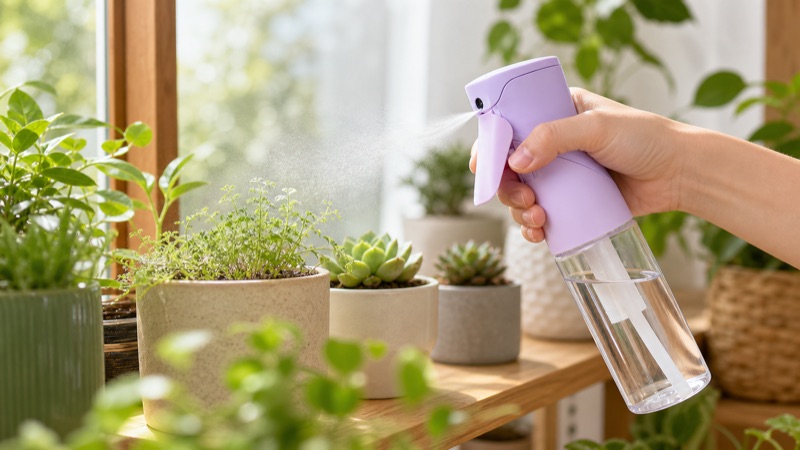
Key Takeaways
- Match sprayer type to garden size: continuous mist sprayers for indoor plants, trigger sprayers for small gardens, pump pressure sprayers for medium plots, and backpack sprayers for large areas.
- Spray nozzle type matters more than capacity — a fine mist nozzle protects delicate leaves while a flat fan nozzle covers ground quickly.
- Continuous spray bottles eliminate hand fatigue and deliver the most even coverage for misting tasks — ideal for plant care, foliar feeding, and humidity control.
- Maintenance is simple: flush with clean water after every use, and your sprayer will last for years.
- For bulk buyers: Desiky offers wholesale garden sprayers with custom branding, starting from low MOQs.
Types of Garden Sprayers
Not all garden sprayers are created equal. Each type is engineered for a specific range of tasks, capacities, and spray patterns. Understanding the differences will save you money and frustration.
1. Hand Trigger Sprayers
The most common and affordable type. A hand sprayer uses a simple squeeze-trigger pump mechanism to draw liquid from the bottle and push it through the nozzle. Most hold 500 mL to 1 liter of liquid and are best suited for spot treatments, small garden beds, and general household plant care.
Best for: Spot-treating pests, applying foliar fertilizer to individual plants, general cleaning, and light gardening tasks.
Limitation: Hand fatigue sets in quickly with repeated squeezing, and coverage can be uneven because each trigger pull produces a single burst rather than a sustained spray.
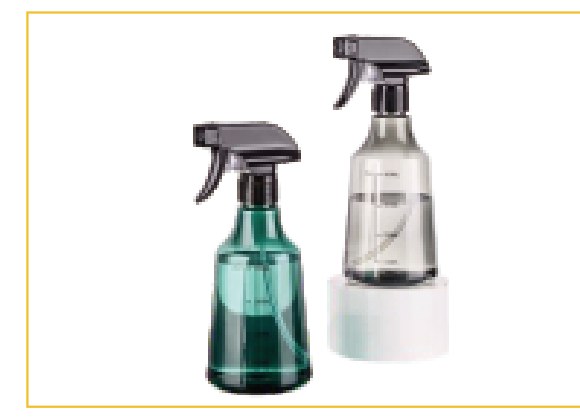
2. Continuous Mist Sprayers
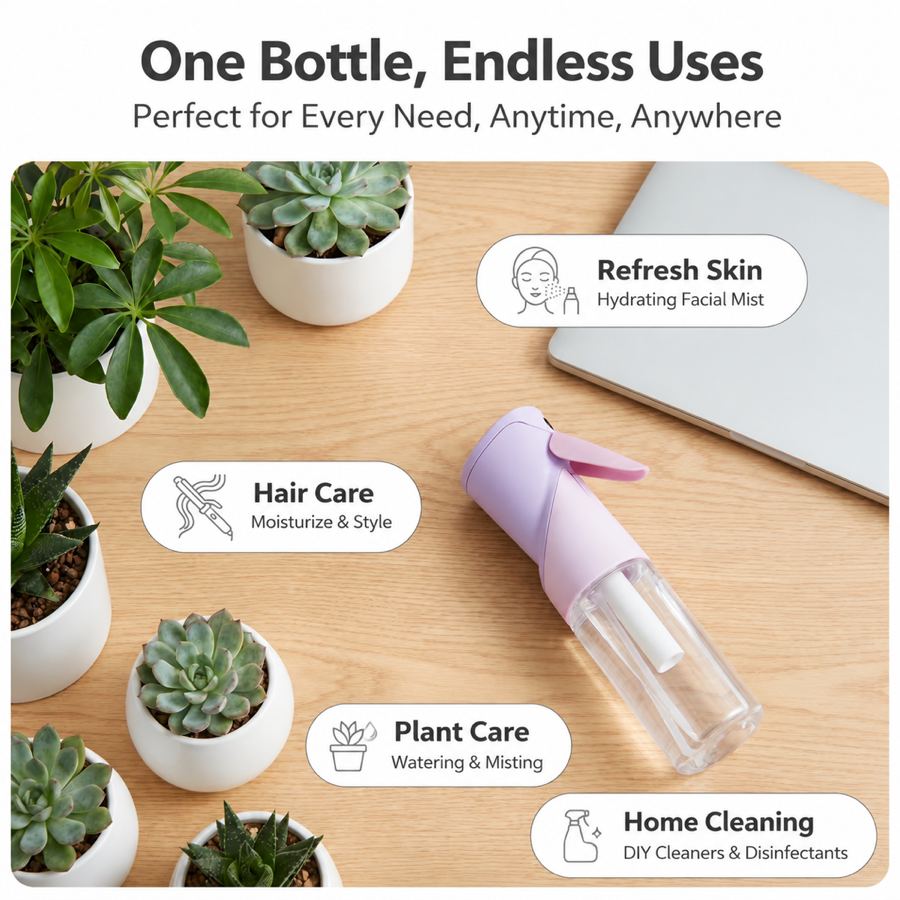
A continuous mist sprayer is a game-changer for plant care. Unlike a standard trigger sprayer that produces one burst per squeeze, a continuous sprayer uses a pressurized chamber to deliver a fine, uninterrupted mist that lasts 3 to 5 seconds per pump. This makes it far more efficient for misting leaves, applying even coats of liquid fertilizer, and maintaining humidity around tropical plants.
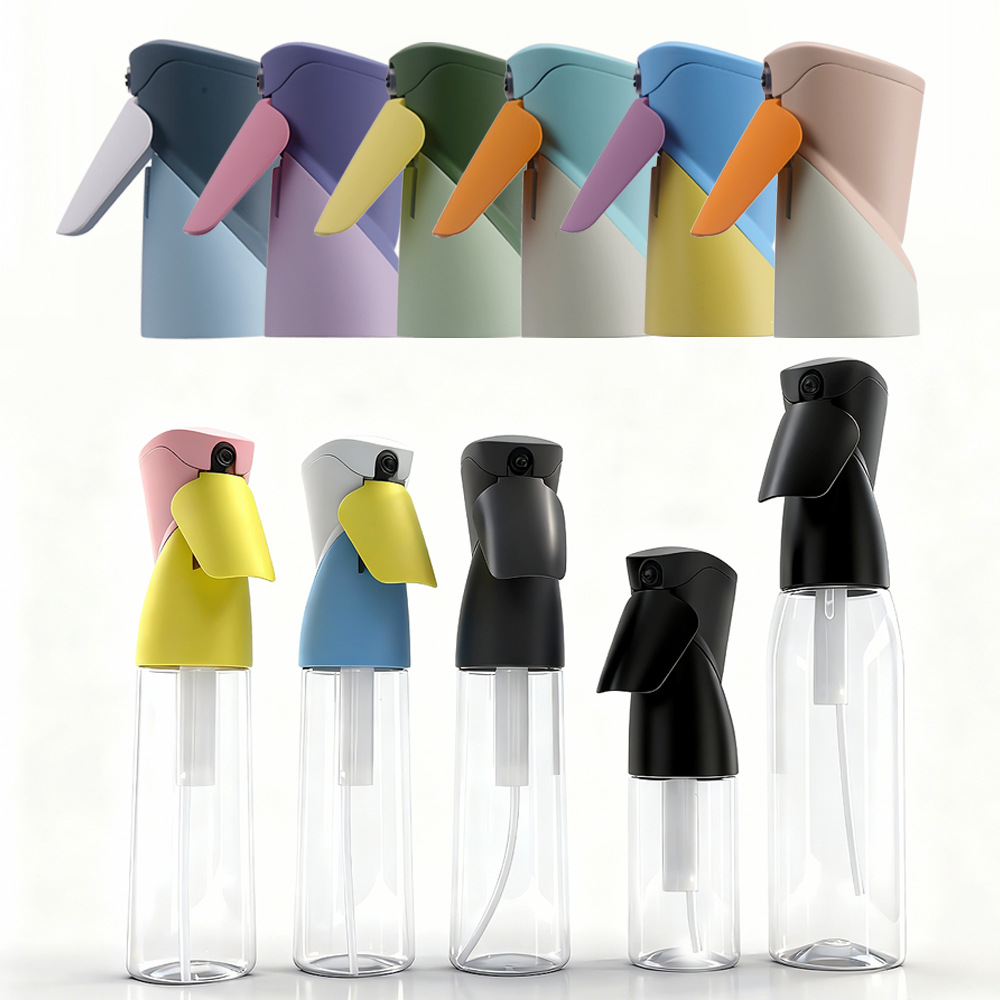
Desiky continuous spray bottles are among the most popular options in this category, offering ultra-fine 0.3 mm mist output in ergonomic designs like the Penguin and Slim Waist series. They are particularly effective as plant mister spray bottles — delivering salon-grade mist quality for home gardening.
Best for: Indoor plants, orchids, ferns, succulents, seedling trays, foliar feeding, humidity boosting, and any task where even, gentle coverage matters.
Limitation: Smaller capacity (typically 200–500 mL) means frequent refilling for large-area tasks.
3. Pump Pressure Sprayers
A pump garden sprayer (also called a compression sprayer) stores pressurized air in a sealed tank. You pump the handle 10 to 20 times to build pressure, then press a valve to release a continuous, hands-free spray. Most hold 1 to 8 liters, making them ideal for medium-sized gardens.
Best for: Applying herbicides, pesticides, and fertilizers over medium garden beds, lawns, patios, and fences.
Limitation: Pressure drops as the tank empties, so spray consistency varies. You need to stop and re-pump periodically.
4. Backpack Sprayers
For large gardens, orchards, and commercial applications, a backpack pressure sprayer is the professional choice. These units hold 12 to 25 liters, sit on your back like a backpack, and use either a manual lever pump or a battery-powered pump to maintain constant pressure.
Best for: Large-scale pest control, weed treatment across lawns and fields, tree spraying, and commercial landscaping.
Limitation: Heavy when full (a 20 L unit weighs over 20 kg), expensive, and overkill for small garden tasks.
Comparison Table: Garden Sprayer Types at a Glance
| Feature | Hand Trigger Sprayer | Continuous Mist Sprayer | Pump Pressure Sprayer | Backpack Sprayer |
|---|---|---|---|---|
| Capacity | 500 mL – 1 L | 200 – 500 mL | 1 – 8 L | 12 – 25 L |
| Spray Pattern | Single burst per squeeze | Continuous fine mist | Continuous stream/fan | Continuous stream/fan |
| Coverage Area | Individual plants | Small clusters, indoor | Medium garden beds | Large lawns, fields |
| Hand Fatigue | High (repeated squeezing) | Low (pressurized chamber) | Low (pump then spray) | Minimal (lever or battery) |
| Best Use Case | Spot treatment | Plant misting, foliar feed | Herbicide, pesticide | Commercial / large area |
| Price Range | $2 – $8 | $5 – $15 | $15 – $50 | $40 – $150+ |
| Durability | Moderate | High (fewer moving parts) | High | Very high |
How to Choose the Right Garden Sprayer
With so many options, how do you pick the best garden sprayer for your specific needs? Consider these five factors:
1. Garden Size
This is the single most important factor. A windowsill herb garden and a 500 m² lawn have completely different spraying needs:
- Indoor / balcony (under 10 plants): A continuous mist sprayer is ideal. Compact, precise, and no overspray.
- Small garden (10–50 plants): A trigger hand sprayer or a 1 L pump garden sprayer keeps things manageable.
- Medium garden (50–200 m²): A 3–5 L pressure sprayer with a shoulder strap covers ground efficiently.
- Large garden / lawn (200+ m²): A backpack sprayer is the only practical option for consistent coverage.
2. Plant Types
Delicate plants need gentle misting, while hardy shrubs can handle stronger streams:
- Orchids, ferns, tropicals: Ultra-fine mist from a continuous sprayer prevents water pooling on leaves, which can cause rot.
- Vegetables and herbs: Medium mist or cone spray for even foliar feeding without damaging tender leaves.
- Trees, hedges, lawn: Stream or flat fan pattern from a pressure sprayer for maximum reach and coverage.
3. Spray Pattern Needs
Different tasks call for different patterns. We cover this in detail in the nozzle types section below, but as a quick rule: choose a sprayer that either offers an adjustable nozzle or accepts interchangeable nozzle tips.
4. Capacity
Bigger is not always better. A larger tank means more weight. For plant misting and foliar feeding, a 300–500 mL continuous sprayer is perfect. For herbicide application across a large garden, anything under 3 liters will have you refilling constantly.
5. Ergonomics
If you will be spraying for more than a few minutes at a time, ergonomics matter enormously. Look for:
- Comfortable, non-slip grip
- Trigger lock or continuous spray mechanism to reduce hand fatigue
- Balanced weight distribution (especially for pressure and backpack sprayers)
- Shoulder strap or harness for units over 3 liters
This is where continuous spray bottles truly shine. Because the pressurized chamber does the work, you get a sustained mist from a single pump — dramatically reducing the repetitive squeezing that causes hand and wrist strain. Desiky's ergonomic continuous sprayers are specifically designed for comfortable, extended use.
Best Garden Sprayers by Use Case
Here are our top recommendations for the three most common garden spraying scenarios:
Best for Small Indoor Plants: Continuous Mist Sprayer
For houseplants, herb gardens, and seedling trays, nothing beats a continuous mist sprayer. The ultra-fine mist settles evenly on leaves without creating heavy droplets that drip and pool. It is the closest thing to natural morning dew you can create indoors.
Why it wins: One pump delivers 3–5 seconds of uninterrupted mist. No squeezing, no hand cramps, no uneven spots. Desiky continuous spray bottles produce a 0.3 mm micro-mist that is gentle enough for the most delicate orchid petals yet covers a wide area efficiently. They also work beautifully as plant misters for tropical plants that need regular humidity boosting.
Best for Medium Gardens: Trigger Hand Sprayer or Small Pressure Sprayer
A quality trigger hand sprayer with an adjustable nozzle handles most home garden tasks — fertilizer application, spot pest treatment, and watering hard-to-reach hanging baskets. For anything over 20 plants, step up to a 2–3 L pump garden sprayer for more efficient coverage.
Pro tip: Keep a dedicated continuous mist sprayer for your delicate plants and a separate trigger sprayer for pest treatments. Cross-contamination between fertilizers and pesticides is a common gardening mistake.
Best for Large Gardens: Pump Pressure Sprayer
For lawns, large vegetable plots, and perimeter pest control, a 5–8 L pressure sprayer with a wand and adjustable spray nozzle is the sweet spot. You get hands-free spraying, consistent pressure, and enough capacity to cover a medium lawn without refilling.
Pro tip: Choose a model with a pressure gauge so you can maintain consistent output. Too much pressure wastes product; too little gives spotty coverage.
Garden Sprayer Nozzle Types Explained
The spray nozzle is arguably the most important component of any garden sprayer. It determines the spray pattern, droplet size, coverage width, and application rate. Understanding nozzle types helps you choose the right one for each gardening task.
Stream / Jet Nozzle
Produces a narrow, concentrated stream of liquid. Best for reaching tall branches, treating individual weeds, and applying product to specific spots without overspray. Not ideal for broad coverage.
Cone Nozzle (Hollow and Full)
A hollow cone nozzle creates a ring-shaped pattern — good for pest control where you want coverage on leaf surfaces. A full cone nozzle fills the entire circle, delivering heavier application rates ideal for soil drenching and systemic treatments.
Flat Fan Nozzle
Produces a wide, flat spray pattern — like a curtain of liquid. This is the standard for herbicide application across lawns and garden beds. It gives even, overlapping coverage when you walk at a steady pace. Most pump pressure sprayers come with flat fan nozzles.
Fine Mist Nozzle
Creates an ultra-fine mist with tiny droplet size (under 100 microns). This is the nozzle type used in continuous mist sprayers and is perfect for foliar feeding, humidity boosting, and applying delicate treatments to sensitive plants. Desiky continuous spray bottles feature precision mist nozzles that produce a consistent 0.3 mm micro-mist — finer than most hand trigger sprayers can achieve.
Nozzle Comparison Table
| Nozzle Type | Pattern | Best Garden Use | Droplet Size |
|---|---|---|---|
| Stream / Jet | Narrow, focused | Spot treatment, tall plants | Large (500+ microns) |
| Hollow Cone | Ring-shaped | Pest control on foliage | Medium (150–300 microns) |
| Full Cone | Filled circle | Soil drench, systemic treatments | Medium-large (200–400 microns) |
| Flat Fan | Wide, flat curtain | Herbicide, broad coverage | Medium (150–300 microns) |
| Fine Mist | Wide, cloud-like | Misting, foliar feed, humidity | Very fine (50–100 microns) |
Pro Tip: Match Nozzle to Task
Using the wrong nozzle type is one of the most common gardening mistakes. A stream nozzle applying herbicide will miss spots and waste product. A fine mist nozzle applying systemic pesticide will drift in the wind. Always check the product label for recommended nozzle types and application rates.
Garden Sprayer Maintenance Tips
A well-maintained garden sprayer lasts for years. A neglected one clogs, corrodes, and fails within months. Here is how to keep yours in top condition:
After Every Use: Flush
This is the single most important maintenance step. After applying any product — fertilizer, pesticide, herbicide, or even plain water — flush the entire system with clean water:
- Empty any remaining product from the tank.
- Fill with clean warm water (about one-third capacity).
- Pump and spray through the nozzle until the water runs clear.
- Remove the nozzle and rinse separately under running water.
This prevents chemical residue from crystallizing inside the pump, dip tube, and nozzle — the number one cause of sprayer failure.
Monthly: Deep Clean
- Soak the nozzle, wand, and dip tube in a warm vinegar-water solution (1:3 ratio) for 30 minutes to dissolve mineral deposits.
- Inspect all seals and gaskets for cracks or wear.
- Apply a thin coat of food-grade silicone lubricant to O-rings and piston seals.
- Check the dip tube for kinks or cracks.
Seasonal: Winterize
If you live in a region with freezing winters, always winterize your sprayer before storage:
- Completely empty the tank, pump, and lines.
- Flush with clean water and spray until empty.
- Release all pressure from the tank.
- Store upside down or with the cap loosely on to allow any remaining moisture to evaporate.
- Store indoors or in a frost-free garage — never leave a sprayer outside in freezing temperatures. Frozen water expands inside the pump and cracks seals, valves, and housing.
Storage Tips
- Store in a cool, dry place away from direct sunlight (UV degrades plastic over time).
- Keep the nozzle clean and uncapped so air can circulate.
- Never store with chemicals inside the tank — even diluted solutions will leave residue.
Where to Buy Garden Sprayers in Bulk
If you are a retailer, garden center, or distributor looking to stock garden sprayers, sourcing directly from a manufacturer is the most cost-effective approach. Here is what to look for in a wholesale supplier:
- Product range: A manufacturer that offers continuous mist sprayers, trigger sprayers, and specialty bottles gives you flexibility to serve different customer segments.
- OEM / custom branding: Private label options let you sell under your own brand, building equity instead of reselling someone else's brand.
- Quality consistency: Factory-direct sourcing eliminates middleman quality issues. Ask for samples before committing to a large order.
- Low MOQ: Smaller retailers need suppliers willing to work with lower minimum order quantities, especially for initial test orders.
Desiky is a spray bottle manufacturer based in Yuyao, China — the world capital of spray bottle production. We supply continuous mist spray bottles that are perfect for plant care, gardening, salon, and household use. Our products are available for wholesale with custom branding, and our MOQ starts at just 2 units for stock products (full OEM customization from 3,000 units).
Whether you are stocking a garden center, launching a plant care brand, or supplying a chain of home improvement stores, contact our team for wholesale pricing, product samples, and custom packaging options.
Conclusion: Choosing Your Perfect Garden Sprayer
The best garden sprayer is not the most expensive one or the biggest one — it is the one that matches your specific garden size, plant types, and tasks. To summarize:
- Indoor plants and seedlings: A continuous mist sprayer delivers the gentlest, most even coverage with zero hand fatigue.
- Small to medium gardens: A quality trigger hand sprayer or a 2–3 L pump garden sprayer handles most home tasks efficiently.
- Large gardens and lawns: A 5+ L pressure sprayer or backpack unit is essential for consistent, large-area coverage.
No matter which type you choose, remember that the spray nozzle determines your results as much as the sprayer itself. Match your nozzle to the task, flush your sprayer after every use, and it will serve you for years.
Looking for high-quality spray bottles for your garden or retail business? Explore Desiky's continuous spray bottle collection — or get in touch for wholesale pricing and custom solutions.
Related Articles: How to Choose a Supplier on Alibaba · OEM Custom Manufacturing Guide · Samples Guide: Testing & Approval · Cosmetic Bottle Wholesale Guide