The global soap dispenser market is projected to reach $4.8 billion by 2027, driven by hygiene awareness and commercial facility upgrades. But for B2B buyers — distributors, hotel chains, facility managers, and private-label brands — the real challenge is not finding a dispenser. It is choosing the right type from a bewildering range of mechanisms, each with different cost structures, soap compatibility requirements, and end-user experiences.
This guide compares the 5 major types of soap dispensers side by side: foam pump, lotion pump, trigger spray, automatic sensor, and wall-mounted commercial units. We cover how each mechanism works, typical MOQ and unit costs, ideal applications, and the specifications you should include in your RFQ. Whether you are sourcing 5,000 units for a hotel chain or launching a private-label hand soap line, this is the definitive reference.
Quick Comparison: 5 Types of Soap Dispensers at a Glance
| Type | Mechanism | Soap Format | Cost/Unit (OEM) | Best For |
|---|---|---|---|---|
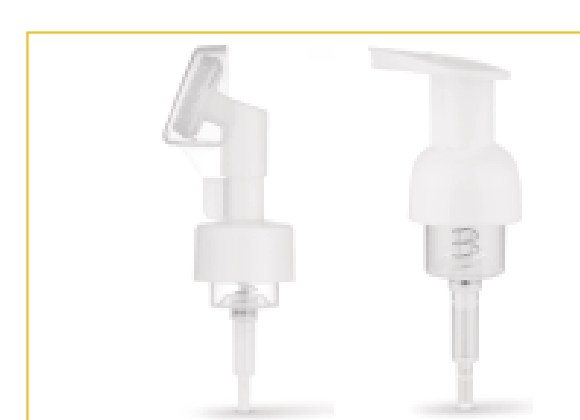
| Foam pump | Air-soap mixer + mesh screen | Diluted liquid (1:3-1:4) | $0.80-1.50 | Restrooms, hotels, hospitals |
| Lotion pump | Piston displacement | Viscous liquid, gel, lotion | $0.40-0.90 | Luxury bath, cosmetics, sanitizer |
| Trigger spray | Trigger lever + piston | Thin liquid, cleaning solutions | $0.50-1.20 | Kitchen, cleaning, industrial |
| Automatic sensor | IR sensor + motor-driven pump | Liquid or foam (cartridge) | $8.00-25.00 | High-traffic commercial, healthcare |
| Wall-mounted | Manual push or elbow lever | Bulk liquid or cartridge | $5.00-15.00 | Public restrooms, factories, schools |
Type 1: Foam Pump Dispensers — How They Create Foam
Foam pump dispensers are the fastest-growing category in commercial soap dispensing, and for good reason: they use 60-70% less soap per wash compared to lotion pumps while delivering a perceived "richer" hand-washing experience. For a deep technical dive into foam mechanisms, read our complete foam soap dispenser guide.
How a Foam Pump Works (Step by Step)
- Downstroke: Pressing the pump head compresses two chambers simultaneously — a soap chamber and an air chamber. The air-to-soap ratio is engineered at 8:1 to 10:1 by volume.
- Mixing: Soap and air merge in a mixing zone above the pump cylinder.
- Mesh filtration: The mixture is forced through 2-3 layers of nylon mesh (150-200 mesh count). Each layer breaks larger bubbles into smaller, more uniform ones.
- Dispensing: Dense, creamy foam exits through the nozzle — bubbles are typically under 0.5mm diameter.
- Return stroke: Releasing the pump creates negative pressure that draws fresh soap and air through one-way check valves.
Foam Pump Specifications for OEM Sourcing
- Output per stroke: 0.5-0.8ml of foam (0.05-0.08ml of concentrated soap)
- Mesh count: 150-200 (higher = finer foam, but higher clog risk)
- Cycle life: 15,000-30,000 actuations
- Neck finish: 30/410 or 43/410 (wider than standard spray bottles)
- Soap compatibility: Must use pre-diluted foaming soap or regular soap diluted 1:3 to 1:4 with water
Common mistake: Using undiluted liquid soap in a foam dispenser. It clogs the mesh within days. Always specify the correct dilution ratio on your product label.
Type 2: Lotion Pump Dispensers — For Viscous Products
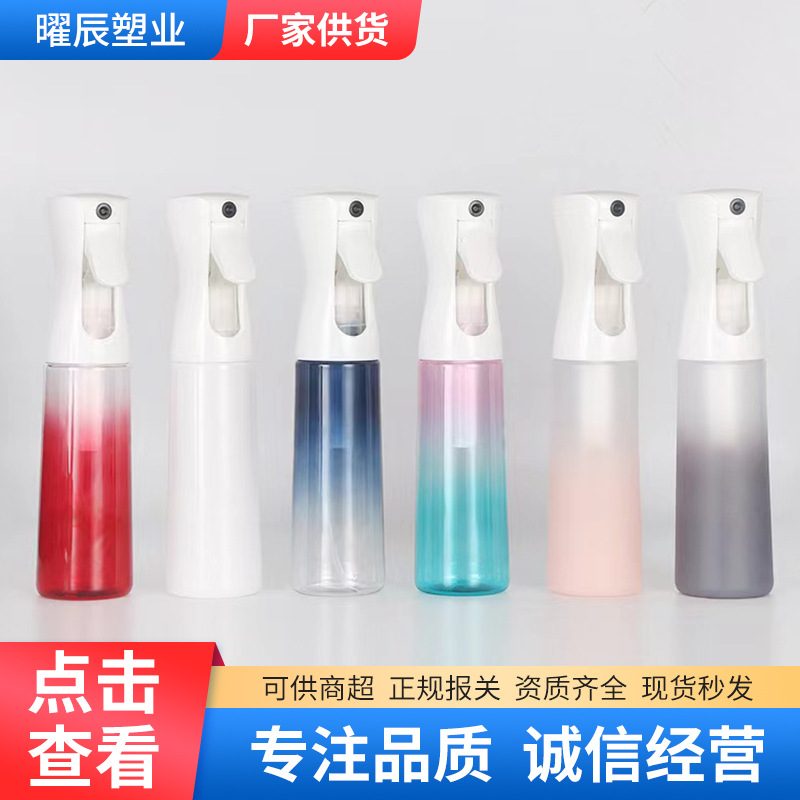
The lotion pump (also called a treatment pump or cream pump) is the oldest and most versatile dispenser type. It uses simple piston displacement to push viscous liquids upward through a spout — no air mixing, no mesh screens.
How a Lotion Pump Works
A lotion pump contains a piston inside a cylinder, connected to a spring-loaded actuator head. Pressing down moves the piston, increasing pressure inside the cylinder and forcing liquid up through the spout. Releasing allows the spring to return the piston, creating suction that draws more liquid up through the dip tube. Two check valves prevent backflow.
Key Specifications
- Output per stroke: 1.0-4.0ml (adjustable via piston diameter and stroke length)
- Viscosity range: Handles 500-50,000 cP (from thin liquid soap to thick lotions)
- Neck finish: 24/410 or 28/410 (standard sizes)
- Cycle life: 10,000-20,000 actuations
- Lock mechanism: Twist-to-lock prevents accidental dispensing during shipping
B2B advantage: Lotion pumps have the lowest per-unit cost ($0.40-0.90) of any dispenser type and work with the widest range of product viscosities. They are the default choice for hand soap, body wash, shampoo, conditioner, and hand sanitizer.
Type 3: Trigger Spray Dispensers — Maximum Coverage
Trigger sprayers are the workhorses of the cleaning industry. Unlike pump dispensers that deposit product directly on hands, trigger sprayers project a mist or stream over a surface area of 20-50cm diameter from 30cm distance.
How a Trigger Sprayer Works
The trigger operates as a Class 1 lever. Squeezing the trigger pulls a piston backward, creating suction that draws liquid up through the dip tube. Releasing the trigger lets the spring push the piston forward, pressurizing liquid through the nozzle. An adjustable nozzle tip lets users switch between fine mist, coarse spray, and focused stream.
Trigger Sprayer vs. Foam Pump: When to Choose Which
| Factor | Trigger Sprayer | Foam Pump |
|---|---|---|
| Application method | Spray onto surfaces | Dispense onto hands |
| Soap consumption | Higher (direct liquid) | 60-70% less |
| Coverage area | 20-50cm spray radius | Point dispensing only |
| Ideal use | Kitchen, bathroom cleaning | Handwashing, sanitizing |
| Output per stroke | 0.8-1.3ml | 0.5-0.8ml foam |
For businesses that need spray functionality, explore our continuous spray bottle collection — featuring pre-compression technology that eliminates the spitting and dripping common with standard trigger sprayers.
Type 4: Automatic Sensor Dispensers — Touchless Hygiene
Automatic soap dispensers use an infrared (IR) proximity sensor to detect hands and activate a motor-driven pump. Post-pandemic, touchless dispensers have become mandatory in many commercial settings — hospitals, restaurants, office buildings, and airports.
How Automatic Dispensers Work
- Detection: An IR LED emits infrared light. When a hand enters the detection zone (typically 5-8cm), reflected IR light hits the sensor, triggering the circuit.
- Dispensing: A small DC motor (3-6V) drives a gear pump or peristaltic pump that delivers a pre-measured dose.
- Dose control: Adjustable from 0.5ml to 2.0ml per activation. Some models offer dual-dose buttons.
- Power: 4×AA batteries (8-12 months at 100 uses/day) or USB-C rechargeable (newer models).
OEM Considerations
- Unit cost: $8-25 depending on materials, motor quality, and features
- MOQ: Typically 1,000-3,000 units (higher than manual dispensers due to electronics)
- Certifications: CE, FCC (for IR sensor electronics), RoHS
- Soap format: Liquid or foam cartridge (proprietary vs. universal refill is a key decision)
- Drip tray: Essential — automatic dispensers drip more than manual ones due to delayed shutoff
Cost-benefit analysis: At 100 uses per day, an automatic foam dispenser saves approximately $120/year in soap costs compared to a manual lotion pump (due to precise dose control and foam efficiency). The dispenser pays for itself in 2-3 months.
Type 5: Wall-Mounted Commercial Dispensers — Bulk Capacity
Wall-mounted dispensers are the standard in high-traffic commercial environments: public restrooms, hospital corridors, school bathrooms, factory washrooms, and restaurant kitchens. They mount to the wall and hold 800ml-1200ml of soap — 3-5× more than countertop dispensers.
Sub-Types
- Manual push-button: User presses a lever or button. Simple, reliable, lowest cost ($5-8). No batteries needed.
- Elbow-operated: Designed for medical and food-service settings where hands may be contaminated. Operated with forearm or elbow. $8-12 per unit.
- Automatic wall-mounted: Combines wall-mount capacity with touchless sensor. $15-25 per unit.
- Cartridge-based: Uses sealed, disposable soap cartridges that snap in — eliminates refill contamination. Higher per-wash cost but preferred in healthcare.
- Bulk-refill: Open-top reservoir that you fill from bulk soap containers. Lowest per-wash cost but requires cleaning between refills.
Specification Checklist for Commercial Buyers
- Capacity: 800ml (small restroom), 1000ml (standard), 1200ml (high-traffic)
- Material: ABS plastic (standard) or stainless steel 304 (vandal-resistant)
- Mounting: Screw-mount (permanent) or adhesive (rental properties)
- Viewing window: Translucent strip to check soap level without opening
- Key lock: Prevents unauthorized refill or theft in public settings
- Drip tray: Built-in or separate — required for all wall-mounted installations
How to Choose the Right Soap Dispenser Type (Decision Framework)
Use this decision tree to narrow down the right dispenser type for your project:
- What is the primary application?
- Handwashing → Foam pump or lotion pump
- Surface cleaning → Trigger sprayer
- Both → Consider stocking both types
- What is the installation environment?
- Countertop (home, hotel room) → Countertop foam pump or lotion pump
- Wall (public restroom, hospital) → Wall-mounted manual or automatic
- Mobile / portable → Trigger sprayer or small lotion pump
- What is the hygiene requirement?
- Standard → Manual pump
- Enhanced (post-pandemic, healthcare) → Automatic touchless
- Medical-grade → Elbow-operated or cartridge-based automatic
- What is the budget per unit?
- Under $1 → Lotion pump or foam pump
- $1-10 → Trigger sprayer, premium foam pump, basic wall-mount
- $10-25 → Automatic sensor, premium wall-mount
Soap Dispenser Materials: What B2B Buyers Should Specify
The dispenser housing material affects durability, aesthetics, and cost:
| Material | Durability | Aesthetic | Cost | Best For |
|---|---|---|---|---|
| PP (Polypropylene) | Good | Matte, solid colors | $ | Standard countertop dispensers |
| PET | Good | Crystal clear, glossy | $$ | Visible soap level, beauty brands |
| ABS | Excellent | High-gloss or matte | $$ | Wall-mounted commercial units |
| Stainless Steel 304 | Superior | Premium, brushed or polished | $$$ | Hotels, luxury retail, vandal-prone |
| Glass | Fragile | Premium, transparent | $$ | Boutique hotels, home decor brands |
Need help selecting the right material and customization for your dispenser project? Visit our OEM customization page or contact our team for a free consultation and samples.
Frequently Asked Questions
What are the different types of soap dispensers?
There are 5 main types: (1) Foam pump dispensers that mix air with diluted soap through mesh screens to create foam; (2) Lotion pump dispensers that use piston displacement for viscous liquids; (3) Trigger spray dispensers that project mist or stream onto surfaces; (4) Automatic sensor dispensers with IR proximity detection for touchless operation; and (5) Wall-mounted commercial dispensers for high-traffic environments with 800-1200ml capacity.
How do soap dispensers work?
All manual soap dispensers work on the same basic principle: a spring-loaded piston creates pressure changes inside a cylinder. Pressing the actuator increases pressure, forcing soap out. Releasing creates suction that draws more soap up through the dip tube. Check valves prevent backflow. The key difference between types is what happens at the exit — foam pumps add air and mesh filtration, lotion pumps have a simple spout, and trigger sprayers use a nozzle to create spray patterns.
What is the best soap dispenser for commercial use?
For most commercial settings, a wall-mounted automatic foam dispenser offers the best combination of hygiene (touchless), economy (foam uses 60-70% less soap), and capacity (1000ml+). For healthcare, choose cartridge-based systems to prevent refill contamination. For budget-conscious projects, manual wall-mounted foam dispensers at $5-8 per unit deliver 80% of the benefits at 30% of the cost of automatic units.
What is the difference between a foam dispenser and a regular soap dispenser?
A foam dispenser has an air chamber and 2-3 layers of mesh screen (150-200 count) that mix air with diluted soap at an 8:1 to 10:1 ratio, creating pre-lathered foam. A regular (lotion pump) dispenser simply pushes undiluted liquid soap through a spout with no air mixing. Foam dispensers use 60-70% less soap per wash, create less mess, and feel more luxurious — but require pre-diluted foaming soap or regular soap diluted 1:3-1:4 with water.
How much does it cost to source soap dispensers OEM?
OEM pricing varies by type: foam pumps $0.80-1.50/unit, lotion pumps $0.40-0.90/unit, trigger sprayers $0.50-1.20/unit, automatic sensor dispensers $8-25/unit, and wall-mounted commercial units $5-15/unit. MOQ is typically 3,000-5,000 for manual dispensers and 1,000-3,000 for automatic units. Custom colors add $0.05-0.10/unit, logo printing $0.03-0.08/unit, and custom molds $3,000-8,000 one-time. Contact us for a detailed quote.