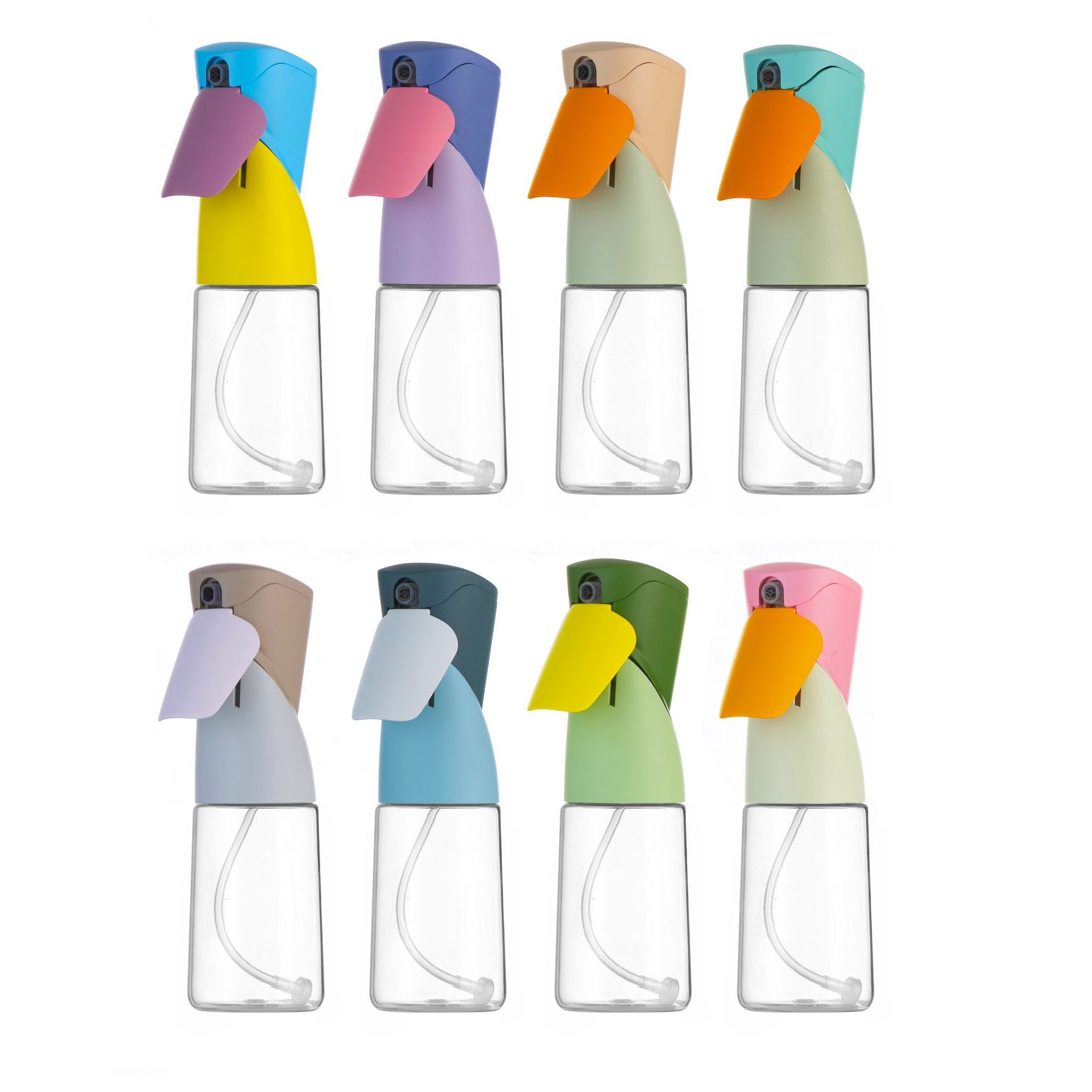
If you have ever held a spray bottle, you have interacted with a surprisingly complex piece of engineering. A typical trigger spray bottle contains 7-12 individual components, each with its own material specification, tolerance requirement, and failure mode. Understanding the parts of a spray bottle is not academic trivia — it is the foundation of smart B2B purchasing. When you know what each component does and what materials it should be made from, you can write better specifications, evaluate supplier quality, and avoid the costly mistakes that come from treating spray bottles as generic commodities.
At Desiky, we manufacture over 5 million spray bottles per month across 53 SKUs. In this guide, we break down every component of a spray bottle, explain the engineering behind each part, and share the material and quality benchmarks that separate a 3-month bottle from a 3-year bottle.
Overview: The 7 Core Parts of a Spray Bottle
Every spray bottle — whether it is a cleaning trigger sprayer, a continuous mist spray bottle, or an oil sprayer — shares the same fundamental component architecture. Here is the complete list:
| Part | Primary Material | Function | Failure Point |
|---|---|---|---|
| 1. Trigger / Actuator | PP (Polypropylene) | Converts hand squeeze into pump action | Cracking after 8,000-10,000 cycles |
| 2. Nozzle / Spray Head | PP or POM | Shapes liquid into mist, stream, or foam | Clogging from mineral deposits |
| 3. Piston & Cylinder | PP + PE gasket | Creates pressure to expel liquid | Seal wear → loss of suction |
| 4. Spring | Stainless steel 304 | Returns piston to ready position | Fatigue / corrosion with chemicals |
| 5. Dip Tube | PE or PP | Draws liquid from bottom of bottle | Cracking, improper length |
| 6. Check Valves (×2) | PE or silicone | Prevent backflow, maintain prime | Deformation → air leaks |
| 7. Bottle Body | PET, HDPE, or PP | Contains liquid, provides structure | Stress cracking with solvents |
Let us examine each part in detail.
1. Trigger Mechanism — The Heart of the Spray Bottle
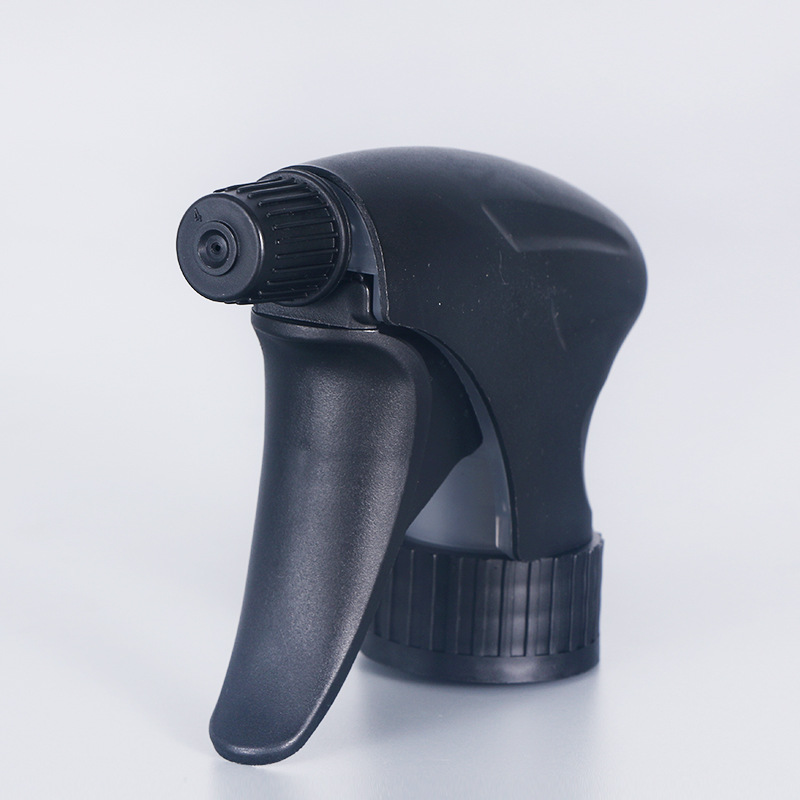
The trigger (also called the actuator or lever) is the part your hand squeezes. It is a Class 1 lever that converts finger force into piston displacement. A well-designed trigger requires 15-25 Newtons of force (about 1.5-2.5 kg) — enough to feel responsive without causing hand fatigue during extended use.
Engineering Specifications
- Material: Injection-molded PP (Polypropylene), MFI 12-25 g/10min
- Wall thickness: 1.2-1.8mm for structural integrity
- Cycle life: Minimum 10,000 actuations (premium: 30,000+)
- Ergonomic radius: 18-22mm finger contact surface
B2B sourcing tip: Ask your supplier for cycle test reports. At Desiky, every trigger mold is tested to 50,000 cycles before production approval. The trigger is the #1 component that determines perceived quality — a flimsy trigger makes an otherwise good bottle feel cheap.
2. Nozzle / Spray Head — Where Precision Happens
The nozzle is the exit point for liquid. It contains a swirl chamber (for mist patterns) or a straight bore (for stream patterns). Many bottles include an adjustable nozzle that rotates between OFF, MIST, and STREAM settings.
Nozzle Types by Application
- Fine mist nozzle: 0.3-0.5mm orifice, produces droplets of 50-100 microns — ideal for hair care and plant misting
- Standard spray: 0.5-0.8mm orifice, 100-300 micron droplets — general cleaning
- Stream nozzle: 1.0-1.5mm orifice — targeted application, degreasing
- Foam nozzle: Includes mesh screen — used in foam soap dispensers and car wash bottles
Our continuous spray bottles use a patented pre-compression nozzle that maintains consistent 60-80 micron droplet size across the entire spray duration — no spitting, no dripping.
3. Piston & Cylinder Assembly — The Pressure Engine
The piston and cylinder assembly is the pump's core. When you pull the trigger, the piston moves backward inside the cylinder, creating negative pressure that draws liquid up through the dip tube. When you release, the spring pushes the piston forward, pressurizing the liquid and forcing it through the nozzle.
Critical Specifications
- Cylinder bore: 8-12mm diameter (larger = more output per stroke)
- Stroke length: 15-22mm
- Output per stroke: 0.8-1.3ml for standard triggers, 0.3-0.5ml for fine mist
- Seal material: PE (polyethylene) gasket or NBR rubber O-ring
The piston-cylinder fit is measured in microns. A gap larger than 0.05mm causes air leaks and loss of suction. This is why injection mold precision matters enormously — and why cheaper bottles from low-quality manufacturers often fail after a few hundred uses.
4. Spring — The Return Force
The spring is the only metal component in most spray bottles. It returns the piston to its starting position after each squeeze, ready for the next stroke. Spring quality directly affects:
- Trigger feel: Too stiff = hand fatigue; too soft = incomplete return
- Cycle life: A good spring maintains consistent force for 30,000+ cycles
- Chemical resistance: Must resist corrosion from cleaning chemicals, essential oils, acidic liquids
Material Options
| Spring Material | Corrosion Resistance | Cost | Best For |
|---|---|---|---|
| Stainless Steel 304 | Excellent | $$$ | Cleaning chemicals, essential oils |
| Stainless Steel 302 | Good | $$ | General purpose, water-based liquids |
| Carbon Steel (plated) | Fair | $ | Budget bottles, non-corrosive liquids only |
Buyer warning: Many budget spray bottles use carbon steel springs with zinc plating. These corrode within 3-6 months when used with acidic cleaners (vinegar, citrus) or essential oils. Always specify SS304 springs for professional-grade bottles. For a deeper dive into material selection, see our guide on HDPE vs PET vs PP plastic comparison.
5. Dip Tube — The Liquid Lifeline
The dip tube (also called a siphon tube or straw) is the long, thin tube that extends from the pump mechanism down to the bottom of the bottle. It draws liquid upward using the suction created by the piston.
Key Specifications
- Material: LDPE (Low-Density Polyethylene) or PP
- Outer diameter: 5-7mm
- Inner diameter: 3-5mm
- Length: Must be cut to reach within 5-10mm of the bottle bottom — too short and you waste product; too long and it kinks
- Bottom cut: Angled at 45° to prevent sealing against the bottle floor
Common problem: A dip tube that is 15mm too short means you cannot use the last 10-15% of liquid in the bottle. When sourcing wholesale, always verify dip tube length matches your specific bottle height. At Desiky, every dip tube is pre-cut to the exact bottle model.
6. Check Valves — The One-Way Gates
Most spray bottles contain two check valves (also called one-way valves or non-return valves):
- Inlet check valve: At the bottom of the cylinder, allows liquid in during the suction stroke, prevents backflow during compression
- Outlet check valve: At the top of the cylinder / base of the nozzle, opens under pressure to let liquid out, closes to maintain prime
Check valves are typically small PE balls or silicone flaps sitting against a seat. Their function is binary — they either work or they don't. When a check valve fails, you get symptoms like: bottle won't spray, liquid drips back into the bottle, or you need to pump 10-15 times to re-prime. Our continuous vs. regular spray bottle comparison explains how continuous mist bottles use a pre-compression chamber that eliminates many check valve issues.
7. Bottle Body — The Container
The bottle body is the largest component and the one most visible to end users. Material choice here affects chemical compatibility, clarity, weight, and recycling.
Bottle Material Comparison
| Material | Clarity | Chemical Resistance | Weight | Recycling Code | Best For |
|---|---|---|---|---|---|
| PET | Crystal clear | Moderate | Light | #1 | Beauty, personal care, visible fill level |
| HDPE | Opaque/translucent | Excellent | Medium | #2 | Cleaning chemicals, industrial |
| PP | Semi-translucent | Good | Light | #5 | High-temp sterilization, food contact |
| Glass | Crystal clear | Excellent | Heavy | N/A | Essential oils, luxury products |
Critical consideration: Not all plastics are compatible with all liquids. Essential oils, for example, will crack PET bottles within weeks. Strong solvents attack PP. Always conduct a 30-day compatibility test with your actual product before committing to a bottle material. Visit our customization page to discuss material compatibility for your specific application.
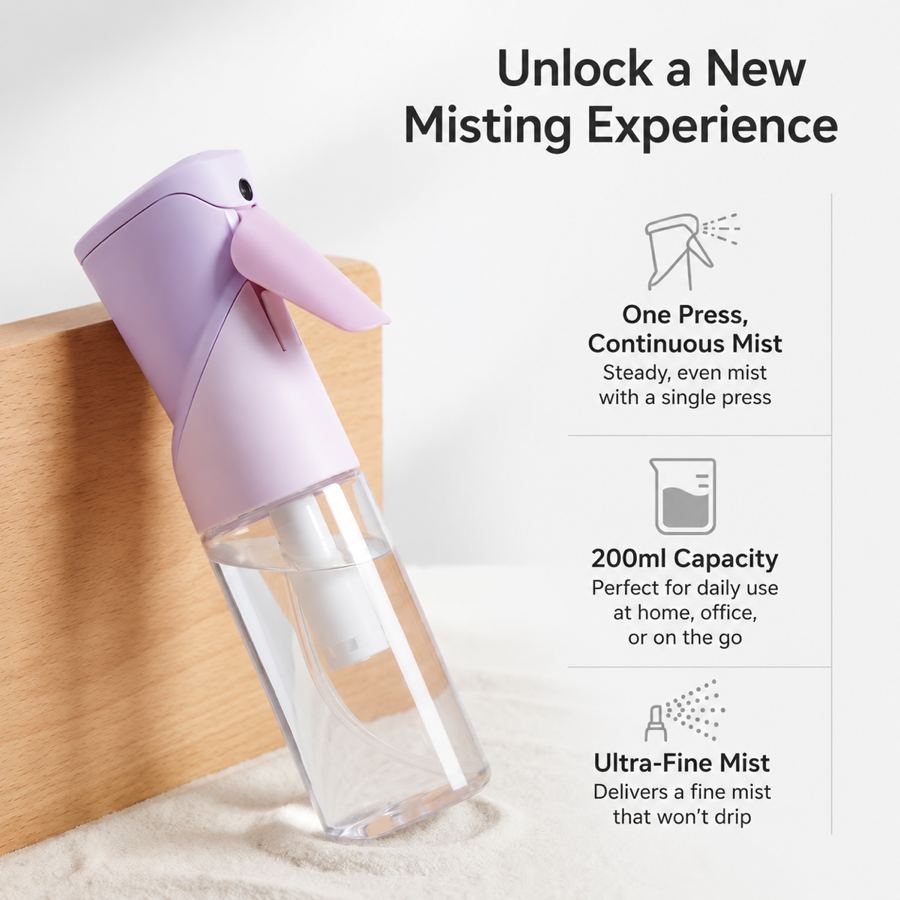
Secondary Components: Gaskets, Closures & Labels
Beyond the 7 core parts, several secondary components complete a spray bottle:
- Neck gasket / seal: Sits between the pump collar and bottle neck. Prevents leaks. Made from PE foam or silicone. Must match the neck finish exactly (e.g., 28/410, 24/410).
- Closure / dust cap: Covers the nozzle during shipping and storage. Prevents accidental discharge and contamination.
- Shrink band: Tamper-evident seal around the pump collar. Required for retail products in most markets.
- Label area: Flat panel on the bottle body designed for adhesive labels or direct printing. Minimum 60×80mm for regulatory compliance text.
How Spray Bottle Components Differ by Type
While all spray bottles share the same basic parts, the specific engineering varies significantly by bottle type:
| Bottle Type | Key Component Differences | Typical Output |
|---|---|---|
| Trigger sprayer | External trigger lever, larger piston (10-12mm) | 1.0-1.3ml per stroke |
| Continuous mist | Pre-compression chamber, dual-action pump | 0.3-0.5ml per stroke, 3-5 sec spray |
| Fine mist (pump) | Finger-press actuator, smaller piston (8-9mm) | 0.10-0.15ml per stroke |
| Foam pump | Air chamber + mesh screen (no nozzle orifice) | 0.5-0.8ml foam per stroke |
| Oil sprayer | Pressurized reservoir, one-way air valve | 0.1ml per second, continuous |
What to Specify When Sourcing Spray Bottle Components (B2B Checklist)
When placing a wholesale order, specify these parameters for each component:
- Trigger: Material (PP grade), color (Pantone), cycle life requirement
- Nozzle: Spray pattern (mist/stream/adjustable), output per stroke (ml), spray angle
- Spring: Material (SS304 mandatory for chemical products), wire diameter
- Dip tube: Length (matched to bottle height), material (LDPE or PP)
- Bottle body: Material (PET/HDPE/PP), capacity (ml), neck finish (28/410, 24/410), color, wall thickness
- Closure/cap: Style, color, tamper-evident band (yes/no)
- Compatibility testing: Request 30-day soak test with your actual product formulation
Need help specifying the right components for your application? Contact the Desiky engineering team for a free technical consultation and sample evaluation.

Frequently Asked Questions
What are the main parts of a spray bottle?
A spray bottle consists of 7 core parts: the trigger/actuator, nozzle/spray head, piston and cylinder assembly, spring, dip tube, two check valves, and the bottle body. Each component has specific material requirements — the trigger and nozzle are typically PP (polypropylene), the spring is stainless steel 304, the dip tube is LDPE or PP, and the bottle body can be PET, HDPE, PP, or glass depending on the application.
What material is best for spray bottle components?
PP (polypropylene) is the standard for triggers, nozzles, and pump mechanisms due to its chemical resistance and injection moldability. For bottle bodies, PET offers the best clarity for beauty products, HDPE provides the highest chemical resistance for cleaning products, and PP is ideal for food-contact applications. Springs should always be stainless steel 304 for corrosion resistance — avoid carbon steel springs if your product is acidic or oil-based.
Why does my spray bottle lose suction?
Loss of suction is almost always caused by one of three things: (1) a worn piston gasket allowing air to bypass the seal — the piston-cylinder gap exceeds 0.05mm; (2) a failed check valve that allows liquid to flow backward; or (3) a cracked or too-short dip tube that draws air instead of liquid. In commercial settings, these failures typically appear after 5,000-8,000 cycles on budget bottles or 20,000+ cycles on quality bottles.
What is the standard neck finish for spray bottles?
The most common neck finish is 28/410 (28mm diameter, 410 thread style), which fits approximately 70% of trigger sprayers and pump sprayers on the market. Other common sizes include 24/410 for smaller bottles (100-250ml) and 33/400 for large-format bottles (750ml+). When sourcing, always confirm that your pump mechanism matches the bottle neck finish — mismatched threads cause leaks.
How many parts does a continuous spray bottle have compared to a regular spray bottle?
A continuous spray bottle has approximately 12-15 individual parts compared to 7-10 for a standard trigger sprayer. The additional components include a pre-compression chamber, accumulator valve, dual-action piston system, and a pressure-regulating mechanism that enables the signature 3-5 second continuous mist from a single pump stroke. Despite the higher part count, quality continuous spray bottles have comparable or better durability because the pre-compression design reduces stress on individual components.