Choosing the right spray bottle supplier is one of the most consequential decisions a brand, retailer, or distributor can make. The supplier you choose directly impacts product quality, brand reputation, delivery reliability, and profit margins. A great supplier becomes a competitive advantage. A poor one becomes a recurring headache — one that shows up as customer complaints, failed quality inspections, missed launch dates, and margin erosion.
Yet many buyers approach supplier selection without a structured evaluation framework, relying on Alibaba search results, price comparisons, and gut feelings. This guide provides a systematic, experience-based approach to evaluating and selecting spray bottle manufacturers and suppliers. Whether you are sourcing continuous spray bottles, trigger sprayers, oil sprayers, or custom OEM bottles, these principles apply.
Key Takeaways

- Manufacturing capability matters more than trading company promises. Always verify whether you are dealing with a factory or a middleman.
- Quality control is the #1 differentiator between good and bad suppliers. Ask for defect rates, testing procedures, and inspection reports — not just certificates.
- MOQ flexibility signals a supplier's willingness to build a relationship, not just fill an order.
- Request samples before committing to any order. Evaluate spray performance, seal quality, and build consistency across multiple samples.
- Total cost of ownership (including defects, shipping, delays, and communication overhead) matters more than unit price.
Step 1: Factory vs. Trading Company — Know Who You Are Dealing With
The first and most important question in spray bottle sourcing: are you dealing with a factory or a trading company?
Why It Matters
A trading company (middleman) adds a markup — typically 10-30% — without adding manufacturing capability. They source from factories, add their margin, and pass the order through. While some trading companies provide value through multi-category sourcing and quality oversight, many simply add cost and communication layers.
Working directly with the factory gives you:
- Better prices: No middleman markup.
- Direct quality control: You can communicate specifications directly to the people making your product.
- Faster iteration: Design changes, color adjustments, and problem resolution happen faster without intermediaries.
- Greater customization flexibility: Factories can modify molds, materials, and processes. Trading companies can only relay your requests.
- Transparency: You know exactly where and how your products are made.
How to Verify
Ask these specific questions to determine whether you are talking to a factory:
- "Can I visit your production facility?" — A factory will invite you. A trading company will deflect or arrange a visit to someone else's factory.
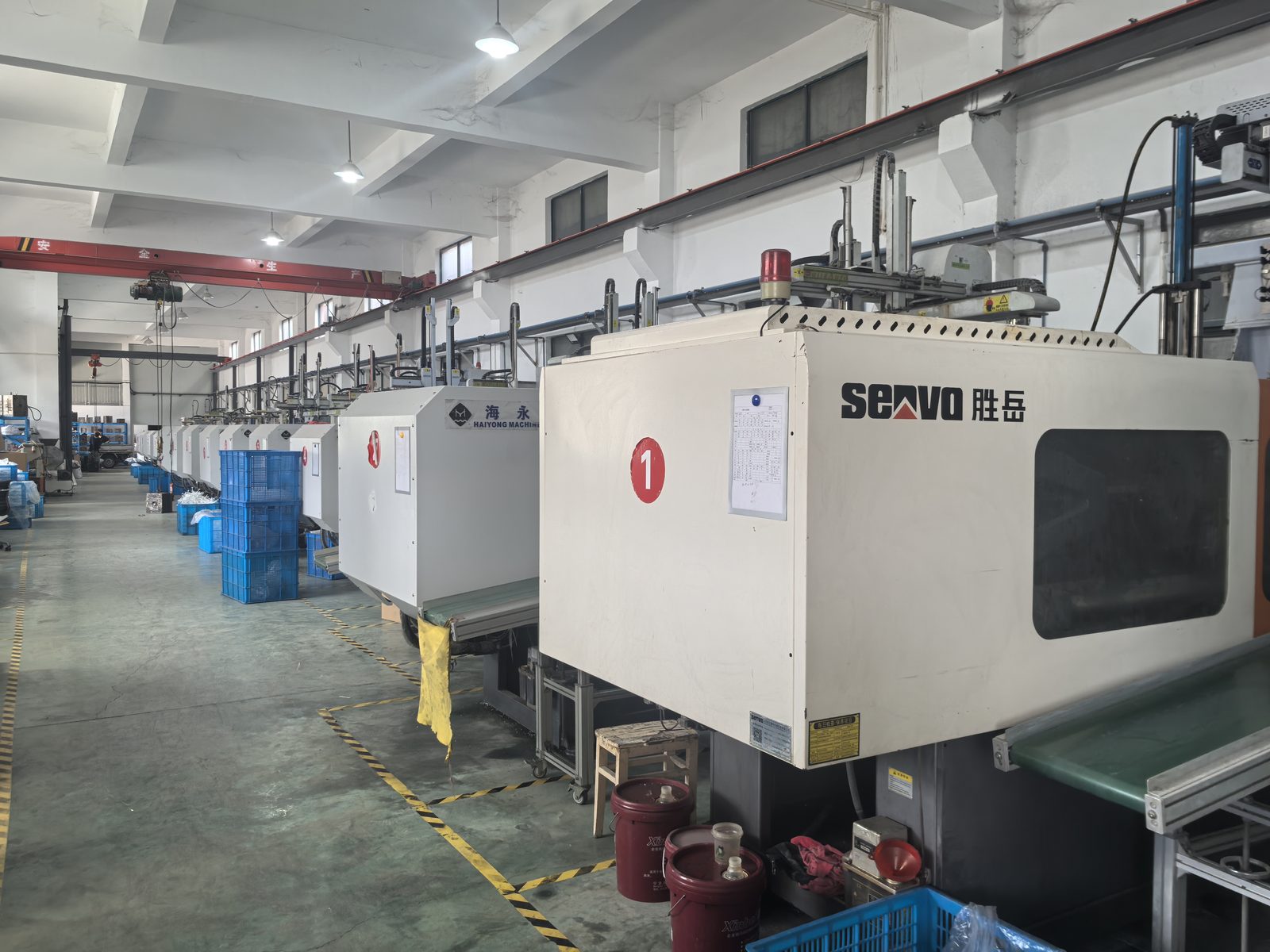
- "What injection molding machines do you operate?" — A factory will name specific brands, tonnages, and quantities. A trading company will give vague answers.
- "What is your monthly production capacity for 500ml spray bottles?" — A factory will give specific numbers (e.g., "200,000 units per month on our current line"). A trading company will say "it depends" or quote unrealistically large numbers.
- "Can you show me your production floor via video call?" — This is the most reliable verification method. A factory will set up a live video tour. A trading company cannot.
Step 2: Evaluate Manufacturing Capabilities
Not all spray bottle factories are equal. Manufacturing capability determines what products you can source, what quality level you can expect, and how flexibly the supplier can respond to your needs.
Key Capabilities to Assess
| Capability | What to Look For | Red Flag |
|---|---|---|
| Injection Molding | In-house molding with multiple machine sizes (80-500 ton) | Outsources all molding to subcontractors |
| Mold Design | In-house mold design and fabrication team | Uses only third-party mold shops |
| Assembly | Automated or semi-automated assembly lines | Fully manual assembly with no process controls |
| Quality Testing | Dedicated QC lab with testing equipment (leak testers, drop testers) | No testing equipment; relies on visual inspection only |
| Product Range | Multiple spray bottle types (continuous, trigger, mist, oil) | Only one product type with no variation |
| R&D | Dedicated R&D team; patented designs; new product launches | No new products in recent years; copies competitor designs |
| Capacity | Clear monthly output numbers with room for scaling | Vague or wildly inflated capacity claims |
Patented Designs: A Sign of Innovation
Suppliers with patented spray bottle designs demonstrate genuine R&D investment and innovation — not just contract manufacturing. Patents also provide your brand with differentiated products that competitors cannot easily replicate. When evaluating suppliers, ask about patents, proprietary pump designs, and unique product features.
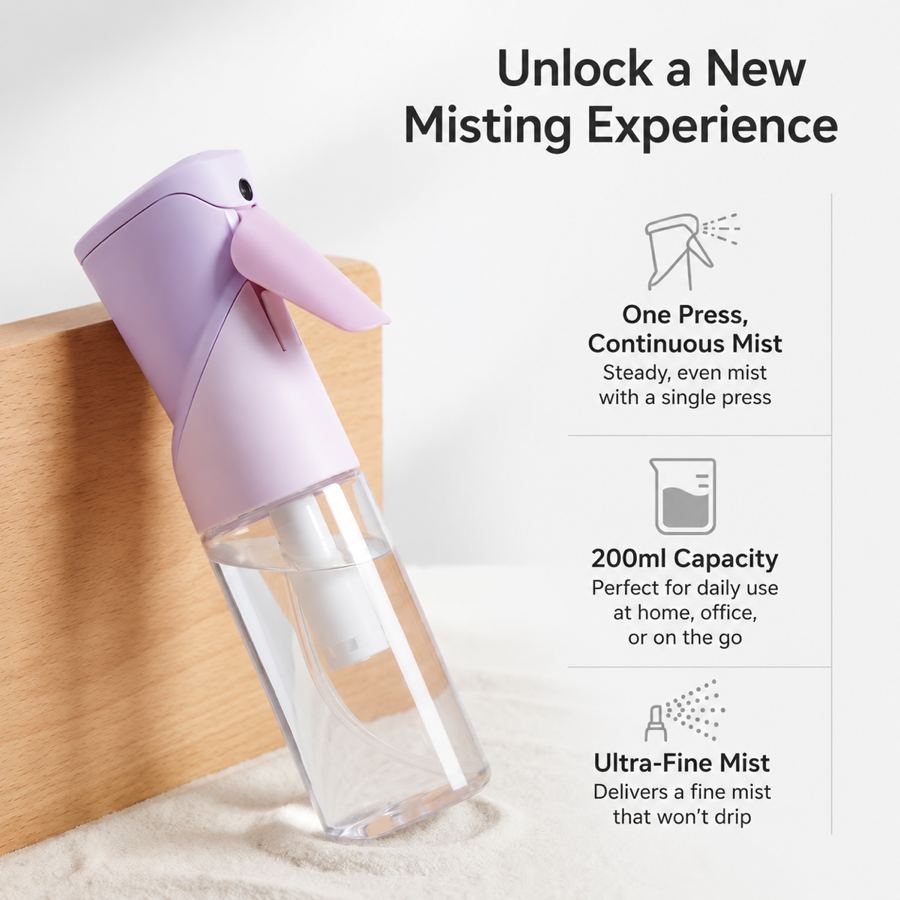
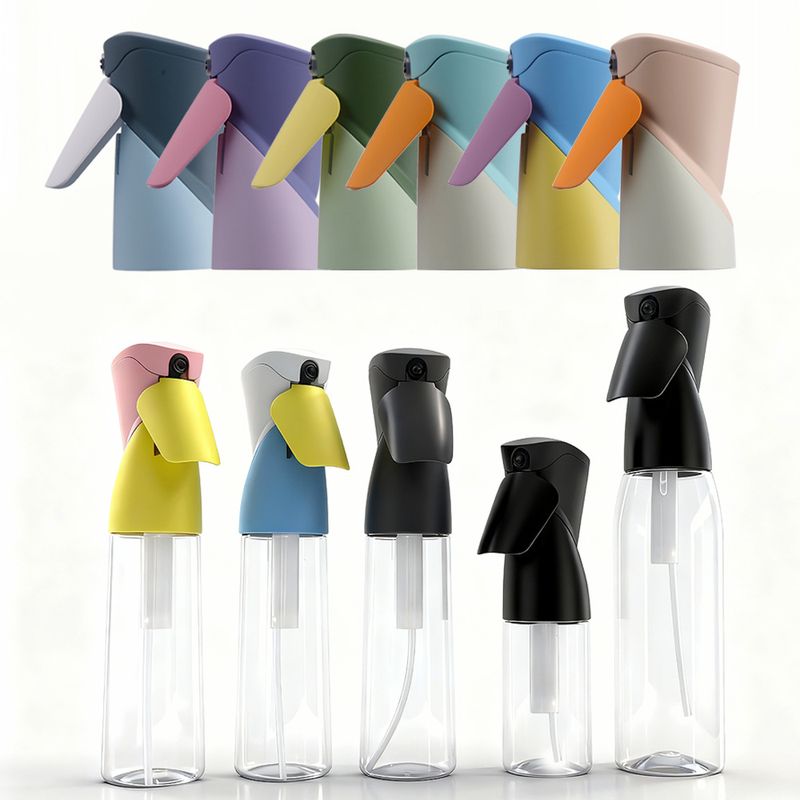
For example, Desiky holds patents on our continuous spray pump mechanism, which delivers the 6-12 second continuous mist that distinguishes our Penguin and Slim Waist series from generic alternatives. This patented design provides our B2B customers with a genuinely differentiated product in a crowded market.
Step 3: Quality Control — The Make-or-Break Factor
Quality control is the single most important factor in spray bottle supplier selection. A spray bottle that leaks, clogs, or fails to spray damages your brand reputation with every unit sold. And because spray bottles are functional products — not decorative items — quality failures are immediately visible to the end user.
Quality Metrics to Request
- Defect rate: What is the supplier's overall defect rate? Industry average for spray bottles is 2-5%. Top manufacturers achieve below 1%. Ask for documented data, not just claims.
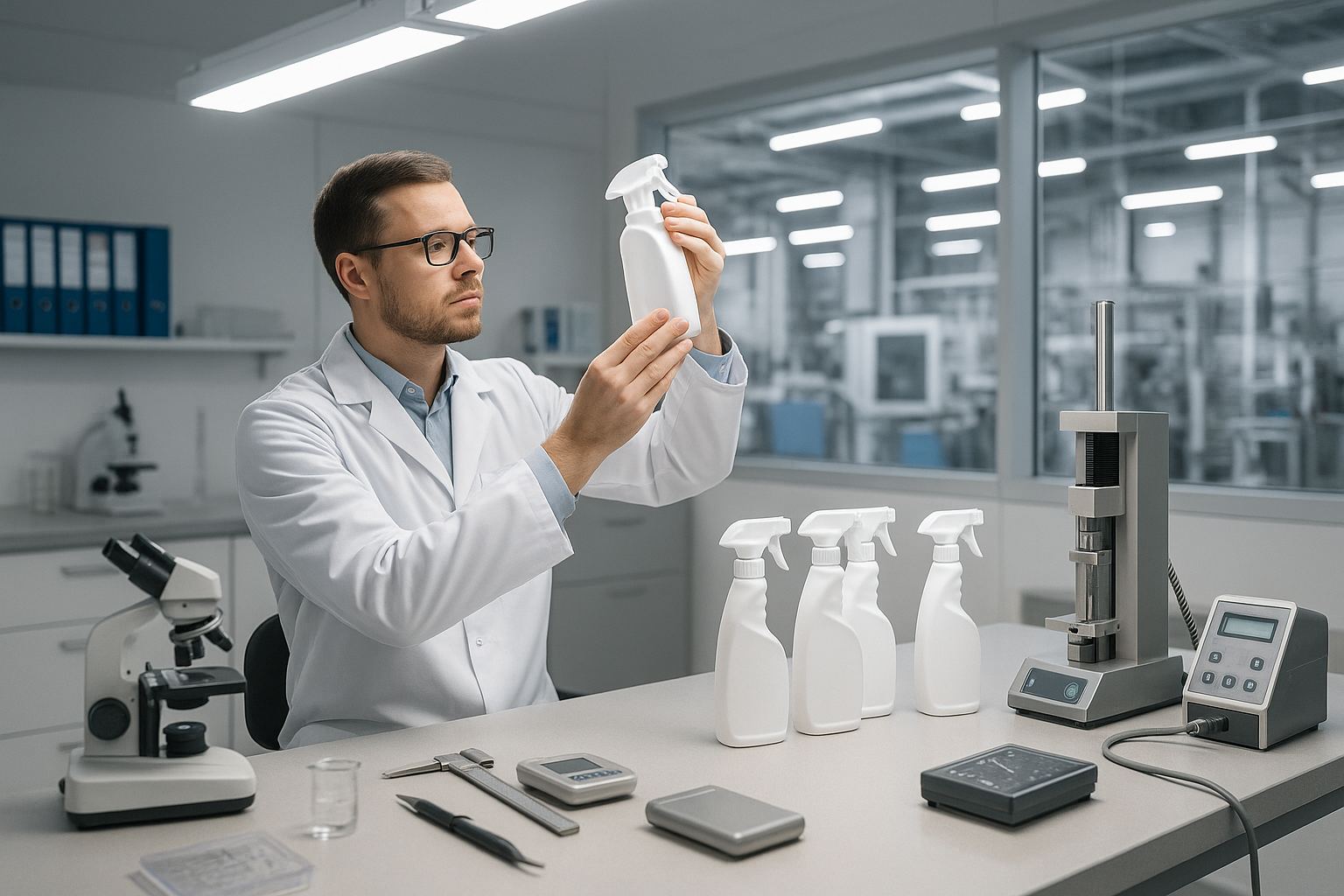
- Testing procedures: How is each bottle tested before shipment? The gold standard is 100% leak testing — every single unit is tested, not just random samples.
- Incoming material inspection: Does the factory test raw materials (PP, PET, ABS, silicone) before production? Poor raw materials cause failures that no amount of final inspection can catch.
- In-process quality checks: Are there quality checkpoints during production, or only final inspection? In-process checks catch problems early, reducing waste and ensuring consistency.
Testing Standards to Expect
A quality spray bottle manufacturer should perform these tests as standard practice:
- Leak test (vacuum or pressure): Every unit should be tested for seal integrity. Desiky tests 100% of production — not samples, every bottle.
- Spray performance test: Spray pattern, distance, and consistency should be verified against specifications.
- Drop test: Bottles should survive a 1-meter drop onto concrete without cracking or leaking (standard industry test).
- Pump lifecycle test: The spray mechanism should be tested for a minimum number of pump cycles (typically 3,000-10,000 cycles depending on the product type).
- Material compliance: Documentation confirming BPA-free, food-grade (where applicable), and REACH/RoHS compliance.
Desiky's Quality Approach
At Desiky, quality control is not a department — it is a philosophy embedded in every production step. Our approach includes:
- 100% leak testing: Every single spray bottle undergoes vacuum seal testing before leaving our facility. Not 10% sampling. Not AQL inspection. Every unit.
- Below 0.5% defect rate: Our actual, documented defect rate is consistently below 0.5% — approximately 4-10x better than the industry average.
- 4-stage quality control: Raw material inspection, in-process checks, 100% leak testing, and pre-shipment final inspection.
- Third-party audit ready: Our facility is always open for customer audits and third-party inspections (SGS, Bureau Veritas, TUV).
Step 4: MOQ and Order Flexibility
Minimum Order Quantities (MOQs) vary significantly across spray bottle suppliers and directly impact your ability to test products, manage inventory, and control cash flow.
Typical MOQ Ranges
| Product Type | Typical MOQ Range | What Affects MOQ |
|---|---|---|
| Standard spray bottles (stock molds) | 3,000 - 10,000 units | Color selection, stock availability |
| Custom color / finish | 5,000 - 20,000 units | Color matching, production changeover time |
| Custom logo / printing | 5,000 - 10,000 units | Printing setup, plate/screen costs |
| Fully custom design (new mold) | 10,000 - 50,000 units | Mold investment ($3,000-15,000+), amortization |
| Glass oil sprayers | 3,000 - 10,000 units | Glass sourcing, assembly complexity |
What to Negotiate
- Sample orders: Any reputable supplier should provide samples (typically 5-20 units) before you commit to a production order. Some charge for samples; many will refund the sample cost against the first order.
- Trial orders: For new relationships, negotiate a smaller first order (even if the unit price is higher) to validate quality, shipping, and communication before committing to large volumes.
- Mixed orders: Can you combine different sizes or colors in a single order to meet MOQ thresholds? Flexible suppliers will allow this; rigid ones insist on per-SKU MOQs.
- Scaling terms: Negotiate price tiers for increasing volume. A good supplier will offer meaningful discounts at 10,000, 25,000, 50,000, and 100,000+ unit levels.
Step 5: Certifications and Compliance
Depending on your target market, you may need specific certifications and compliance documentation. Missing certifications can result in customs delays, import rejections, or legal liability.
Essential Certifications
- ISO 9001: Quality management system certification. This is the baseline — any serious manufacturer should have it.
- BPA-free testing: Essential for any spray bottle that contacts food, beverages, or personal care products.
- FDA compliance: Required for bottles sold in the US that contact food or cosmetics. Ensure materials are FDA-approved for intended use.
- REACH compliance: Required for products sold in the EU. Confirms that materials do not contain restricted substances.
- RoHS compliance: Restricts hazardous substances (lead, mercury, cadmium). Relevant if your bottle contains any electronic components or metal parts.
- CPSIA: Required for products marketed to or accessible by children in the US.
Documentation to Request
- Material Safety Data Sheets (MSDS) for all materials used
- Test reports from accredited third-party labs (SGS, Intertek, Bureau Veritas)
- Certificate of compliance for each applicable standard
- Product liability insurance certificate (if selling in litigious markets like the US)
Step 6: OEM and Customization Capabilities
If you are building a branded product line, your supplier's OEM (Original Equipment Manufacturer) capabilities determine how differentiated your products can be. The best suppliers offer customization at multiple levels.
Levels of Customization
- Color customization: Custom bottle body and spray head colors from the Pantone spectrum. This is the most basic level of OEM and most suppliers can do it.
- Logo and branding: Silk-screen printing, pad printing, hot stamping, or UV printing of your logo and branding on the bottle. Quality varies significantly — ask for printed samples to evaluate print durability (will it survive rubbing, water, and oils?).
- Packaging customization: Custom boxes, inserts, labels, and retail-ready packaging. Some factories have in-house packaging capabilities; others subcontract it.
- Design modification: Adjustments to existing designs — changing bottle shape proportions, nozzle type, or cap style using modified existing molds.
- Fully custom design: Creating entirely new bottle shapes, spray mechanisms, or product concepts from scratch. This requires new molds ($3,000-15,000+ depending on complexity) and a development timeline of 30-60 days.
Desiky's OEM service covers all five levels. Our in-house design team works from your brand guidelines to create production-ready artwork, our mold shop builds and maintains custom tooling, and our production lines handle everything from color matching to final packaging — all under one roof. This single-source approach eliminates the coordination complexity and quality inconsistencies that come from using multiple vendors.
Step 7: Lead Time and Shipping
Lead time includes production time plus shipping time. Understanding both is essential for inventory planning and launch schedules.
Typical Lead Times
| Order Type | Production Time | Shipping (Sea to US West Coast) | Total Lead Time |
|---|---|---|---|
| Stock products, standard colors | 7-15 days | 18-25 days | 25-40 days |
| Custom colors / printing | 15-25 days | 18-25 days | 33-50 days |
| New mold / custom design | 30-60 days (mold) + 15-25 days (production) | 18-25 days | 63-110 days |
Shipping Considerations
- Sea freight is the standard for spray bottle shipments. Air freight is 5-8x more expensive and typically only justified for urgent sample shipments or small top-up orders.
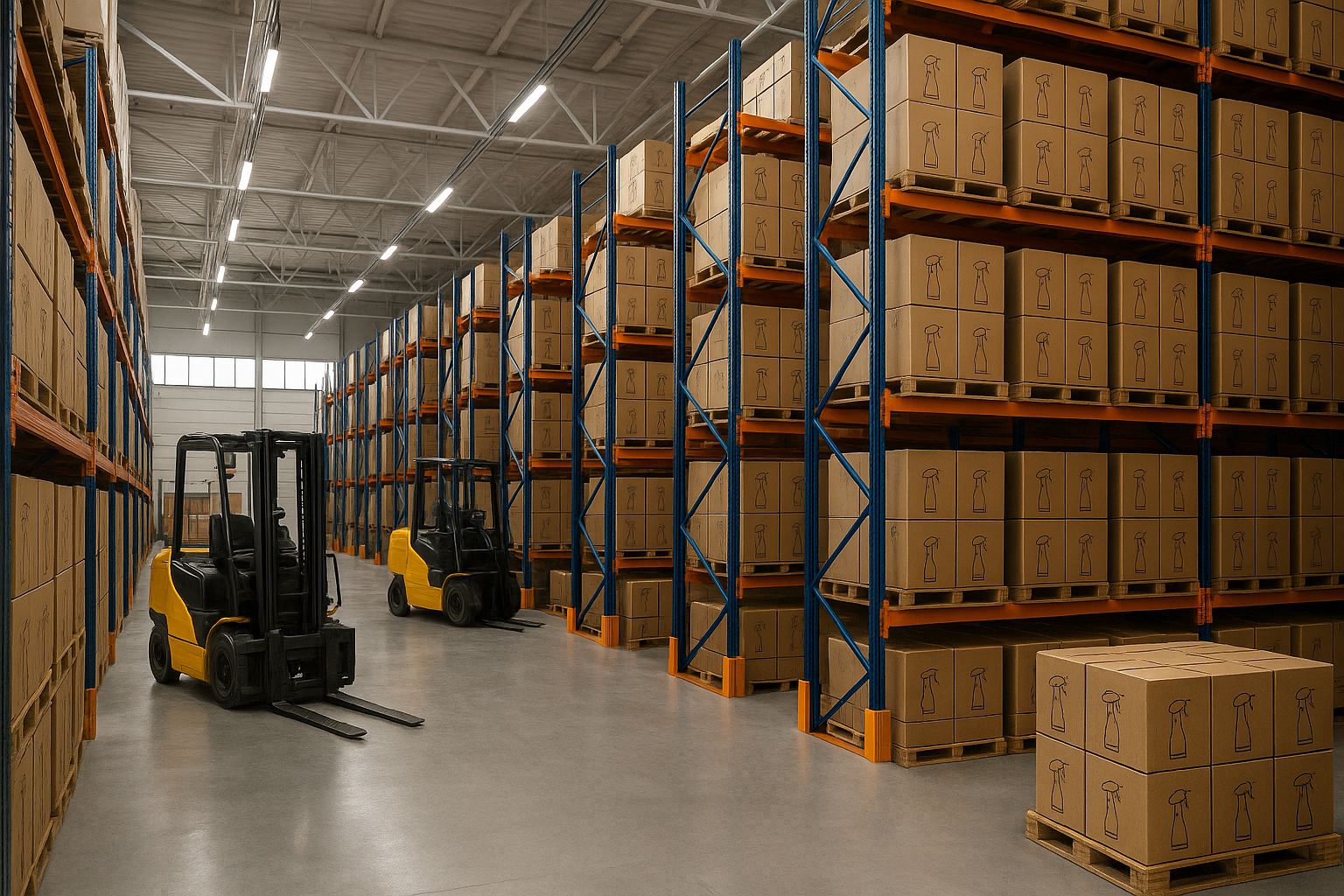
- Container loading: A standard 20-foot container holds approximately 15,000-20,000 500ml spray bottles. A 40-foot container holds 30,000-40,000 units. Knowing these numbers helps you optimize order quantities to fill containers efficiently (partial containers cost disproportionately more per unit).
- Incoterms: Clarify shipping terms upfront. FOB (Free On Board) means the supplier handles production and loading at the port; you handle ocean freight and import. CIF (Cost, Insurance, Freight) means the supplier quotes a delivered price to your destination port.
Step 8: Communication and Responsiveness
The quality of communication with your supplier predicts the quality of the entire relationship. Pay attention to these signals during your initial interactions:
- Response time: A good supplier responds within 24 hours (accounting for time zone differences). Consistently slow responses during the sales phase predict poor communication during production issues.
- English proficiency: Can the sales team communicate clearly about technical specifications, quality standards, and shipping details? Miscommunication causes expensive errors.
- Technical knowledge: Does the contact person understand spray bottle mechanics, materials, and production processes? A knowledgeable contact can solve problems proactively. A pure salesperson can only relay messages.
- Proactive updates: During production, does the supplier send unsolicited progress updates and photos? Or do you have to chase for information?
- Problem resolution: How does the supplier handle issues? Every supplier will eventually face a quality problem or shipping delay. The ones worth keeping are the ones who acknowledge issues quickly, propose solutions, and follow through.
Step 9: Red Flags to Watch For
In over a decade of spray bottle manufacturing at Desiky, we have seen the tactics that unreliable suppliers use. Here are the warning signs:
- Prices significantly below market: If a quote is 30%+ below other suppliers, something is being compromised — material quality, seal integrity, testing rigor, or labor standards. You will pay the difference in returns and complaints.
- Unwillingness to provide samples: Any legitimate manufacturer will provide samples. Refusing (or endlessly delaying) suggests the product will not match the promises.
- No factory visit option: If a supplier will not let you visit (or arrange a video tour of) their production facility, question whether they have one.
- Vague quality data: "Our quality is very good" is not quality data. Ask for defect rates, test reports, and inspection procedures. If they cannot provide specifics, they probably do not measure.
- Pressure to order without samples: "Special price expires this week" or "We have stock but it will sell out" are sales tactics, not partnership behaviors.
- Inconsistent sample quality: If two sample batches show different quality levels, production consistency is a problem. Your customers will receive the lower quality.
- No certifications or compliance documentation: For US/EU markets, proper compliance documentation is non-negotiable. Suppliers who cannot provide it are either non-compliant or not dealing with export markets regularly.
- Changing terms after order placement: Price increases, MOQ changes, or delivery date extensions after you have committed signal a supplier that overpromises to win orders.
Step 10: The Supplier Evaluation Scorecard
Use this 10-point scorecard to objectively compare suppliers. Rate each criterion on a 1-5 scale and total the scores. We recommend working with suppliers scoring 35 or above.
| Criterion | Weight | What to Evaluate |
|---|---|---|
| Manufacturing capability | High | In-house production, equipment, capacity |
| Quality control | High | Testing procedures, defect rates, QC documentation |
| Product quality (samples) | High | Spray performance, seal integrity, build quality |
| Certifications | Medium-High | ISO, FDA, BPA-free, REACH, RoHS as applicable |
| OEM capabilities | Medium | Customization depth, in-house design, mold capabilities |
| Pricing | Medium | Competitiveness, volume tiers, total cost of ownership |
| MOQ flexibility | Medium | Sample availability, trial orders, mixed SKU options |
| Lead time | Medium | Production speed, reliability of delivery dates |
| Communication | Medium | Response time, English proficiency, technical knowledge |
| Innovation / R&D | Low-Medium | Patents, new product development, design capabilities |
Why Desiky: A Transparent Self-Assessment
We believe in earning business through transparency, not just marketing. Here is how Desiky measures up against our own evaluation framework:
- Factory direct: Desiky is a manufacturer — Yuyao Desiky Commodity Co., LTD, part of the Ningbo Y-Shine Plastic Industry group. Our factory in Yuyao, Zhejiang Province is open for visits and video tours at any time.
- Manufacturing capability: In-house injection molding, mold design and fabrication, automated assembly, and dedicated QC laboratory. Monthly capacity for continuous spray bottles exceeds 500,000 units.
- Quality control: 100% vacuum leak testing on every unit. Documented defect rate below 0.5%. Four-stage quality process from raw material to pre-shipment.
- Certifications: ISO 9001 certified. BPA-free tested. FDA-compliant materials. REACH and RoHS documentation available.
- Product innovation: Patented continuous spray pump designs. Two distinct product series (Penguin and Slim Waist). Glass oil sprayer line. Ongoing R&D investment.
- OEM capabilities: Full-service OEM from color matching to custom packaging. In-house design team. Custom mold capabilities.
- Product range: Continuous spray bottles (200ml, 300ml, 500ml), oil spray bottles, glass oil sprayers, and custom OEM solutions.
Frequently Asked Questions
How do I find spray bottle manufacturers?
Start with industry trade platforms (Alibaba, Global Sources, Made-in-China), but verify that you are dealing with actual manufacturers rather than trading companies. Attend industry trade shows (Canton Fair, Beautyworld, ISSA) for face-to-face meetings. Ask for factory video tours, production capacity details, and injection molding machine specifications to verify manufacturing claims. Direct manufacturer websites — like desikyspray.com — often provide the most transparent information.
What is the typical MOQ for spray bottles?
MOQs range from 3,000 to 50,000 units depending on the level of customization. Stock products in standard colors may be available from 3,000 units. Custom colors and printing typically require 5,000-10,000 units. Fully custom designs with new molds usually require 10,000-50,000 units to justify the mold investment.
How long does it take to produce spray bottles?
Production time ranges from 7-60 days depending on order complexity. Stock products take 7-15 days. Custom color or printing adds 15-25 days. New mold development adds 30-60 days for mold fabrication before production begins. Add 18-25 days for sea freight shipping to US ports.
What certifications should a spray bottle supplier have?
At minimum: ISO 9001 for quality management and BPA-free testing for any bottles that contact food or personal care products. For the US market, FDA-compliant materials are essential. For the EU, REACH compliance is required. Additional certifications like SGS test reports and product liability insurance provide extra assurance.
How do I verify spray bottle quality before ordering?
Request samples (5-20 units) and evaluate: spray consistency (every unit should spray identically), seal integrity (shake vigorously for leaks), pump lifecycle (test 500+ pumps on each sample), and build quality (no rough edges, consistent colors, proper fit of all components). Compare samples against each other — inconsistency across samples indicates production control issues.
What is the difference between OEM and ODM spray bottles?
OEM (Original Equipment Manufacturing) means the supplier manufactures bottles to your specifications — you provide the design, they produce it. ODM (Original Design Manufacturing) means the supplier uses their existing designs and you add your branding. Most spray bottle sourcing starts as ODM (using the supplier's proven designs with your colors and logo) and evolves to OEM (custom designs) as the relationship and volumes grow.
How much do spray bottles cost wholesale?
Wholesale prices vary by type, size, material, and order volume. As a general range: standard trigger sprayers cost $0.30-$1.00 per unit, continuous spray bottles cost $0.80-$2.50 per unit, and glass oil sprayers cost $1.50-$4.00 per unit. Prices decrease with volume. Custom designs, special colors, and premium finishes add to the base cost. Contact Desiky for specific pricing based on your requirements.
Conclusion
Choosing the right spray bottle supplier is a decision that pays dividends — or extracts costs — for the life of your product line. The 10-step framework in this guide provides a structured approach to evaluating manufacturers on the factors that actually matter: manufacturing capability, quality control, flexibility, communication, and total cost of ownership.
Do not shortcut the evaluation process. Request samples. Ask hard questions about defect rates and testing procedures. Verify manufacturing claims with video tours. Start with a trial order before committing to large volumes. The time you invest in supplier selection upfront saves exponentially more time, money, and frustration down the line.
If you are sourcing spray bottles — continuous mist bottles, oil sprayers, or custom OEM designs — we invite you to evaluate Desiky against the framework in this guide. Tour our factory (in person or via video), test our samples, review our quality data, and compare our capabilities against any supplier on your shortlist. Contact our team to start the conversation.
Related Articles: How to Choose a Supplier on Alibaba · OEM Custom Manufacturing Guide · Samples Guide: Testing & Approval · Cosmetic Bottle Wholesale Guide