If you are launching a room spray or linen spray, the bottle is where most first production runs go wrong — not the scent. We manufacture 53 spray bottle models in Yuyao, China, and the room spray complaints we see from home fragrance brands are almost always packaging problems: a PET bottle that crazes around the shoulder after six weeks with a citrus blend, a pump that stops priming because the fragrance oil was never fully solubilized, or a 40% alcohol formula that nobody realized was a Class 3 flammable liquid until the freight forwarder refused the carton.
The pages that currently rank for room spray bottles are product listings — a price, a neck size, and a photo. This guide gives you what those listings leave out: a formula-to-bottle matrix, sprayer output data, the wetted parts you need to specify, the aging test we run before approving a room spray bottle, the regulations that decide your alcohol level, and FOB pricing with MOQ.
Quick Answer
- Water-based or low-alcohol (≤24%) room sprays: PET bottle + PP fine mist pump or continuous mist sprayer. Lowest cost, lightest freight.
- High-alcohol (40–80%) or citrus/essential-oil-heavy sprays: amber or cobalt glass (or lined aluminum) + pump with LDPE gasket and stainless steel spring.
- Output: fine mist pumps deliver about 0.10–0.20 ml per stroke; our continuous mist bottles give 6–12 seconds of mist per press — better for linen and large rooms.
- Before you order: run a 4-week, 45°C filled-bottle test with your actual formula. Compatibility charts do not replace it.
Match the Bottle to Your Formula First
Room sprays are not one chemistry. A lavender linen water with 3% fragrance and Polysorbate 20 behaves nothing like a 70% ethanol "perfume-style" room mist. Start from the formula type, then pick the bottle and sprayer. This is the matrix our sales engineers use when a home fragrance brand sends us a spec sheet:
| Formula Type | Typical Composition | Recommended Bottle | Recommended Sprayer | Watch Out For |
|---|---|---|---|---|
| Water-based (solubilized) | 2–8% fragrance, solubilizer (e.g., Polysorbate 20), preservative, 85%+ water | PET or HDPE | PP fine mist pump or continuous mist | Undissolved oil clogging the orifice; microbial growth without preservative |
| Low-alcohol (≤24% ethanol) | 10–24% ethanol, 2–6% fragrance, water | PET, HDPE, or glass | Fine mist or continuous mist | Still "flammable" for US consumer labeling if flash point is below 37.8°C |
| High-alcohol (40–80% ethanol) | Perfumer's alcohol or SD alcohol, 3–10% fragrance | Glass or internally lined aluminum | Fine mist pump, LDPE gasket, 304 steel spring | Class 3 dangerous goods for shipping; CARB 18% VOC limit in California |
| Citrus / essential-oil heavy | High d-limonene or other terpenes | Glass (amber or cobalt) | Pump with LDPE gasket (not NBR) | PET crazing, HDPE scent loss and paneling, gasket swelling |
| Luxury / gift line | Any of the above | Heavy-base glass, 50–100 ml | Metal-collar fine mist pump + overcap | Collar corrosion in bathrooms; pump height vs overcap fit |
Composition ranges are starting points our customers commonly use, not formulation specs — solubilizer demand depends on the fragrance, and your formulator should confirm stability.
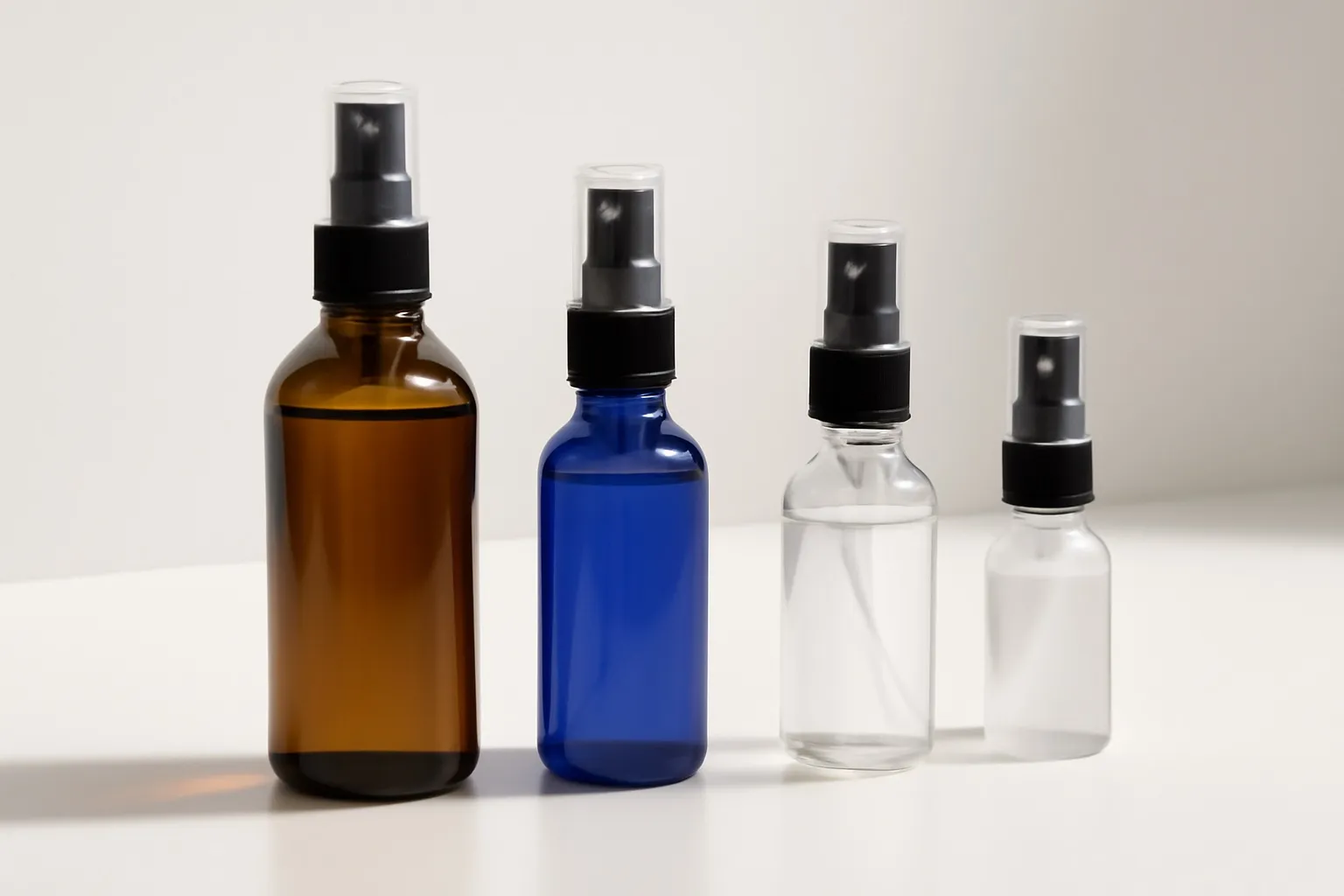
6 Ways Room Spray Packaging Fails (and What Causes Each)
Every one of these failures passes a quick visual check when the samples arrive. They show up 4–12 weeks later — usually after the first retail shipment. Here is what we look for on returned bottles:
| Failure | What You See | Root Cause | Fix |
|---|---|---|---|
| PET crazing | Fine white cracks at the shoulder or base | Terpene-rich fragrance + residual molding stress + heat | Switch to glass, or lower fragrance load and test at 45°C |
| Scent loss / paneling | Weaker scent, bottle walls pulled inward | Fragrance permeating through untreated HDPE | Glass, PET, or fluorinated HDPE |
| Leaking at the neck | Wet collar, sticky label | NBR gasket swelling in fragrance, or low application torque | LDPE gasket; set torque and check retention after storage |
| Pump stops priming | Spits, then nothing | Undissolved fragrance oil or solubilizer gel blocking the 0.2–0.4 mm orifice | Fix solubilization; filter formula; specify larger orifice |
| Last 10–15% won't spray | Liquid left in the bottle | Dip tube cut too short or not angled to the heel | Specify dip tube length per bottle height |
| Rusty collar or spring | Brown stain in the mist, corroded metal collar | Carbon steel spring in a water-based formula; humid bathroom storage | 304 stainless spring; anodized or plastic collar |
Several of these overlap with problems cleaning brands face — our chemical-resistant spray bottle guide covers the same wetted-part logic for bleach and degreasers.
Launching a room or linen spray? Send us your formula type (water-based, alcohol %, citrus content) and target retail price. Our engineers will recommend 2–3 bottle and sprayer combinations and send free samples for your own compatibility test. Request room spray bottle samples →
Looking for a reliable spray bottle supplier?
Get free samples and a factory-direct quote within 12 hours.
Get a Free Quote →Bottle Material Comparison: PET vs HDPE vs Glass vs Aluminum
Material decides compatibility, freight cost, breakage rate, and shelf appeal at the same time. Prices below are indicative FOB Ningbo for 100–250 ml bottle bodies at 10,000 pcs in 2026; they move with resin prices and decoration.
| Property | PET | HDPE | Glass (amber/cobalt/clear) | Aluminum (lined) |
|---|---|---|---|---|
| Water-based sprays | Excellent | Excellent | Excellent | Good (lining required) |
| High ethanol (40–80%) | Test required | Good, but scent permeation | Excellent (inert) | Good (lining compatibility test) |
| Citrus / terpenes | Crazing risk | Permeation, paneling | Excellent | Good |
| Clarity / premium look | Glass-like clear | Opaque only | Highest perceived value | Modern, opaque |
| Light protection | Low (unless tinted) | Good (opaque) | Amber blocks most UV | Complete |
| Weight (250 ml bottle) | ~20–30 g | ~20–30 g | ~200–280 g | ~35–50 g |
| Indicative FOB (body) | $0.06–0.18 | $0.06–0.16 | $0.18–0.45 | $0.30–0.70 |
| Typical MOQ | 3,000 (stock) – 5,000 | 5,000 | 1,000–3,000 | 5,000–10,000 |
Glass weighs roughly 8–10× more than PET at the same capacity, which matters when you ship to Amazon FBA or pay parcel rates. Retail distributors list glass room spray containers at about $0.78–$2.52 per unit in small lots; at container volume from a factory, a 100 ml amber bottle with pump typically lands in the $0.30–0.65 range before decoration. For a deeper resin comparison, read HDPE vs PET vs PP spray bottles and our glass spray bottle guide, or browse our glass spray bottles.
Sprayer Choice: Fine Mist Pump vs Continuous Mist vs Trigger
The sprayer defines how your product feels in the customer's hand — and how long a bottle lasts. For room sprays the target is a fine, even mist that does not leave wet spots on fabric.
| Spec | Fine Mist Pump | Continuous Mist Sprayer | Fine Mist Trigger |
|---|---|---|---|
| Output | 0.10–0.20 ml per stroke (most common 0.12–0.15 ml) | 6–12 seconds of mist per press | ~1.0–1.6 ml per pull |
| Droplet size | 40–80 micron | 40–70 micron | 100–200+ micron |
| Neck finish | 18/410, 20/410, 24/410 | Matched bottle + head system | 28/400 or 28/410 |
| Typical size | 30–250 ml | 200–500 ml | 250–500 ml (16 oz) |
| Best for | Room mists, pillow sprays, gift sets | Linen, curtains, large rooms, refill sizes | Budget linen water, car interiors |
| Indicative FOB (sprayer) | $0.05–0.12 (PP); $0.10–0.20 (metal collar) | $0.25–0.50 | $0.08–0.15 |
Output is pump-specific — two 24/410 pumps can differ by 50%. Ask your supplier for measured ml/stroke, not the neck size. A quick way to set customer expectations: a 100 ml bottle at 0.13 ml per stroke gives about 770 sprays; a 250 ml bottle gives about 1,900.
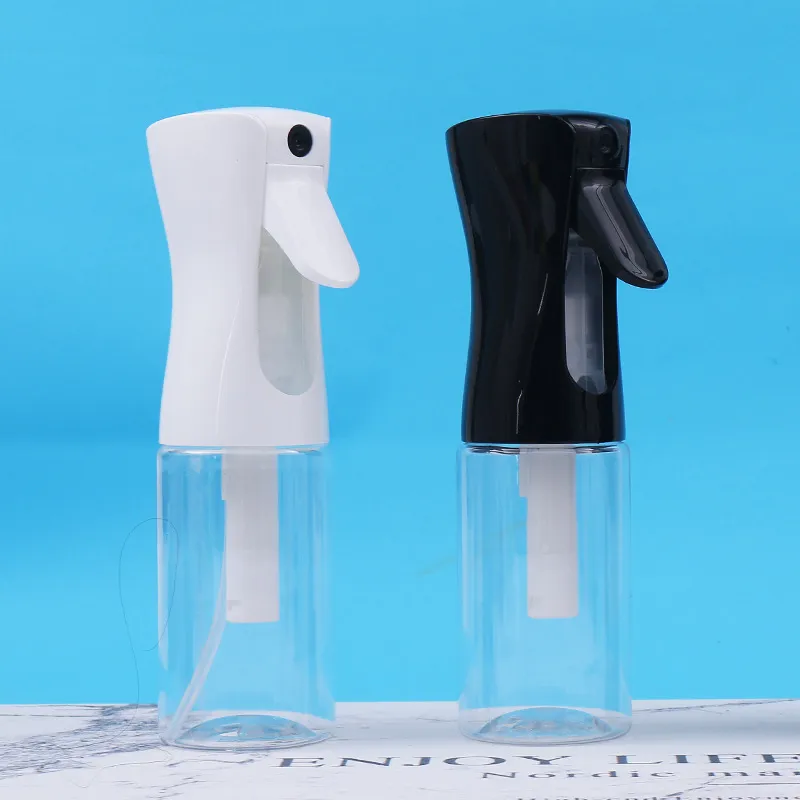
Continuous mist sprayers give a finer, more even cloud with far less hand fatigue than a trigger — which is why linen spray brands moving up from triggers usually choose them. How long the mist "hangs" still depends on droplet size, formula, and airflow, so compare samples side by side in a real room. See our continuous spray bottles (MOQ 3,000 pcs from stock) and the continuous vs regular spray bottle comparison.
Wetted Parts: The Components Nobody Specifies
Buyers specify the bottle color and the pump color. Few specify the parts the fragrance actually touches — and those are what fail. Put these in your purchase order:
- Gasket / liner: LDPE is the common choice for fragrance and alcohol. NBR (nitrile) can swell and soften with terpene-rich blends; silicone is soft and can absorb fragrance. Neither material is universally fragrance-proof — test your formula.
- Spring: 304 stainless steel, or an external-spring pump that keeps the spring out of the liquid path. Carbon steel springs rust in water-based sprays.
- Ball valve: glass or 304 stainless steel.
- Dip tube: PE, cut to reach the bottle heel with a slight angle. Specify the length per bottle — a generic tube is the reason the last 10–15% will not spray.
- Actuator orifice: 0.2–0.4 mm for fine mist. If your formula contains oil or botanical extracts, filter it and do not go below 0.3 mm.
- Closure torque: set application torque per neck size and check removal torque after 24 hours and after heat storage, using the ASTM D2063 torque retention method.
Our nozzle specifications page lists orifice and output data across our models.
Our 4-Week Room Spray Compatibility Test
Compatibility charts tell you what usually works. A filled-package aging test tells you what works with your fragrance. This is the protocol we recommend — and run in our lab for brands that send formula samples:
| Test | Condition | Duration | Pass Criteria |
|---|---|---|---|
| Heat storage | 45°C, filled bottles upright and inverted | 4 weeks | No leak, no crazing under polarized light, weight loss ≤1.5% (glass/PET) |
| Cold + freeze-thaw | 4°C, plus 3 cycles −10°C / 25°C | 1–2 weeks | No haze or separation; pump primes in ≤5 strokes |
| Gasket immersion | Gasket soaked in formula, room temperature | 7 days | Weight/dimension change ≤5%, no softening |
| Output drift | Measure ml/stroke before and after heat storage | 4 weeks | Within ±10% of initial output |
| Light exposure | Clear vs amber bottles at a sunny window | 2 weeks | No color change of formula |
| Leak test | Vacuum −60 kPa, 10 seconds | 100% of production | Zero leakers |
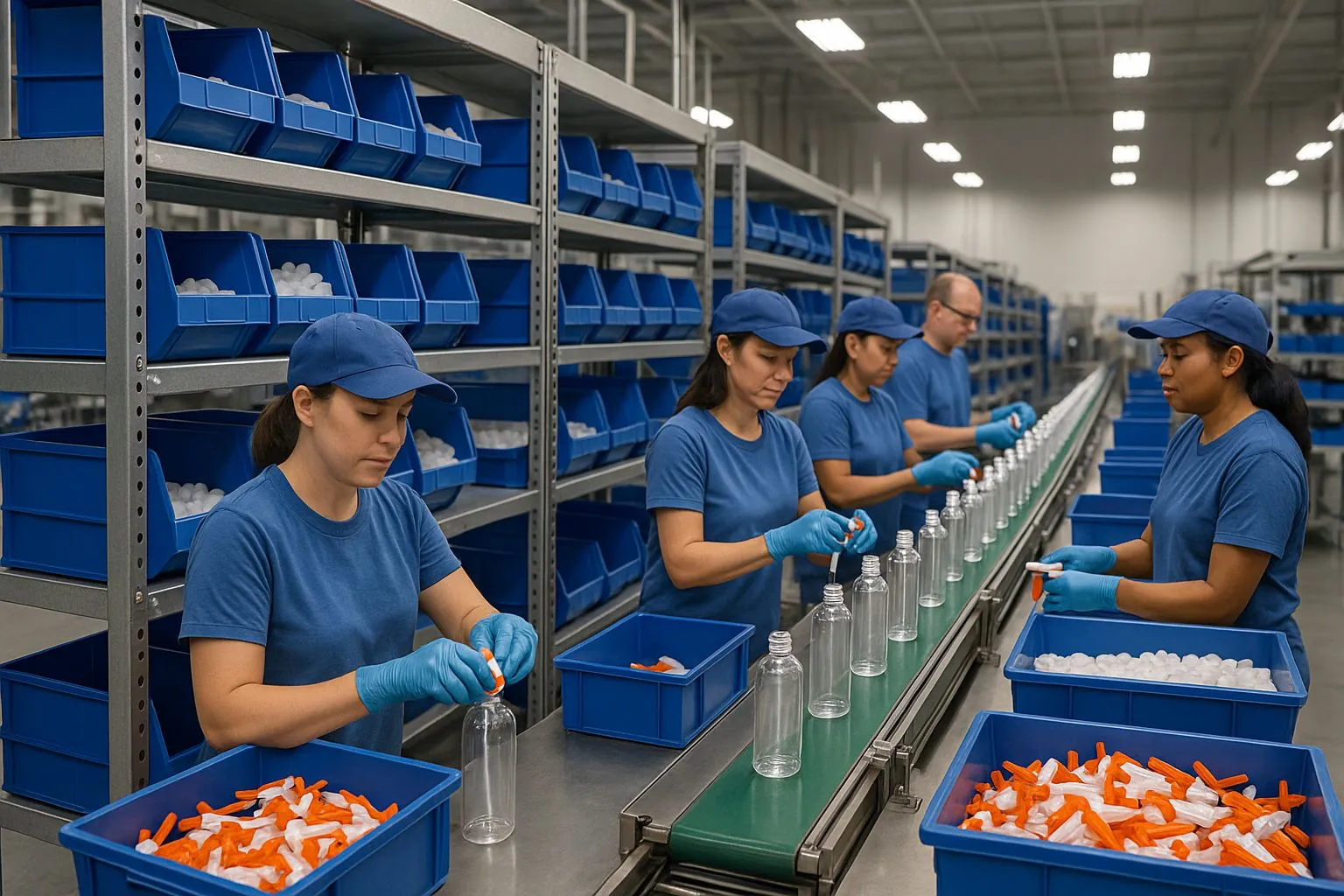
Run this on production-intent samples, not on stock samples from a different resin lot. Our spray bottle samples guide explains how to order and approve them.
Regulations That Decide Your Alcohol Level (and Your Bottle)
Alcohol content drives flash point, and flash point drives shipping class, consumer labeling, and even whether you can sell in California. Decide this before you choose glass vs PET, because it also decides your freight cost.
| Rule | What It Says | What It Means for Room Sprays |
|---|---|---|
| US DOT 49 CFR 173.150(e) | Aqueous solutions with 24% or less alcohol by volume, no other hazardous material, and at least 50% water are excepted from the Hazardous Materials Regulations | Keeping ethanol ≤24% avoids dangerous-goods shipping for most water-based room sprays |
| UN1266 Perfumery products | Alcohol-based fragrance products with a flash point below 60°C ship as Class 3 flammable liquids | Needs DG documentation; parcel options shrink sharply |
| 49 CFR 173.150(b) limited quantity | Inner packagings up to 1.0 L (PG II) or 5.0 L (PG III) | Retail-size bottles can usually move as limited quantity with proper marking |
| CPSC FHSA, 16 CFR 1500.3(c)(6) | "Flammable" = flash point above −6.7°C and below 37.8°C (100°F) | A 20% ethanol formula (flash point ~36°C) can be DOT-excepted yet still need "flammable" cautionary labeling |
| California CARB, 17 CCR 94509(a) | Air Freshener – Liquid/pump spray: 18% VOC by weight | Ethanol counts as VOC — high-alcohol room sprays are not California-compliant without a valid exemption |
| IFRA Standards (51st Amendment) | "Air freshener sprays, manual, including aerosol and pump" are Category 10B; pillow spray is Category 11 | Ask your fragrance house for the IFRA certificate for the right category |
| EU CLP (Regulation 1272/2008) | Flash point <23°C = Flam. Liq. 2 (H225); 23–60°C = Flam. Liq. 3 (H226); EUH208 for sensitizers ≥0.1%; UFI for hazardous mixtures | Label space is needed — plan bottle size and label panel early |
Approximate flash points of ethanol–water mixtures (NFPA Fire Protection Guide to Hazardous Materials, 13th ed.) show why the thresholds bite. Fragrance changes the real value, so test your finished formula by closed cup (ASTM D93 or D56).
| Ethanol (% v/v) | Flash Point | US DOT | FHSA "Flammable" (<37.8°C) | EU CLP |
|---|---|---|---|---|
| 10% | 49°C | Excepted (≤24%) | No | Flam. Liq. 3 |
| 20% | 36°C | Excepted (≤24%) | Yes | Flam. Liq. 3 |
| 40% | 26°C | Class 3 (UN1266) | Yes | Flam. Liq. 3 |
| 50% | 24°C | Class 3 (UN1266) | Yes | Flam. Liq. 3 |
| 70% | 21°C | Class 3 (UN1266) | Yes | Flam. Liq. 2 |
This is a packaging manufacturer's summary, not legal advice — confirm classification with your formulator and freight forwarder. For carton and pallet requirements, see our spray bottle packaging and shipping guide.
Room Spray Bottle Pricing, MOQ and Lead Time (FOB Ningbo)
Here is what home fragrance brands typically order from us, with the numbers you need for a landed-cost sheet. Complete sets include bottle, sprayer, and cap.
| Configuration | MOQ | Indicative FOB (complete set) | Lead Time |
|---|---|---|---|
| Stock PET continuous mist, 200/300/500 ml | 3,000 pcs | $0.35–0.70 | 3–5 days (stock) |
| Custom-color PET continuous mist | 3,000–5,000 pcs | $0.40–0.80 | 20–25 days |
| PET bottle + PP fine mist pump, 100–250 ml | 5,000 pcs | $0.12–0.30 | 20–25 days |
| Amber glass Boston round + fine mist pump, 100 ml | 1,000–3,000 pcs | $0.30–0.65 | 20–30 days |
| Luxury heavy-base glass + metal-collar pump + overcap | 3,000–5,000 pcs | $0.80–2.00 | 30–40 days |
Decoration adders: silk screen $0.03–0.06 per color, hot stamping (foil) $0.05–0.10, shrink sleeve $0.05–0.15, UV coating +$0.02–0.04. Screen setup runs about $80–150 per color. For stock sizes in larger volumes, compare options on our room spray bottles wholesale page; for branding, read the spray bottle private label guide.
What Actually Makes a Room Spray Look Premium
Luxury room sprays retail at $25–60, and shoppers judge them by weight and finish before they smell anything. The upgrades that move perceived value most, roughly in order of cost-effectiveness:
- Heavy-base glass — a thick bottom adds heft for about $0.10–0.30 more than a standard Boston round.
- Metal-collar pump with overcap — replaces the "cleaning bottle" look of a plain PP pump.
- Frosted or lacquered finish — hides fill-level variation and fingerprints.
- Hot-stamped logo instead of a paper label — survives bathroom humidity.
- Refill format — a 500 ml continuous mist refill next to a 100 ml glass hero bottle raises basket size and supports sustainability claims.
Beauty brands face the same trade-offs; our cosmetic spray bottle buyer's guide covers finish options in more depth, and our cosmetic bottles range includes fine fog and airless formats.
Room Spray Bottle Launch Checklist
- Confirm formula type and alcohol % — this sets shipping class, labeling, and California eligibility.
- Choose 2–3 bottle + sprayer combinations from the matrix above.
- Order production-intent samples with the specified gasket, spring, and dip tube length.
- Run the 4-week compatibility test with your finished fragrance.
- Measure ml/stroke and write it into your spec sheet (±10% tolerance).
- Approve decoration with a physical pre-production sample.
- Confirm carton drop test and DG paperwork before the first shipment.
Frequently Asked Questions
What is the best bottle for room spray?
For water-based or low-alcohol (≤24%) room sprays, a PET bottle with a PP fine mist pump or continuous mist sprayer is the most cost-effective choice. For high-alcohol formulas or citrus and essential-oil-heavy blends, use amber or cobalt glass with an LDPE gasket and stainless steel spring, because glass is inert and does not craze or absorb fragrance.
Can I put alcohol-based room spray in PET plastic bottles?
Often yes, but it must be tested. Ethanol alone is generally compatible with PET at room temperature, but heat combined with terpene-rich fragrance (such as d-limonene in citrus oils) can cause crazing. Store filled bottles at 45°C for 4 weeks and inspect for cracks and weight loss before approving PET.
Is room spray considered hazardous for shipping?
It depends on alcohol content. Under US DOT 49 CFR 173.150(e), aqueous solutions with 24% or less alcohol by volume and at least 50% water are excepted from hazmat rules. Higher-alcohol room sprays with a flash point below 60°C usually ship as UN1266 Perfumery products, Class 3, often as limited quantity.
What type of sprayer is best for room and linen spray?
Fine mist pumps (0.10–0.20 ml per stroke) suit room mists and pillow sprays in 30–250 ml bottles. Continuous mist sprayers, which deliver 6–12 seconds of mist per press, are better for linen, curtains, and large rooms because they cover more area evenly with less hand fatigue. Triggers are the budget option but produce larger droplets that can spot fabric.
What is the MOQ for custom room spray bottles?
At our factory, stock PET continuous mist bottles start at 3,000 pcs with 3–5 day dispatch. Custom colors typically need 3,000–5,000 pcs with 20–25 day lead time, and glass fine mist bottles start around 1,000–3,000 pcs. Silk screen logos add about $0.03–0.06 per color.
Why does my room spray pump stop working or leak?
The most common causes are undissolved fragrance oil clogging the 0.2–0.4 mm orifice, an NBR gasket swelling in the fragrance, or insufficient closure torque. Fix the solubilization, specify LDPE gaskets and a 304 stainless spring, and check removal torque after heat storage.
Get Room Spray Bottles Engineered for Your Formula
Desiky manufactures continuous mist, fine mist, and glass spray bottles in Yuyao, China — 53+ models, 500,000+ units monthly capacity, ISO 9001 quality control, and 100% vacuum leak testing. Tell us your formula type, alcohol %, bottle size, and target market, and we will recommend compatible bottle and sprayer combinations with free samples for your aging test.
Request a Quote for Room Spray Bottles →
Related Guides: Chemical-Resistant Spray Bottles | Glass Spray Bottle Guide | Continuous vs Regular Spray Bottle | Mist Spray Bottle Wholesale