
If you are sourcing bottles for a consumer brand — whether spray bottles for hair care, oil sprayers for kitchen products, or trigger bottles for cleaning formulas — you will encounter two manufacturing models: OEM (Original Equipment Manufacturer) and ODM (Original Design Manufacturer). Choosing the wrong one can cost months of development time and thousands of dollars. This guide breaks down both models from a practical buyer's perspective so you can make an informed decision.
Quick Summary
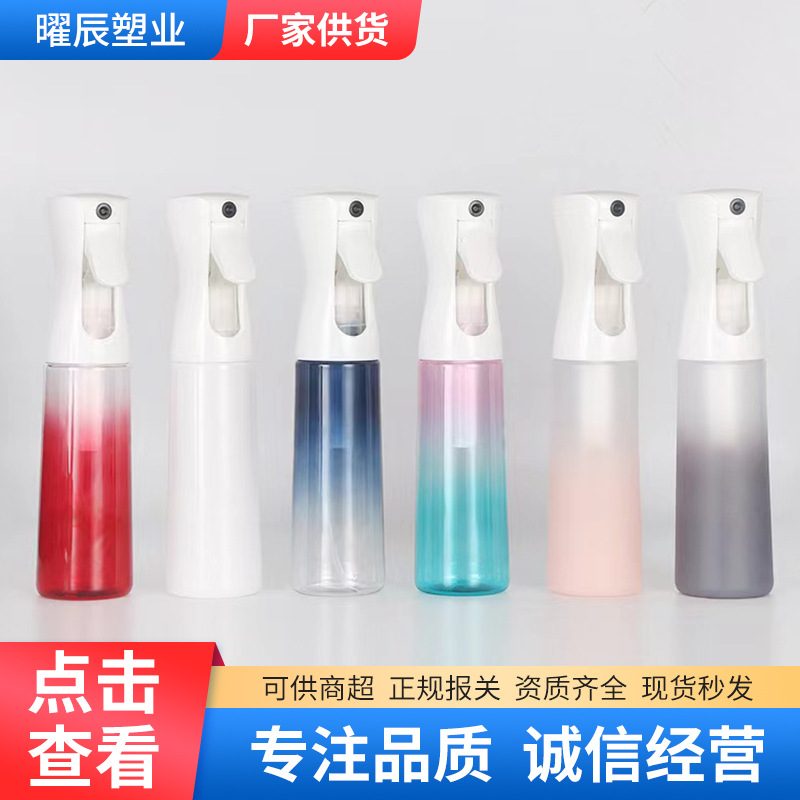
- OEM = You provide the design, the factory produces it. You own the IP. Higher MOQ (usually 10,000+), longer lead time (60-90 days first order), but fully unique product.
- ODM = The factory designs and manufactures. You add your logo and branding. Lower MOQ (1,000-3,000), faster to market (15-25 days), but shared design with other buyers.
- Most brands start with ODM to test the market, then graduate to OEM for differentiation.
What Is OEM Bottle Manufacturing?
In an OEM arrangement, the bottle manufacturer produces bottles according to your proprietary design. You provide the CAD files, specifications, and product requirements — the factory handles tooling, injection molding, assembly, and quality control. The key distinction: you own the intellectual property.
OEM is the right choice when your bottle shape, mechanism, or design is a competitive advantage. For example, if you have designed a unique ergonomic trigger sprayer that differentiates your cleaning brand, OEM ensures no competitor can buy the same bottle from the same factory.
OEM Cost Structure
| Cost Component | Typical Range | Notes |
|---|---|---|
| Custom mold development | $3,000 - $15,000 | Depends on complexity; simple bottle $3-5K, multi-cavity mold $8-15K |
| Prototype / 3D sample | $200 - $800 | 3D printed or soft-mold sample before steel tooling |
| Unit cost (10K pcs) | $0.25 - $0.80 | Lower per-unit vs ODM because you absorb tooling cost |
| Minimum order | 10,000 - 20,000 pcs | Required to justify custom mold investment |
| Lead time (first order) | 60 - 90 days | Mold making (20-30 days) + trial + production |
| Lead time (reorders) | 25 - 35 days | Mold already exists, production only |
What Is ODM Bottle Manufacturing?
In an ODM arrangement, the factory designs and manufactures the bottles using their own molds and engineering. You select from the manufacturer's existing product catalog, then customize with your brand's colors, logo, and packaging. The factory owns the base design IP — you own your branding elements.
ODM is ideal for brands entering a new market or testing product-market fit. You skip the $5,000-$15,000 mold investment and the 60-day design cycle. Most continuous spray bottle orders from Amazon sellers, salon brands, and beauty startups use the ODM model.
ODM Cost Structure
| Cost Component | Typical Range | Notes |
|---|---|---|
| Mold cost | $0 (existing molds) | Factory uses their own tooling — no mold charge |
| Logo/color customization | $100 - $500 setup | Screen printing plate + color matching |
| Unit cost (3K pcs) | $0.40 - $1.20 | Higher per-unit because factory amortizes their mold investment |
| Minimum order | 1,000 - 3,000 pcs | Lower barrier to entry |
| Lead time | 15 - 25 days | No mold development needed |
OEM vs ODM: Decision Matrix
| Factor | OEM | ODM |
|---|---|---|
| Design ownership | You own 100% | Factory owns base design |
| Exclusivity | Fully exclusive | Other buyers may use same shape |
| Upfront investment | $5,000 - $20,000+ | $100 - $500 |
| Time to market | 3-4 months (first order) | 2-4 weeks |
| MOQ | 10,000 - 20,000 | 1,000 - 3,000 |
| Best for | Established brands, patent-protected designs | New brands, Amazon sellers, market testing |
| Risk level | Higher (larger investment) | Lower (test before committing) |
The Hybrid Approach: Start ODM, Graduate to OEM
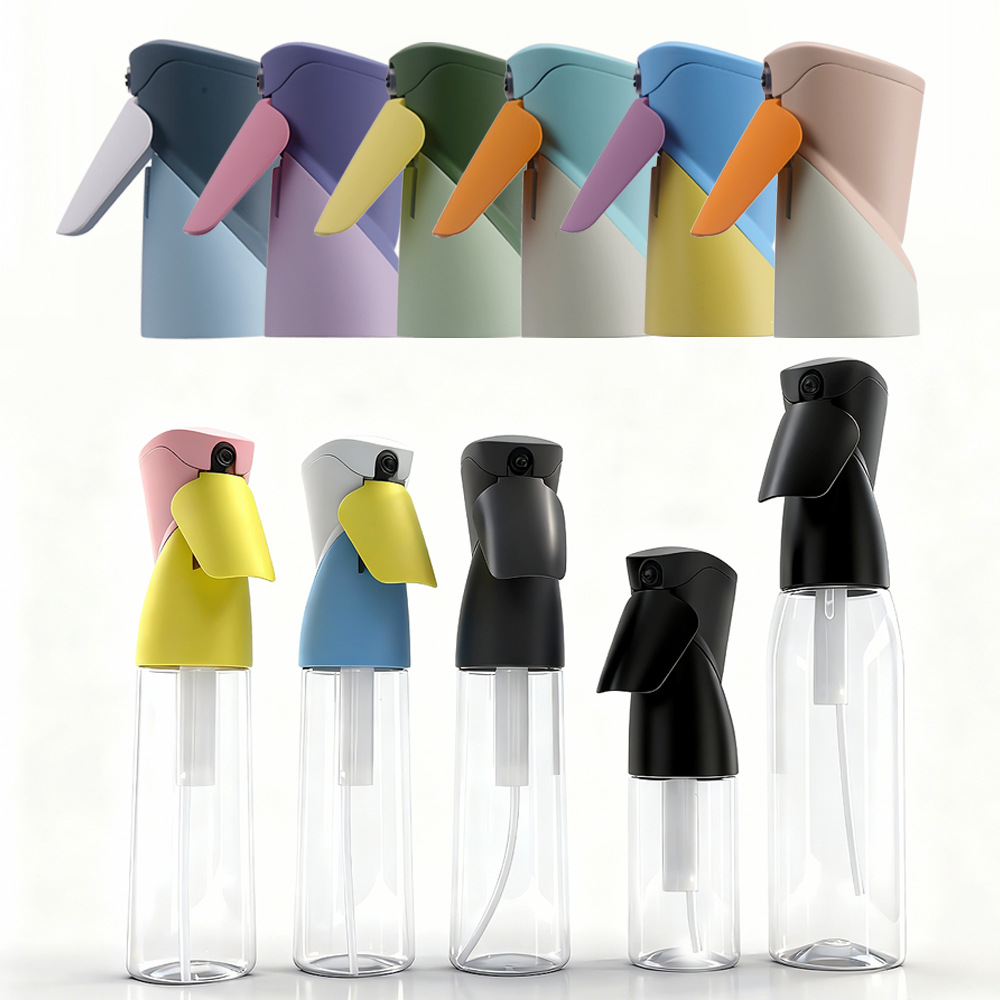
Most successful bottle brands follow a staged approach. They start with ODM to validate market demand — choosing from a manufacturer's existing designs like Desiky's Penguin or Slim Waist continuous spray bottle series. Once they prove the product sells, they invest in OEM tooling for a unique design that competitors cannot replicate.
Here is a typical progression:
| Stage | Model | Volume | Investment |
|---|---|---|---|
| 1. Market test | ODM — stock bottles + your label | 1,000-3,000 pcs | $500-$2,000 |
| 2. Brand building | ODM — custom color + logo | 3,000-10,000 pcs | $2,000-$5,000 |
| 3. Differentiation | OEM — custom bottle design | 10,000+ pcs | $8,000-$20,000 |
| 4. Scale | OEM — multi-cavity molds | 50,000+ pcs | Mold already paid; unit cost drops 15-25% |
How to Choose a Bottle Manufacturer for OEM/ODM
Not all bottle factories offer both OEM and ODM equally well. Here is what to evaluate when selecting a bottle manufacturer:
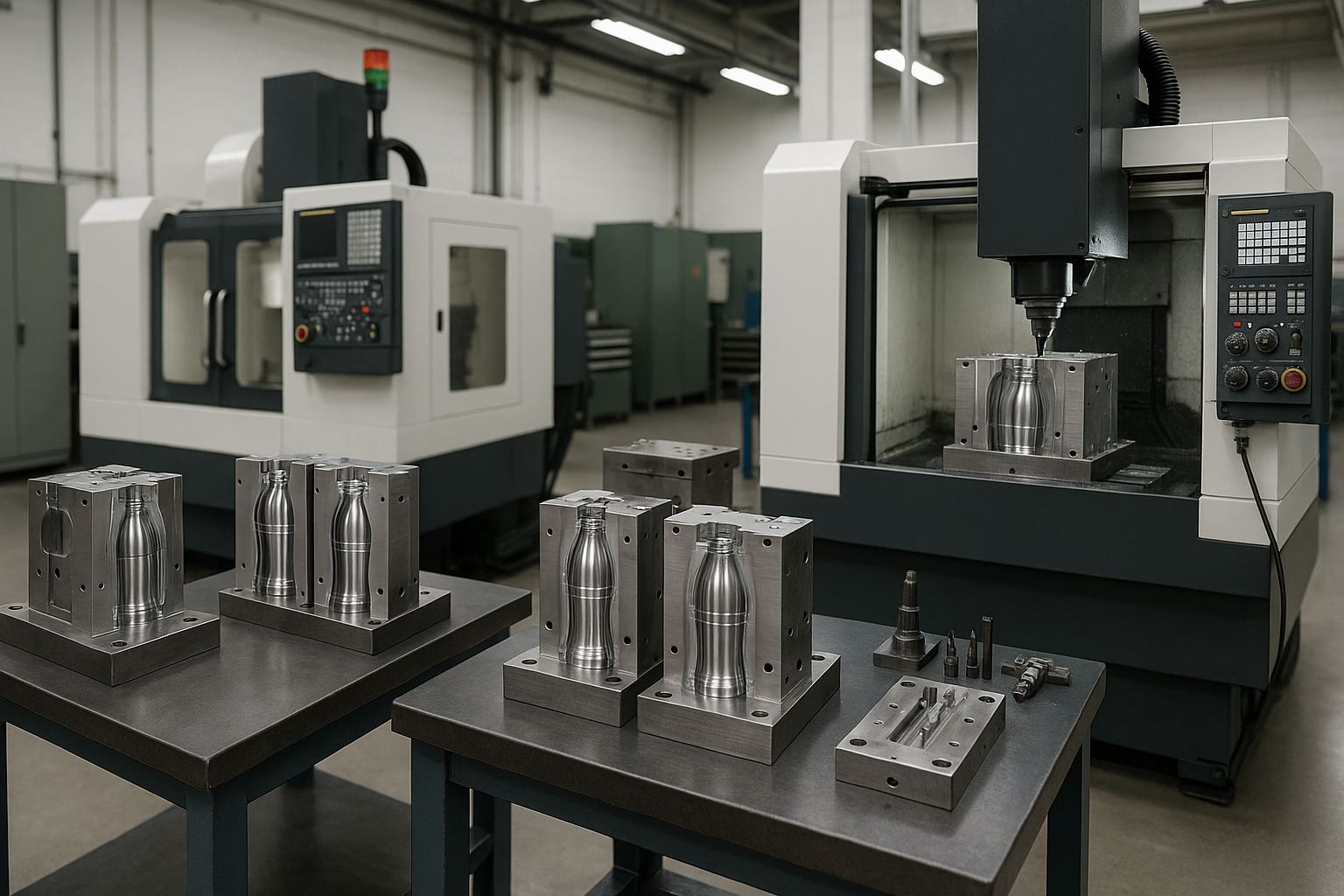
- In-house mold workshop — If you plan OEM, the factory must have CNC machining capabilities for steel molds, not outsource to a third-party mold shop (which adds cost and lead time).
- Existing product range — For ODM, a deep catalog (50+ SKUs) means more options and proven mold reliability.
- IP protection track record — Ask for EU/US design patent examples. A factory that protects its own designs is more likely to protect yours.
- QC infrastructure — Leak testing, spray calibration, material testing. Request their QC checklist and failure rate data.
- Export compliance — FDA, EU 10/2011, REACH, BPA-Free certifications are non-negotiable for consumer products.
Common OEM/ODM Pitfalls to Avoid
- Skipping the prototype phase — Never approve mass production from a 3D render alone. Always get a physical T1 sample from the actual steel mold and test it with your product formulation.
- Unclear IP terms in the contract — Specify in writing who owns the mold, the design, and the right to sell to third parties. For OEM, you should own the mold — even if the factory stores it.
- Choosing purely on price — A factory quoting 30% below market may be using recycled materials, thinner walls, or cheaper seals. Request material certificates and independent testing.
- Ignoring the dip tube and seals — The bottle body is only half the product. Spray performance depends on the pump mechanism, dip tube length, and seal quality. Test the complete assembled unit, not just the bottle shell.
FAQ
Can I switch from ODM to OEM with the same factory?
Yes — and it is the recommended approach. A factory that already produces your ODM orders understands your quality requirements, volume patterns, and logistics. Transitioning to OEM with the same bottle manufacturer is typically smoother than onboarding a new factory from scratch. At Desiky, many of our OEM clients started with stock ODM orders before investing in custom molds.
Who owns the mold in an OEM arrangement?
If you paid for the mold, you own it — but the factory typically stores and maintains it. Your contract should specify: (1) mold ownership transfers to you, (2) mold cannot be used for third-party orders, (3) you can request mold transfer to another factory (though this is rare and not recommended). Standard practice in China is buyer-owned, factory-stored molds.
What is the realistic minimum budget for starting a bottle brand?
With the ODM model, you can launch a private label bottle brand for as little as $2,000-$5,000 (1,000-3,000 units at $0.50-$1.20 each, plus shipping, labeling, and packaging). OEM requires $10,000-$25,000 minimum including mold investment. Most successful brands allocate $3,000-$8,000 for their first order.
Related Articles: How to Choose a Supplier on Alibaba · OEM Custom Manufacturing Guide · Samples Guide: Testing & Approval · Cosmetic Bottle Wholesale Guide
![Top 10 Spray Bottle Manufacturers in China [2026 Verified Factory List]](/images/blog/top-spray-manufacturers.jpg)

![Best Spray Bottle for Every Use: Buyer's Guide by Application [2026]](/images/blog/best-spray-bottle-guide.jpg)